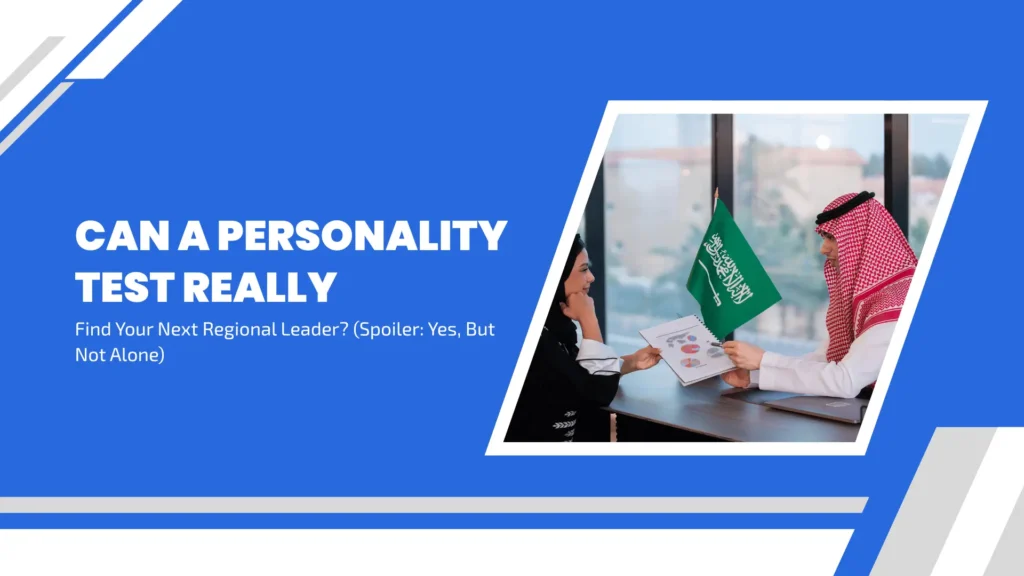
Let’s be real for a second. You’ve probably sat through a hiring process where the candidate looked perfect on paperimpeccable resume, great interview answersbut completely fell apart when the pressure was on. Or maybe you’ve been the candidate who felt like you were “acting” your way through a corporate interview, only to land in a role that felt like wearing shoes two sizes too small.
This is where psychometric testing comes in. Not as a magic wand, but as a flashlight. When you’re hiring for leadership roles that span New York, Riyadh, and Dubai, you cannot afford to guess. You need data.
Today, we’re talking about how Arab American professionals, US employers, and GCC businesses can use these tools to actually get leadership hires right. No fluff. Just practical, cross-cultural sense.
Why Your Gut Feeling Isn’t Enough for GCC Leadership
If you are a US company setting up a team in Saudi Arabia or expanding into the Dubai free zone setup, you already know the stakes are high. Leadership in the Gulf isn’t just about managing P&L statements. It’s about navigating wasta (connections) respectfully, managing a multi-national workforce, and adapting to local business rhythms during Ramadan.
Psychometric testslike personality inventories (think Hogan or DISC) and cognitive ability testsmeasure how a person actually operates, not just how they say they operate in an interview.
For example, if you are hiring a project manager for NEOM project jobs, you need someone with extreme stress tolerance and abstract reasoning. A traditional interview might miss that. A well-designed psychometric assessment won’t.
The Arab American Advantage: Bridging Two Worlds
Here is a niche observation from my desk: Arab American professionals are often the best candidates for regional leadership roles in the GCC. Why?
Because you have the cultural code-switching skills. You understand that “inshallah” might mean “maybe tomorrow” or “absolutely not,” depending on the tone. You also understand the efficiency demands of Western corporate culture.
Butand this is a big “but”you need to prove it. When you apply for careers in Middle East for Westerners or specifically hiring in Riyadh, you will likely face psychometric tests that are normed for Western audiences. Be aware: some tests might not fully appreciate your bicultural agility. Ask the recruiter if the assessment has been validated for a Middle Eastern context.
For US Employers: Hiring Internationals for Tech & Healthcare
Let’s flip the map. You are a US hospital or a Silicon Valley startup trying to hire Arab tech talent. You are looking at h1b visa for software engineers or us healthcare jobs for arab medical professionals. You are likely drowning in resumes.
Psychometric testing helps you filter for remote leadership capability. If you are managing remote teams in different time zones (say, Boston to Bahrain), you need leaders who are intrinsically motivated and comfortable with asynchronous communication. A psychometric test can flag candidates who require constant face-to-face validation (a disaster for remote work).
Specifically for healthcare: If you are sponsoring usmle for arab doctors or a nursing license usa, you are making a massive investment. Adding a resilience and empathy inventory to your visa sponsorship for healthcare workers process reduces the risk of a bad cultural fit that leads to burnout.
Navigating the Saudi and UAE Markets Right Now
The gcc business climate is white-hot, but tricky. Here is what is working right now:
- Saudi Arabia (Vision 2030): The demand for megaprojects jobs is insane. We see a huge need for bilingual leaders who can manage massive workforces. However, the saudi arabia work visa process is strict. Psychometric testing is often used after the visa approval but before the final offer to ensure the candidate can handle the scrutiny of saudi vision 2030 jobs for foreigners.
- UAE (Dubai & Abu Dhabi): The uae talent pool is saturated with generalists. You need specialists. When doing business expansion in gcc market comparison, the UAE is easier for entry (thanks to the dubai free zone setup), but retention is harder. Use assessments to find leaders who won’t jump ship after 18 months for a competitor down the street.
- Qatar: Qatar recruitment laws are very specific about labor rights and contract lengths. Expat retention dubai is a topic; retention in Doha is another beast entirely. Test for long-term commitment and adaptability.
The “Secret Sauce”: Cross-Cultural Training + Psychometrics
Here is a truth bomb: You can pass a psychometric test and still fail a relocation.
I cannot stress this enough. The test tells you how a person thinks. Cross-cultural training tells them why people in Doha or Jeddah act the way they do.
For US employers hiring Arab professionals: Do not just test them and throw them into a team. Provide relocation support middle east style assistance, even if they are moving from Dearborn to Dubai. And for GCC firms hiring Americans or Western expats: P air your testing with family support uae or american community in uae integration. A lonely leader is a flight risk.
We saw this firsthand with a client doing us arab joint venture project management. They used psychometrics to find a Jordanian-American COO. But the real retention tool? Onboarding expatriates in middle east with a cultural mentor for the first 90 days. The tests got the right person in the door; the support kept them there.
High-Demand Sectors for 2024-2025
If you are job hunting or building a team, look here:
- Renewable Energy: Renewable energy jobs saudi arabia are booming. Look for roles with ACWA Power and NEOM.
- Fintech: Fintech careers dubai are hot. The DIFC is hiring compliance and product leads.
- Tourism & Hospitality: Tourism jobs qatar and Saudi are exploding post-World Cup and with the Red Sea Project.
- Bilingual Support: There is a massive need for bilingual customer support center arabic english leads. Companies need talent for arabic customer service to manage their 24/7 support team structure.
FAQ: Your Burning Questions, Answered
Q: How can a US business actually start setting up a team in Saudi Arabia or Dubai right now?
You have two paths. For Dubai, look at the dubai free zone setup (DMCC, DIFC, etc.)it takes about 3-4 weeks to get a license. For Saudi, you need a local partner or a regional HQ license. KSA recruitment requires you to go through the Qiwa and Muqeem platforms. Do not try to DIY the visas; hire a PRO (Public Relations Officer) or a specialized firm. And yes, we strongly recommend using remote psychometric screening before you fly anyone in for an interview.
Q: What are the actual requirements for Arab professionals to work in the US or GCC?
For the US: You typically need an employer to sponsor a visa (H1B for tech, O-1 for extraordinary ability, or EB-2/3 for green cards). Networking for arab professionals in usa is criticaljoin local chapters of the Arab American Institute or industry groups.
For the GCC: You need a job offer first. The employer sponsors the residency visa (Iqama in KSA, Emirates ID in UAE). For Americans, working in dubai as an american is easy tax-wise (no federal income tax), but you need to understand the dubai expat salary guidedon’t accept a US salary; negotiate for housing and schooling stipends.
Q: How can expatriates integrate smoothly and stay long-term in the Middle East?
This is my soapbox. Expat retention dubai fails when people live in a Western bubble. Tip #1: Learn 20 words of Arabic (even “Shukran” goes a long way). Tip #2: Get out of the Marina/JBR bubble. Visit Old Dubai or the historic districts in Riyadh. Tip #3: Address the family. If your spouse is bored or your kids don’t have a school, you will leave. Relocation support middle east must include spouse career coaching and school search assistance.
Q: Which sectors offer the strongest opportunities for leaders in 2024?
Without a doubt: Gcc economic diversification is driving everything.
- Logistics & Supply Chain (due to regional shifts).
- Renewable Energy (Saudi and UAE are all-in on solar/hydrogen).
- Digital Economy (Fintech, AI, Cloud).
- Healthcare (Post-pandemic, the GCC is building massive medical cities).
If you have skills in future skills in arabian gulf like data analytics or green project management, you are golden.
The Bottom Line (And Where to Get Real Help)
Look, psychometric testing is not a replacement for a real conversation over karak chai or a virtual coffee. But it is the best defense against hiring a “brilliant jerk” who destroys your gcc business climate team morale.
Whether you are an Arab American professional eyeing neom careers 2024 or a US firm navigating saudi arabia work visa logistics, you need a partner who speaks both languages.
That has been the focus at Arab American Recruiters. We specialize in exactly this friction point: placing Arab professionals in US and GCC roles, and helping US/GCC firms navigate expatriate onboarding and international hiring projects without losing their minds. We use psychometric testing as a tool, not a crutch, ensuring the human element never gets lost in the data.
If you are ready to stop guessing and start hiring leaders who actually last, come see how we bridge the gap.