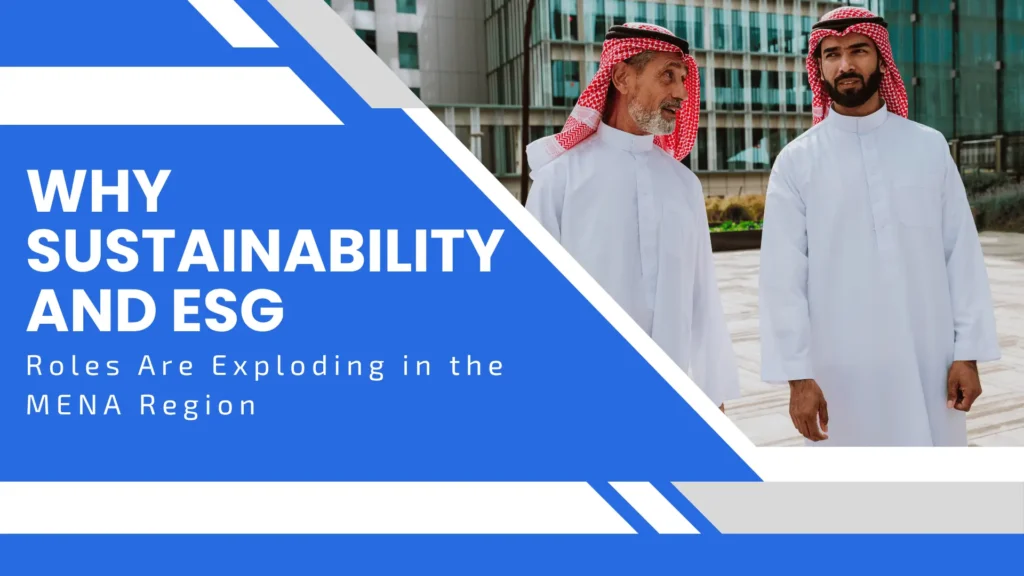
If you’ve been scrolling through LinkedIn lately or chatting with colleagues about the gcc business climate, you have probably noticed a shift. The conversation isn’t just about oil prices or logistics hubs anymore. It is all about Net Zero, ESG frameworks, and “green” megaprojects.
For Arab American professionals looking to leverage their bicultural skills, US employers eyeing international expansion, and GCC businesses scaling up, there is a massive opportunity brewing. The demand for talent in Sustainability and Environmental, Social, and Governance (ESG) roles is outpacing the supply of local experts.
Let’s break down where the real jobs are, how to navigate the legal hurdles, and—most importantly—how to actually stay once you get there.
The Great Shift: From Oil to ESG in the Gulf
Here is a truth bomb: The Gulf Cooperation Council (GCC) is diversifying faster than most people give it credit for. While fossil fuels still pay the bills, saudi vision 2030 jobs for foreigners and similar initiatives in the UAE are laser-focused on renewable energy, smart cities, and sustainable finance.
You cannot walk through a business district in Riyadh or Dubai without hearing about megaprojects jobs. These aren’t just construction gigs; they require data scientists, environmental engineers, and compliance officers who understand global ESG reporting standards.
For US employers, this means your traditional “expat” package is evolving. You aren’t just sending an engineer to turn a wrench. You are sending a us arab joint venture project management specialist who can bridge Western regulatory expectations with local execution.
Hotspots: Where the Action Is
Saudi Arabia (Riyadh & NEOM)
If you are setting up a team in saudi arabia right now, you need to prioritize green credentials. Neom project jobs are the headline grabbers—think hydrogen production and zero-carbon cities. But the real volume is in hiring in riyadh for consultancies that help existing companies pivot to sustainability. Getting a saudi arabia work visa for an ESG specialist is actually becoming streamlined because the government has tagged these as priority skills.
UAE (Dubai Free Zones)
The UAE remains the launchpad. A dubai free zone setup allows you to spin up a sustainability consulting arm without needing a local sponsor in some cases. The uae talent pool is incredibly international, but there is a specific hunger for Arabs who understand Western boardrooms. If you are an American with Lebanese or Egyptian roots, you are the “purple squirrel” employers are hunting for.
Qatar
Qatar recruitment laws have modernized significantly post-World Cup. They are now heavily focused on renewable energy jobs saudi arabia (and Qatar itself) as well as water security. The pace is slower than Dubai, but the retention rates are higher because the benefits are robust.
The Logistics: Visas, Onboarding, and Keeping Your People
You can hire the best ESG director in the world, but if you botch the move, they will leave within six months. I have seen it happen too many times.
For Employers: Retention is a Strategy
Onboarding expatriates in middle east isn’t just about a plane ticket and a furnished apartment. It requires proactive relocation support middle east.
- Family Support UAE: If your hire’s spouse isn’t working or the kids can’t find a suitable school, they will bounce. Top firms now offer “spouse career coaching” as part of expat retention dubai strategies.
- Cross-cultural training: Do not assume everyone knows how to operate in a GCC boardroom. Cross-cultural training on communication styles (indirect vs. direct feedback) saves millions in misunderstanding.
- Managing remote teams in different time zones: Your ESG lead might be in Riyadh, but your data team is in Chicago. Invest in asynchronous workflows. Don’t demand instant replies; demand results.
For Job Seekers: The Visa Reality
- For the US: If you are an Arab professional looking to come to America, h1b visa for software engineers is tough but possible, especially if you specialize in carbon accounting software. Us healthcare jobs for arab medical professionals are actually more stable. If you have your usmle for arab doctors or a nursing license usa, visa sponsorship for healthcare workers is aggressive right now.
- For the GCC: Working in dubai as an american is still a great lifestyle play. However, check the dubai expat salary guide versus the cost of living dubai vs usa. The tax-free salary looks amazing, but rents have spiked. The american community in uae is huge, so you won’t feel isolated. For those looking at careers in middle east for westerners, Saudi is where the career acceleration is happening, while Dubai is for lifestyle balance.
High Demand Sectors in 2024 (Beyond Solar Panels)
We know renewables are hot. But let’s look at the weird, wonderful, and practical niches.
- Fintech Careers Dubai: Sustainable finance (green bonds, ESG investing) is exploding. Banks need compliance officers who can verify “green” claims.
- Tourism Jobs Qatar & KSA: Ecotourism is a massive pillar of Vision 2030. They need project managers who can build luxury resorts without destroying mangroves.
- Tech & AI: Arab tech professionals usa jobs are shifting toward climate tech. If you can code for energy efficiency, both the US and GCC want you.
- Bilingual Support: As companies launch ESG initiatives, they need bilingual customer support center arabic english teams to handle public inquiries. Talent for arabic customer service is actually a scarcity. If you are setting up a multilingual call center setup, remember that a 24/7 support team structure requires cross-cultural communication in business training to handle the different communication styles of European, American, and local customers.
Navigating the “Soft” Skills Gap
The biggest failure I see in ksa recruitment and UAE hiring isn’t a lack of technical skill. It is a lack of cultural dexterity.
A US employer might expect a direct “no” if a deadline is missed. A GCC manager might say “inshallah” (God willing), which the American misinterprets as “yes.” That is a relationship killer.
If you are an Arab American Recruiters placement, we focus heavily on this. Our experience in expatriate onboarding and international hiring projects tells us that the candidates who last the longest are those who treat the move like a marriage, not a one-night stand. They learn the local business etiquette. They respect the hierarchy. They don’t complain that “back home we did it this way.”
FAQ: Your Burning Questions Answered
Q: How can a US business realistically set up a team in Saudi Arabia or Dubai?
A: For Saudi, you will likely need a local partner or a branch license (which is getting easier via investor visas). Setting up a team in saudi arabia requires a saudi arabia work visa for each employee, which is tied to a specific sponsor. For Dubai, a dubai free zone setup is the fastest route—you get 100% ownership and simplified visa processing. Do not try to DIY this; hire a PRO (Public Relations Officer) or a consultancy to handle the paperwork.
Q: What are the requirements for Arab professionals to work in the US vs. the GCC?
A: In the US, it is tough without a sponsor. The h1b visa for software engineers is a lottery, but us healthcare jobs for arab medical professionals (doctors, nurses) have a clearer path via usmle or nursing license usa transfers. In the GCC, the requirement is usually a university degree attested, a clean medical test, and a job offer. For working in dubai as an american, you just need a passport valid for six months and an employer to process your labor card.
Q: How can expatriates integrate smoothly and stay long term in the Middle East?
A: Do the boring stuff immediately: open a local bank account, get a local SIM, and learn 20 words of Arabic (even “Shukran” goes a long way). Join the american community in uae or similar groups in Riyadh. Secure family support uae if you have kids—school placement is a nightmare if you wait. Finally, accept that expat retention dubai and Riyadh relies on patience. Things move on “Gulf time,” not New York time.
Q: Which sectors offer the strongest opportunities in 2024?
A: Beyond the obvious renewable energy jobs saudi arabia and fintech careers dubai, look at tourism jobs qatar and logistics. Also, neom careers 2024 are opening up for mid-level managers, not just C-suite. And never underestimate bilingual customer support center arabic english roles; every global firm entering the region needs them to manage local regulators.
The Final Word (And Where to Go From Here)
The gcc economic diversification train has left the station. Whether you are a us employer looking to expand, or an arab american professional tired of the same old routine, the MENA region is offering a career inflection point.
The key is to stop treating it like a “foreign” assignment and start treating it like a home. The companies that win are the ones that invest in cross-cultural training and relocation support middle east. The professionals who win are the ones who learn the local laws and build genuine networks.
We specialize in making these connections stick. From ksa recruitment to placing arab tech professionals usa jobs, the goal is always the same: finding the cultural fit as much as the technical one.
Ready to make the move?
Let’s talk. Visit Arab American Recruiters to see how we help bridge the gap between US talent and GCC ambition.