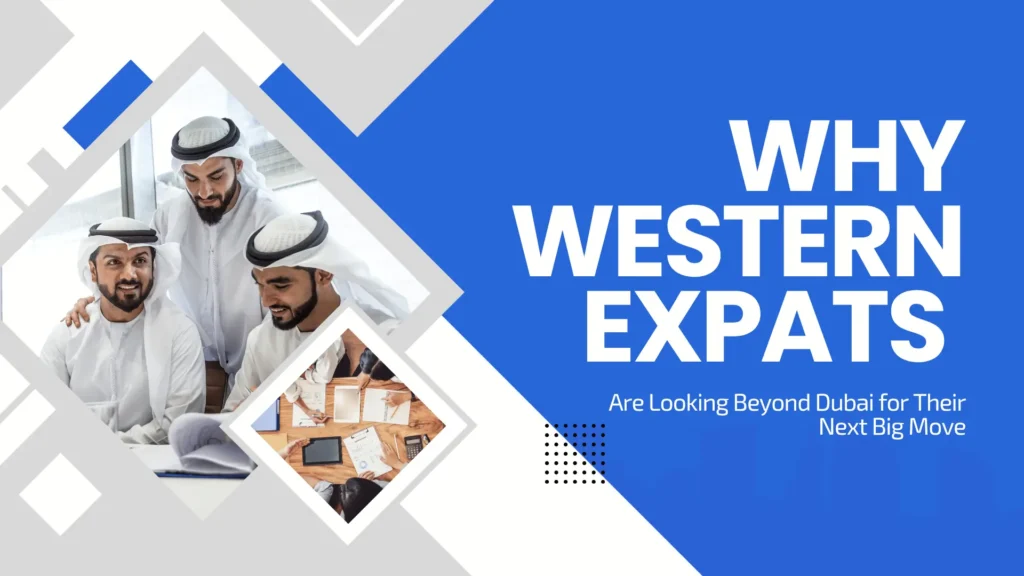
Let’s be real for a second. Dubai has been the shiny object for Western expatsincluding many Arab Americansfor nearly two decades. And honestly? It earned that reputation. Great infrastructure, zero income tax, and a lifestyle that blends luxury with convenience. But here’s what I’m hearing from candidates and clients alike: the landscape is shifting.
Smart professionals and employers are now asking a different question. Not “how do I get to Dubai,” but “where else in the GCC should I be looking?”
If you’re an Arab American professional weighing your next career move, a US employer exploring international hiring, or a GCC business scaling up, this one’s for you. Let’s talk about where the real action is happening right nowand spoiler alert: it’s not all about Dubai anymore.
The New Center of Gravity: Saudi Arabia’s Unstoppable Momentum
Look, I couldn’t confirm every single job number floating around about Saudi’s megaprojects, but here’s what is verifiable: Saudi Vision 2030 is not a slogan. It’s a economic transformation playing out in real time, and it’s creating opportunities that didn’t exist three years ago.
For US employers and GCC businesses thinking about setting up a team in Saudi Arabia, the timing has never been better. The Kingdom has streamlined everything from incorporation to saudi arabia work visa processing. Is it as fast as Dubai? Not yet. But the gap is closing fast, and the scale of opportunity is simply larger.
I’ve placed Arab American engineers and project managers into NEOM project jobs and hiring in Riyadh has gone from cautious to aggressive across every sector. What’s driving this? Simple math. Saudi isn’t just building citiesit’s building an entire economic ecosystem. That means jobs in construction, tech, finance, healthcare, and energy that need Western-trained professionals who understand both regional culture and global best practices.
Qatar and the UAE: Still Vital, But Different
Let’s not write off the rest of the Gulf. Qatar learned from the World Cup buildup that smart qatar recruitment laws and infrastructure investment pay off long after the cameras leave. The country is quieter than Dubai or Riyadh, and for some professionalsespecially those with familiesthat’s a feature, not a bug.
The UAE remains a powerhouse, but the conversation has matured. Dubai free zone setup is still the gold standard for speed and flexibility, but more companies are realizing that a Dubai license doesn’t mean you have to house your whole team there. The uae talent pool is deep, diverse, and increasingly expensive. Smart businesses are using Dubai as a regional HQ while building operational teams in Abu Dhabi, Sharjah, or even Riyadh.
If you’re doing a gcc business climate comparison, here’s my take: UAE for agility and established infrastructure, Saudi for scale and long-term growth, Qatar for niche expertise and government-backed stability. Each has its strengths. None is a wrong answer.
What This Means for Arab American Professionals
Here’s where it gets personal. As an Arab American, you have something most Western expats don’t: cultural fluency and language skills that actually matter in daily business. That’s not a nice-to-have. That’s a competitive edge.
But I also know many of you are looking in both directions. Maybe you’re in the US now, working in tech or healthcare, and wondering about the Gulf. Or maybe you’ve done a Dubai stint and are thinking about coming back to the States. Both paths are viable, but they require different strategies.
For those eyeing the US market, arab tech professionals usa jobs are growing, particularly in cybersecurity, AI, and cloud architecture. The h1b visa for software engineers remains competitive, but companies are increasingly open to usa tech relocation for senior talent. Networking for arab professionals in usa is critical hereand I’ve seen too many talented people assume their resume will do the work. It won’t. Get involved with professional associations. Go to the conferences. Make the calls.
In healthcare, the numbers are even clearer. US healthcare jobs for arab medical professionals are abundant, but licensing is the real hurdle. USMLE for arab doctors is non-negotiable, and nursing license usa requirements vary by state. The good news? Visa sponsorship for healthcare workers is more available than in almost any other sector. Hospitals are desperate. If you have the credentials, they will find a way to bring you over.
For Employers: How to Actually Make This Work
Let me save you some trial and error. Whether you’re a US company expanding into the Gulf or a GCC business hiring Western talent, the mechanics matter more than most people admit.
Onboarding expatriates in middle east isn’t just about flights and housing. The difference between someone who stays two years and someone who stays seven is almost always family support. If you’re serious about expat retention dubai or Riyadh or Doha, invest in relocation support middle east that covers schools, spousal employment, and community integration. I’ve watched companies lose six-figure hires because they cheaped out on the family transition. Don’t be that company.
Cross-cultural training sounds soft until you’re managing a team where half the members observe Friday-Saturday weekends and the other half are on US time zones. Managing remote teams in different time zones requires intentional structureshared overlap hours, clear handoff protocols, and tools that don’t assume everyone works 9-to-5.
For us arab joint venture project management, the biggest friction point isn’t technical. It’s communication style and decision-making speed. US teams tend to want quick votes and fast execution. Gulf partners often prefer relationship-building and consensus before action. Neither is wrong. But if you don’t build cross-cultural communication in business into your project plan from day one, you will hit avoidable delays.
High-Demand Sectors You Should Be Watching
If you’re job hunting or hiring in 2024, these are the lanes with real momentum:
Renewable energy jobs Saudi Arabia are exploding. The Kingdom has committed to major solar and hydrogen projects, and they need engineers, project managers, and environmental specialists.
Fintech careers Dubai remain strong, but I’m seeing interesting spillover into Abu Dhabi and Riyadh as regulatory sandboxes multiply.
NEOM careers 2024 are real, but be specific about what you’re applying for. The line between “megaproject hype” and actual job openings is thinner than critics admit, but you still need to target roles with clear funding and timelines.
Tourism jobs Qatar are more stable than people assume. Post-World Cup, the country has invested heavily in hospitality and events infrastructure.
Here’s a sleeper category: bilingual customer support center arabic english operations. With more global companies serving the Middle East, the demand for multilingual call center setup expertise is real. If you understand talent for arabic customer service and can design 24/7 support team structure across time zones, you have a skill set that very few people combine effectively.
Frequently Asked Questions (The Practical Stuff)
How can businesses set up a team in Saudi Arabia or Dubai?
For Saudi, you’ll need a local sponsor or a 100% foreign-owned license in specific sectors. The process has gotten fastercount on 8 to 12 weeks for most setups. For Dubai, a free zone license is your fastest path. Each free zone has different rules, so match your business activity to the right one. I always tell clients: budget for legal fees and don’t try to DIY the compliance piece. The penalties for getting it wrong are steep.
What are the requirements for Arab professionals to work in the US or GCC?
For the US, it depends on your specific status. If you’re already a US citizen or green card holder, you’re fine. If you need sponsorship, tech and healthcare are your best bets. For the GCC, requirements vary: Saudi needs a work visa tied to a specific employer and a degree attestation. UAE has a points-based system for certain roles. Qatar requires a No Objection Certificate from your current employer in many cases. Always check the latestthese rules change faster than blogs can track.
How can expatriates integrate smoothly and stay long term in the Middle East?
The people who last are the ones who build lives, not just careers. Join community groups. Learn some Arabicyes, even basic phrases change how locals perceive you. Get your family settled first. If your spouse is miserable, you won’t stay. And be realistic about cultural adaptation. You don’t have to love everything, but constant complaining is a fast track to isolation and early departure.
Which sectors offer the strongest opportunities in 2024?
For the Gulf: renewable energy, construction management on megaprojects, fintech compliance, healthcare administration, and bilingual customer operations. For Arab professionals in the US: software engineering (especially AI/ML), healthcare (nursing and specialized medicine), data analytics, and project management for companies with Gulf operations.
The Bottom Line
Here’s what I’ve learned placing Arab professionals in both the US and GCC markets: the rules change constantly, but the fundamentals don’t. Know your value. Build real relationships. And don’t assume the old playbooks still work.
Dubai will always be Dubai. But the most interesting opportunities right now? They’re everywhere else.
Ready to make your next move? Whether you’re an Arab American professional seeking the right role, a US employer expanding internationally, or a GCC business building a world-class team, we’ve been navigating these waters for years. From ksa recruitment to expatriate onboarding to cross-border hiring strategies, Arab American Recruiters specializes in making complex international placements feel straightforward. Let’s talk about where you’re headed next.