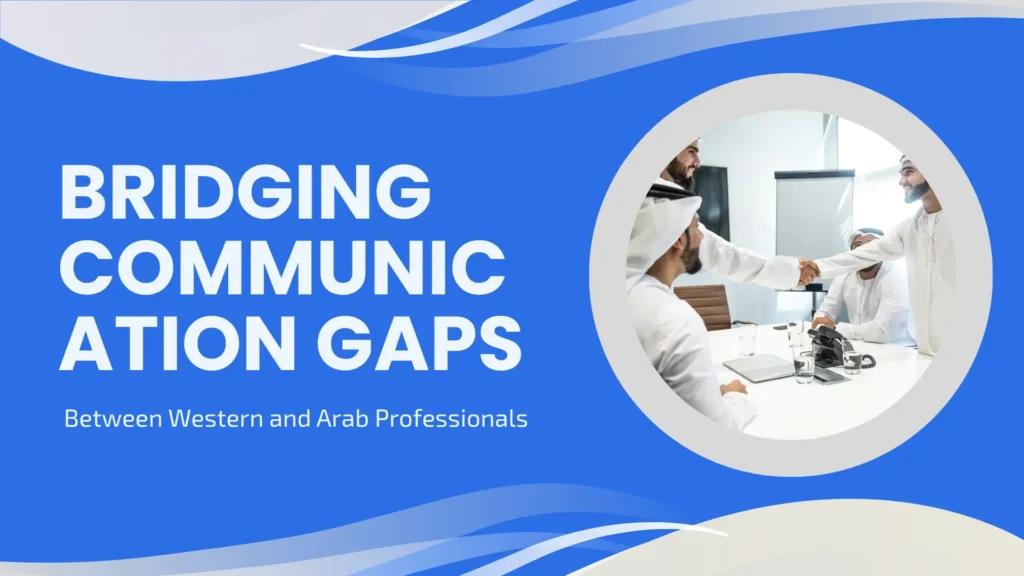
You could have the best business strategy in the worlda flawless contract, a groundbreaking megaprojects job lined up, or a brilliant fintech career in Dubai waiting for you. But if your team doesn’t know how to talk to each other, that strategy crashes faster than a bad conference call.
I’ve spent years watching this dynamic play out. On one side, you have Western professionals (usually from the US or Europe) who value directness, speed, and “getting to the point.” On the other side, you have Arab professionals who prioritize relationship, respect, and context.
Neither is wrong. But if you are setting up a team in Saudi Arabia or hiring for a US-Arab joint venture project management role, you need a translatornot for the language (though Arabic helps), but for the culture.
Let’s bridge that gap.
The “Yes” That Means “Maybe” (And Why It Drives Westerners Nuts)
Here is a classic friction point. An American manager asks an Arab colleague, “Can you get this report done by 3 PM?”
The Arab professional replies, “Yes, inshallah.”
The American hears: “Yes. I promise. I will absolutely do this.”
The Arab professional meant: “I hear you. I will try my best. I respect you too much to say no to your face, but the printer is broken, it is prayer time, and my cousin just showed up. We will see.”
This is the heart of cross-cultural communication in business. In many Western cultures, communication is low-context. You say what you mean. In Arab culture, it is high-context. You rely on shared understanding, non-verbal cues, and the preservation of dignity (often called wasta or face).
If you don’t address this, you get frustrated bosses and confused employees. You get turnover. You get failed expat retention Dubai strategies.
For US Employers: Hiring Arab Talent (Without the Headache)
Are you looking at the UAE talent pool or trying to recruit Arab tech professionals for USA jobs? Good move. The bilingual, highly educated workforce coming out of the Gulf is incredible.
But your standard American interview script might scare them off.
If you ask, “What is your biggest weakness?” in a blunt American accent, a candidate from Riyadh or Cairo might clam up. In their culture, exposing a flaw to a stranger is rude. They aren’t being dishonest; they are being polite.
How to fix it:
- Build rapport first. Spend the first five minutes of the interview asking about their day, their family (generally), or their travel. Do not skip this.
- Be clear about the visa pathway. If you are sponsoring an H1B visa for software engineers, say that upfront. If you are hiring doctors, know the USMLE for Arab doctors and the nursing license USA requirements. Uncertainty kills the deal.
- Leverage experts. Firms like Arab American Recruiters specialize in this exact bridge. They know how to vet candidates for cultural fit on both sides of the Atlantic while handling the messy logistics of USA tech relocation.
For GCC Businesses: Hiring Americans & Westerners
Let’s flip the table. You are a leader in business expansion in GCC market comparison studies, and you’ve decided to hire a Westerner for your Neom project jobs or your renewable energy jobs Saudi Arabia.
The American arrives in Riyadh or Dubai. They are eager. They are loud. They want to change everything in the first week.
Here is the mistake local leaders make: They assume the expat is arrogant. Usually, they aren’t. They are just terrified of being useless.
The Onboarding Secret
If you want to stop the revolving door of expats leaving after 12 months, you need relocation support Middle East that includes cultural coaching.
- For the employer: Provide cross-cultural training before the plane lands. Teach your new American hire why you start meetings with small talk (taarof). Teach them that a deadline is a suggestion, not a threat, until the relationship is solid.
- For the job seeker: If you are an American eyeing careers in Middle East for Westerners, understand this: Your technical skills got you the offer. Your patience will keep you there.
The Geography Game: Riyadh vs. Dubai vs. Doha
You cannot talk about bridging gaps without looking at the map. Each Gulf country has a different vibe.
Saudi Arabia (The Transformer)
With Saudi Vision 2030 jobs for foreigners exploding, the culture here is formal and deeply traditional. If you are hiring in Riyadh, expect longer negotiation cycles. However, the youth are incredibly tech-savvy. KSA recruitment now prioritizes soft skills like adaptability. Getting a Saudi Arabia work visa requires patience (lots of it), but the upside for megaprojects is unmatched.
UAE (The Hub)
Working in Dubai as an American is the easiest transition. English is everywhere. Dubai free zone setup allows for 100% foreign ownership, which changes the power dynamic. However, the cost of living Dubai vs USA is steep. If you aren’t offering housing or schooling (family support UAE is critical), your expat retention Dubai rate will plummet.
Qatar (The Specialist)
Qatar recruitment laws are strict regarding labor rights and medical checks. If you are hiring for tourism jobs Qatar or logistics, understand that the American community in UAE is different from the one in Doha. It is quieter, more family-oriented, and requires more bureaucratic navigation.
Building the 24/7 Dream Team
One massive opportunity right now is bilingual customer support center Arabic English. As US companies try to serve MENA clients, they need talent for Arabic customer service.
But how do you manage that team when you are in New York and they are in Amman or Cairo?
- Time zones: Stop scheduling meetings for 8 AM EST. That is 4 PM in the Gulf. Your team is exhausted. Use asynchronous communication (Loom, Slack) for everything except urgent crisis management.
- The Friday factor: Do not schedule anything important on Friday mornings (prayer time) or late nights during Ramadan. If you ignore Ramadan, you will lose your entire multilingual call center setup.
The FAQ You Actually Need (Conversational Style)
Q: I’m a US business owner. How do I actually start setting up a team in Saudi Arabia or Dubai without losing my mind?
A: First, stop trying to DIY the legal stuff. For Saudi, you usually need a local partner or a special license (though this is changing with the new regional headquarters rules). For Dubai, look at the Dubai free zone setup (like DMCC or Internet City)it’s much faster. You will need a saudi arabia work visa or a UAE residency permit. Hire a PRO (Public Relations Officer) to handle the paperwork. Then, hire a recruitment partner who does onboarding expatriates in middle east as a service, not an afterthought.
Q: I’m an Arab doctor/nurse. Can I work in the US?
A: Yes, but it’s a marathon, not a sprint. For US healthcare jobs for Arab medical professionals, you need the USMLE for Arab doctors (three steps, expensive, but doable) or the nursing license USA (CGFNS certification). The biggest hurdle isn’t the test; it’s the visa sponsorship for healthcare workers. Look for hospitals in underserved areas (rural Texas, inner-city Chicago) who are willing to sponsor the green card.
Q: I’m moving to Dubai for a fintech job. How do I stay long term?
A: Don’t just live in the Marina bubble. Join the American community in UAE groups on Facebook, but also go to the old souks. The expats who last more than two years are the ones who learn basic Arabic phrases (not just “Shukran”) and respect the local customs. Also, check your Dubai expat salary guideif your housing allowance isn’t covering a good school, you will leave when your kid turns 5.
Q: Which sectors are popping off in 2024?
A: Three big ones. First, Neom careers 2024 and renewable energy jobs Saudi Arabia (green hydrogen is huge). Second, fintech careers Dubai (the UAE wants to beat Singapore). Third, bilingual customer support center Arabic English roles for remote US tech companies. Also, don’t sleep on future skills in Arabian Gulf like AI ethics and supply chain logistics.
The “Glue” That Holds It All Together
You can read a hundred articles about cross-cultural communication (including this one), but the secret sauce is simple: Curiosity over ego.
When the American manager assumes the Arab employee is being “difficult,” they lose trust. When the Arab manager assumes the American is being “rude,” they lose morale.
If you are building a 24/7 support team structure that spans Phoenix and Riyadh, or you are an Arab professional on an H1B visa for software engineers in Silicon Valley, remember this: You are the bridge.
And bridges take a beating from the weather (and the traffic), but they are the only way anyone gets to the other side.
Ready to stop translating and start connecting?
Whether you are a US company looking to tap into the UAE talent pool or a Saudi firm hunting for Arab tech professionals for USA jobs, the logistics of visas and relocation shouldn’t be a guessing game.
At Arab American Recruiters , we don’t just fill seats. We handle the messy middlethe saudi arabia work visa timelines, the relocation support Middle east packages, and the cross-cultural training that actually saves you money on turnover.
Check out how we help businesses scale across the GCC business climate and the US market. Let’s build teams that actually speak the same language.