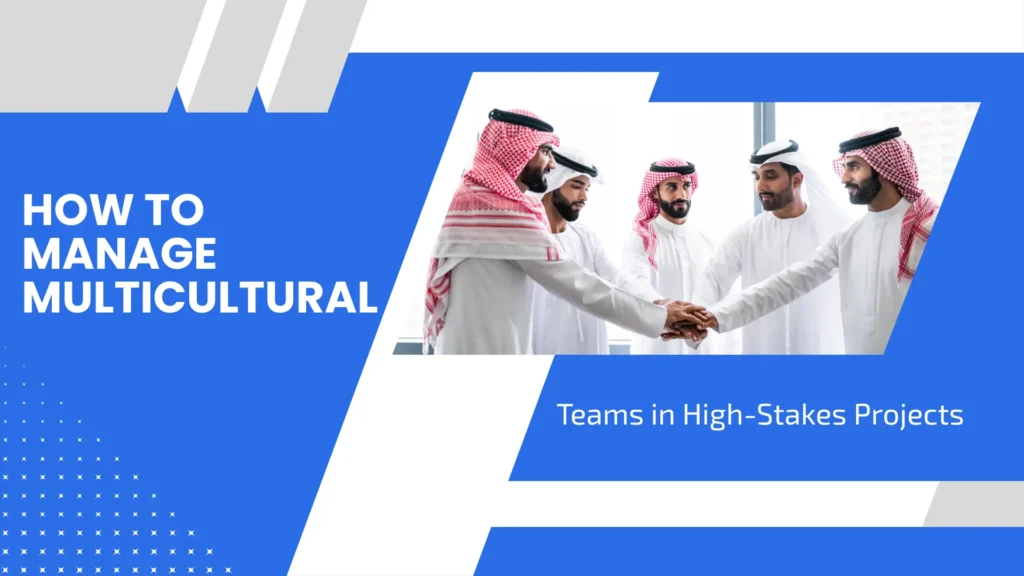
Let’s be honest: managing a high-stakes project is stressful enough without adding time zones, language barriers, and different cultural expectations into the mix. But in today’s global economyespecially with the incredible growth happening in the GCC and the opportunities for Arab professionals in the USmulticultural teams aren’t just common; they’re essential.
Whether you’re a US employer setting up a team in Riyadh, an Arab American professional navigating a tech role in Silicon Valley, or a GCC-based business expanding into a Dubai Free Zone, the ability to lead diverse teams is your competitive advantage.
I’ve spent years watching these cross-border collaborations either soar or sink. The difference usually isn’t talentit’s how you manage the human side of the equation. Let’s break down how to make multicultural teams thrive when the pressure is on.
Why High-Stakes Projects Demand a New Leadership Mindset
High-stakes projectsthink NEOM Project Jobs, fintech launches in Dubai, or US healthcare expansionsmove fast. Deadlines are tight, budgets are watched, and the margin for error is slim. When you layer cultural differences on top of that, communication gaps can turn into costly delays.
The good news? A well-managed multicultural team isn’t a liability; it’s your secret weapon. Diverse perspectives lead to better problem-solving. But you have to be intentional about it.
For Employers: Building and Managing Teams Across Continents
If you’re a US employer or a GCC business scaling up, you’re likely dealing with three distinct challenges: getting the right people in the door, keeping them there, and making sure they work as one unit.
Navigating the Hiring Maze
Recruitment across borders is a logistical puzzle. Whether you’re setting up a team in Saudi Arabia or hiring in Dubai, you need to understand the local landscape.
In Saudi Arabia, KSA recruitment has transformed under Vision 2030. If you’re hiring for gigaprojects or tech hubs, you’ll find a highly motivated talent pool, but you must be prepared for Saudi Arabia work visa processes that require careful coordination with the Ministry of Human Resources. Similarly, if you’re looking at the UAE, a Dubai free zone setup offers streamlined visa processing and foreign ownership benefits, making it a popular entry point for businesses.
The mistake I see too often is treating GCC business climate as a monolith. It’s not. Qatar recruitment laws, for example, have specific requirements around sponsorship and contract standardization that differ from the UAE’s more flexible free zone structures. Do your homework. Or better yet, partner with experts who handle this daily.
Onboarding Expatriates: It’s More Than a Plane Ticket
Here’s where many projects stumble. You’ve hired a brilliant engineer from the US for a role in Riyadh, or a project manager from Cairo for a role in Doha. You’ve sorted the paperwork. The project starts in two weeks. You assume they’ll figure out the rest.
That’s a risk.
Effective onboarding expatriates in Middle East goes beyond HR orientation. It includes relocation support Middle East that addresses housing, schooling, and even spouse employment. If you want to avoid turnover during a critical project phase, expat retention Dubai (and the broader GCC) hinges on family support UAE and beyond. If a team member is stressed about their child’s school or their visa status, they aren’t focused on your project’s milestones.
We’ve seen the best results when companies invest in cross-cultural training before the first day. This isn’t just about learning local customs; it’s about understanding communication styles. In many GCC cultures, relationship-building precedes business. In Western contexts, time is often treated as a finite resource. Acknowledging and respecting these differences in a project kickoff meeting can prevent weeks of friction.
Managing Remote and Distributed Teams
High-stakes projects rarely happen in one room anymore. You might have a project manager in the US, developers in Cairo, and stakeholders in Dubai.
When you’re managing remote teams in different time zones, transparency is non-negotiable. Use asynchronous communication for status updates so no one is forced to attend a 2 AM meeting. But for critical decision-making, schedule overlapping hours where the entire core team can be present.
And please, don’t underestimate the power of a face-to-face gathering. If the budget allows, fly key team members to the project site. It’s hard to build trust over Slack. A week of working side-by-side can build the rapport that carries you through the next six months of remote work.
For Job Seekers: Thriving in the US and GCC Markets
If you’re an Arab professionalwhether you’re in the US looking to return to the region, or you’re in the GCC eyeing opportunities in Americathe landscape is rich with opportunity.
Pathways to the US
For Arab tech professionals, the US market is hungry for your skills. The h1b visa for software engineers remains a primary pathway, though it’s competitive. We’re also seeing increased movement in healthcare. US healthcare jobs for Arab medical professionals are booming, but you need to navigate the credentialing process. If you’re a physician, that means tackling the usmle for arab doctors. For nurses, it’s the nursing license usa and securing visa sponsorship for healthcare workers.
Networking is your best friend here. Networking for arab professionals in usa through organizations like the Arab American Chamber of Commerce or industry-specific groups can open doors that online applications simply can’t.
Pathways to the GCC
For Americans or Westerners considering the shift, working in dubai as an american is still a top-tier career move. However, it’s important to ground expectations. The dubai expat salary guide varies widely by sector. While the cost of living dubai vs usa can be comparable (or even higher in Dubai for housing), the tax-free income is the game-changer.
If you’re looking beyond Dubai, the opportunities are staggering. Renewable energy jobs Saudi Arabia are scaling rapidly under Vision 2030. Fintech careers dubai are exploding with regulatory support. And let’s not forget the sheer scale of neom careers 2024. Similarly, tourism jobs qatar are maturing post-World Cup, offering stable, long-term roles in hospitality and events.
The Unspoken Skill: Bilingual Talent
One of the most underrated assets in these cross-border projects is bilingual talent. If you’re managing a us arab joint venture project management scenario, having team members fluent in both English and Arabic is invaluable. It prevents miscommunication and builds trust with local stakeholders.
This is why we’re seeing a surge in demand for bilingual customer support center arabic english roles and multilingual call center setup. If your business serves the region, a 24/7 support team structure needs to be staffed with talent for arabic customer servicepeople who understand the cultural nuances of hospitality alongside technical efficiency.
Industry FAQ: Your Questions Answered
How can businesses set up a team in Saudi Arabia or Dubai?
It depends on your goals. For Saudi Arabia, you’ll typically need a local sponsor or a branch license, and you’ll navigate KSA recruitment through the Qiwa and Muqeem platforms. The Saudi Arabia work visa process has become more digitized, but compliance is strict. For Dubai, a Dubai free zone setup is often the fastest route. Free zones like DIFC (for finance) or Dubai Internet City (for tech) offer their own visa quotas and simplified processes. In both cases, having a local partner or a specialized recruitment firm that handles onboarding expatriates in Middle East is highly recommended.
What are the requirements for Arab professionals to work in the US or GCC?
For the US, it varies by profession. Tech professionals often target the H1B visa for software engineers, which is a lottery-based system. Medical professionals need to pass licensing exams (like the USMLE for Arab doctors) and find employers willing to offer visa sponsorship for healthcare workers. For the GCC, the process is employer-driven. You’ll need a valid job offer, and your employer will sponsor your residency visa. For Saudization and Emiratization, some roles are reserved for nationals, but in high-demand fields like renewable energy jobs Saudi Arabia or fintech careers Dubai, there are clear pathways for expatriates.
How can expatriates integrate smoothly and stay long term in the Middle East?
Integration starts with mindset. Financially, understanding the dubai expat salary guide and cost of living dubai vs usa helps set realistic expectations. Socially, it’s about community. The american community in uae is large and welcoming, offering support networks. The biggest factor for retention, however, is what we call “family settlement.” Relocation support middle east that includes family support uaehelping with schools, spouse visas, and housingturns a two-year assignment into a decade-long home. Long-term careers in middle east for westerners are thriving for those who embrace the lifestyle and invest in the local community.
Which sectors offer the strongest opportunities in 2024?
If you’re looking at the GCC, watch the megaprojects. NEOM project jobs and other megaprojects jobs tied to Saudi Vision 2030 jobs for foreigners are creating thousands of roles in construction, tech, and urban planning. Renewable energy jobs Saudi Arabia and fintech careers Dubai are also top-tier. In the US, the demand for Arab tech professionals usa jobs remains high, especially in AI and cybersecurity, alongside a persistent need for us healthcare jobs for arab medical professionals. The common thread across all these is the need for future skills in arabian gulfdigital literacy, project management, and cross-cultural communication.
Your Next Step: Building Teams That Last
Managing multicultural teams in high-stakes projects isn’t about avoiding differences; it’s about leveraging them. Whether you’re an employer navigating business expansion in gcc market comparison or a professional exploring working in dubai as an american, the principles are the same: clear communication, respect for cultural context, and robust support systems.
This is exactly where deep experience matters. At Arab American Recruiters, we specialize in placing Arab professionals in the US and GCC, and we handle the complex logistics of expatriate onboarding and international hiring projects. We understand the nuances of cross-cultural communication in business because we live it every day.
If you’re ready to build teams that perform under pressurewhether that’s hiring in Riyadh for a new gigaproject or finding bilingual talent for a us arab joint venture project management rolewe’re here to help.
Let’s make your next project a success. Visit Arab American Recruiters to learn how we support businesses and professionals across borders.