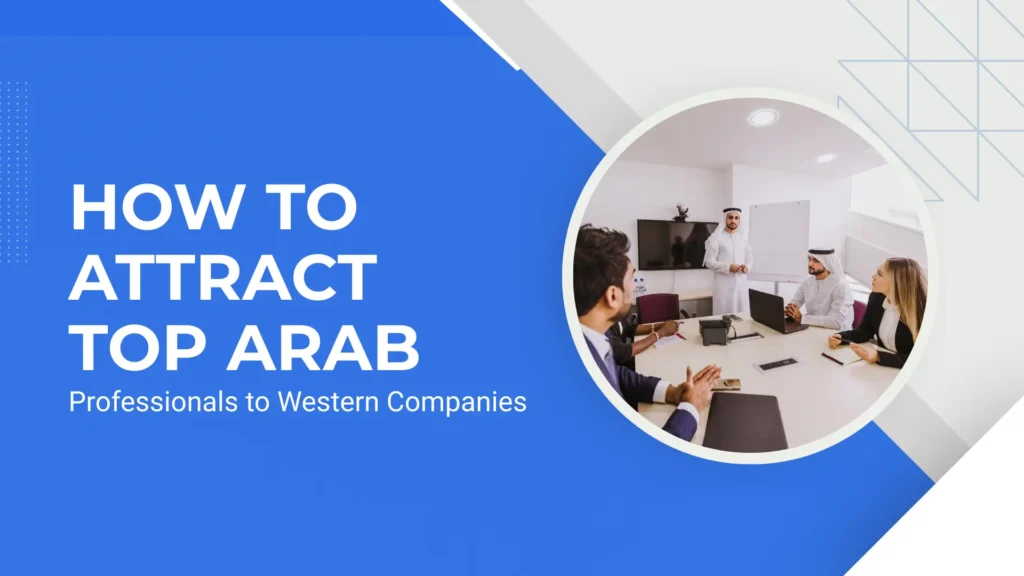
If you are serious about global growth, you cannot afford to ignore Arab talent.
Across the United States and the GCC, highly skilled Arab professionals are building companies, leading engineering teams, managing hospitals, launching fintech products, and driving megaprojects. Yet many Western employers still struggle to connect with this talent in a meaningful way.
Attracting top Arab professionals is not just about posting a job. It is about understanding workforce mobility, cultural nuance, visa realities, and long term career goals that often stretch between the US and the Middle East.
Let’s break this down in practical terms for employers and for professionals navigating these markets.
Why Arab Talent Is a Strategic Advantage
The GCC region is undergoing rapid economic transformation. Saudi Arabia’s Vision 2030 initiatives are creating new industries in tourism, renewable energy, technology, and infrastructure. The UAE continues to strengthen its position as a regional headquarters hub. Qatar remains a strategic center for energy and global events.
At the same time, Arab professionals in the US are deeply embedded in sectors like healthcare, engineering, technology, academia, and entrepreneurship.
When Western companies successfully attract Arab professionals, they gain:
- Bilingual and multicultural communication skills
- Strong networks across the Middle East
- Familiarity with both Western and GCC business norms
- Experience navigating complex regulatory environments
This is particularly powerful in cross border projects, US Arab joint venture project management, and expansion into the GCC business climate.
What Top Arab Professionals Actually Want
Let’s be honest. High performers are not just looking for a salary.
Many Arab professionals are thinking about:
- International mobility
- Stability for their families
- Respectful workplace culture
- Clear career progression
- Visa security
- Opportunities to contribute to regional growth
If you are hiring in Riyadh, Dubai, Doha, or New York, these themes consistently show up in candidate conversations.
Companies that understand this tend to win the best talent.
Hiring in Saudi Arabia: Big Opportunities, Clear Rules
Saudi Arabia is currently one of the most dynamic labor markets in the region. With Saudi Vision 2030 jobs for foreigners increasing across sectors, companies are expanding quickly.
You will see strong demand in:
- Renewable energy jobs Saudi Arabia
- Technology and smart city development
- Healthcare modernization
- Tourism and hospitality
- Megaprojects jobs such as infrastructure and urban planning
Large initiatives such as NEOM have created global interest in neom project jobs and neom careers 2024 roles. However, competition is intense.
For Employers: Setting Up a Team in Saudi Arabia
If you are setting up a team in Saudi Arabia, focus on:
- Understanding local labor laws
- Securing the right sponsorship structure
- Navigating the Saudi Arabia work visa process
- Aligning compensation with local expectations
You also need strong KSA recruitment strategies that combine local hires with international expertise.
Companies expanding into Riyadh often underestimate compliance requirements. Work with specialists who understand both local regulation and international hiring standards.
For Professionals: Working in Saudi Arabia
If you are considering Saudi Arabia:
- Research sector specific demand
- Confirm your qualifications are recognized
- Understand the sponsorship and contract structure
- Ask about relocation support Middle East policies
The opportunity is real, especially in future skills in Arabian Gulf sectors such as AI, sustainability, and digital transformation.
UAE: A Global Talent Magnet
The UAE continues to attract professionals from around the world. The UAE talent pool is diverse, competitive, and highly international.
Dubai in particular stands out for fintech careers Dubai, logistics, hospitality, and tech startups. Many international firms use Dubai free zone setup structures to establish regional operations.
For Employers: Hiring in the UAE
If you are hiring in Dubai or Abu Dhabi:
- Choose the right legal structure
- Understand visa quotas
- Align compensation with the Dubai expat salary guide norms
- Offer family support UAE packages
Expat retention Dubai is closely linked to lifestyle. Professionals often evaluate cost of living Dubai vs USA before accepting offers. Transparent discussions about housing, schooling, and healthcare make a big difference.
Also consider cross cultural training. Many workplace issues are not about competence but communication style.
For Professionals: Working in Dubai as an American
If you are working in Dubai as an American or moving from the US:
- Review your contract carefully
- Understand housing allowances
- Connect with the American community in UAE
- Clarify health insurance and schooling support
The UAE offers strong earning potential, but lifestyle planning is key.
Qatar: Smaller Market, Strong Niche Demand
Qatar recruitment laws are structured and relatively clear, but the market is smaller compared to Saudi Arabia and the UAE.
Key growth areas include:
- Tourism jobs Qatar
- Energy and infrastructure
- Education and healthcare
For employers, compliance and sponsorship rules must be handled carefully. For professionals, contract clarity and relocation packages matter more than ever.
Attracting Arab Professionals to the United States
Now let’s talk about the other direction.
Many Arab professionals are interested in arab tech professionals USA jobs, US healthcare jobs for Arab medical professionals, and research roles.
Visa Realities Matter
For tech roles, the H1B visa for software engineers remains a common pathway. However, it is competitive and lottery based.
For healthcare:
- USMLE for Arab doctors is mandatory for physician licensing
- Nursing license USA requirements vary by state
- Visa sponsorship for healthcare workers can be available but depends on employer and specialty
If you are an employer, do not promise sponsorship casually. Be transparent about timelines and risk. If unsure about specific visa caps or quotas, I could not confirm this information; here is how you can verify it: consult official US immigration authorities or licensed immigration attorneys.
How US Employers Can Compete
To attract Arab professionals:
- Highlight visa sponsorship clarity
- Emphasize diversity and inclusion
- Offer structured onboarding
- Support networking for Arab professionals in USA
Retention improves when companies invest in community integration, not just paperwork.
Cross Cultural Communication Is Not Optional
One of the most overlooked factors in international hiring is cross cultural communication in business.
Arab professionals often value relationship building before direct confrontation. Western managers may prioritize speed and blunt feedback.
Neither approach is wrong. But unmanaged, they cause friction.
Invest in cross cultural training. It is cheaper than replacing talent.
Managing Remote Teams Across Time Zones
Hybrid teams across the US and GCC are common now. Managing remote teams in different time zones requires intentional systems.
Best practices include:
- Rotating meeting times
- Clear written documentation
- Defined escalation processes
- Cultural awareness in communication
In bilingual customer support center Arabic English operations or multilingual call center setup projects, clarity becomes even more critical.
If you are building a 24 7 support team structure across continents, leadership alignment must be strong from day one.
Onboarding and Retention in the Middle East
Onboarding expatriates in Middle East markets requires more than orientation sessions.
Think about:
- Housing assistance
- School placement
- Spousal employment support
- Community integration
Expat retention Dubai and Riyadh retention patterns show that family stability drives long term commitment.
Relocation support Middle East programs that ignore family concerns often fail.
Sector Spotlight: Where Opportunities Are Strongest
Across 2024 and beyond, these sectors show strong demand:
- Technology and digital transformation
- Renewable energy jobs Saudi Arabia
- Fintech careers Dubai
- Tourism jobs Qatar
- Healthcare in both US and GCC
- Large scale megaprojects jobs linked to infrastructure and urban planning
These align closely with GCC economic diversification strategies.
Professionals with bilingual skills and global exposure are especially attractive.
A Quick Word on Specialized Recruiters
Firms such as Arab American Recruiters have built experience placing Arab professionals in the US and GCC. They often support expatriate onboarding and international hiring projects across Saudi Arabia, UAE, and Qatar.
For companies unfamiliar with the region, working with recruiters who understand both markets can reduce risk and cultural missteps.
Industry FAQ
How can businesses set up a team in Saudi Arabia or Dubai?
Start with the legal structure. In Saudi Arabia, clarify sponsorship and labor compliance before hiring. In Dubai, evaluate whether a mainland entity or free zone model suits your business.
Secure work visas early, define compensation clearly, and build a localized HR framework. Cross cultural training should be part of the rollout plan.
What are the requirements for Arab professionals to work in the US or GCC?
In the US, professionals need valid work authorization. For tech roles, the H1B visa is common. For doctors, passing the USMLE is required. Nurses must meet state licensing standards.
In Saudi Arabia, UAE, and Qatar, a valid job offer and employer sponsorship are typically required for work visas. Credential recognition varies by profession.
Always verify requirements through official government portals or qualified legal advisors.
How can expatriates integrate smoothly and stay long term in the Middle East?
Successful integration depends on:
- Family support
- Cultural adaptation
- Community engagement
- Transparent employer communication
Companies that invest in onboarding expatriates in Middle East markets and long term expat retention Dubai strategies see stronger loyalty.
Which sectors offer the strongest opportunities in 2024?
Technology, renewable energy, fintech, tourism, healthcare, and megaprojects remain strong across Saudi Arabia, UAE, Qatar, and the US.
Professionals with skills aligned to Saudi Vision 2030 jobs for foreigners initiatives and GCC economic diversification efforts will likely see sustained demand.
Final Thoughts: Talent Is Global, Strategy Must Be Too
Attracting top Arab professionals to Western companies is not about marketing slogans. It is about understanding mobility, family dynamics, regulatory complexity, and cultural intelligence.
Whether you are building a team in Riyadh, expanding through Dubai free zone setup structures, or recruiting Arab tech professionals in the US, success depends on thoughtful execution.
If you are exploring international hiring or career moves across the US and GCC, you can learn more at Arab American Recruiters.