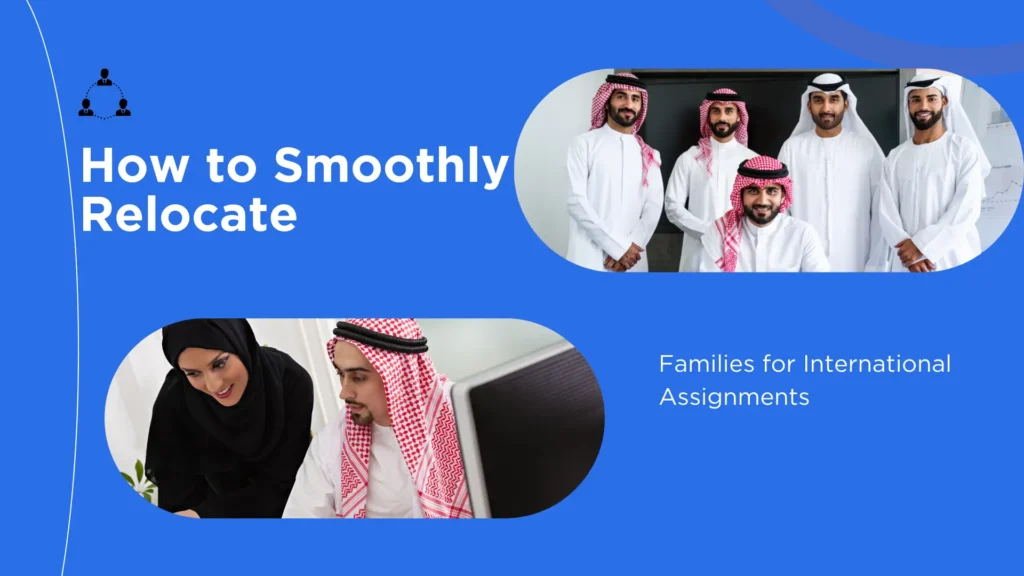
Relocating a professional across borders is one thing. Relocating their entire family is another story altogether. Anyone who has worked in international recruitment or workforce mobility knows this simple truth: if the family is unhappy, the assignment will almost always fail.
For Arab American professionals, US employers hiring internationally, and GCC businesses expanding their teams, family relocation is no longer a “nice to have.” It is a core business strategy. Companies that get it right see higher retention, faster onboarding, and stronger engagement. Those that ignore it deal with early returns, disengaged employees, and damaged employer brands.
In this guide, I’ll walk you through how to relocate families smoothly for international assignments, with a special focus on Saudi Arabia, the UAE, Qatar, and the US. This is written from the perspective of someone who has worked closely on onboarding expatriates in the Middle East and placing Arab professionals across borders.
Why family relocation matters more than ever
Global hiring has changed. Today’s professionals are not just chasing salary. They are thinking about education, healthcare, lifestyle, community, and long-term stability for their families.
In the GCC, massive economic diversification is underway. Saudi Vision 2030 jobs for foreigners, fintech careers in Dubai, renewable energy jobs in Saudi Arabia, and tourism jobs in Qatar are pulling talent from around the world. At the same time, the US continues to attract Arab tech professionals, healthcare workers, and business leaders.
This means employers are no longer competing locally. They are competing globally. And family support has become one of the strongest differentiators in attracting and retaining international talent.
What “smooth relocation” really means
A smooth relocation is not just about booking flights and arranging housing. It is about helping families feel safe, supported, and confident in their new environment.
At a minimum, this includes:
- Clear visa and immigration support
- Housing and school guidance
- Healthcare access and insurance setup
- Cultural orientation and cross-cultural training
- Community integration and social support
- Ongoing check-ins after arrival
When these elements are aligned, employees can focus on their work instead of firefighting personal issues.
For Employers: Building relocation programs that actually work
Start before the offer letter
The best relocation programs begin before a candidate even signs. Employers should be transparent about:
- Cost of living Dubai vs USA or Riyadh vs Houston comparisons
- Schooling options and tuition expectations
- Healthcare access and insurance coverage
- Cultural and lifestyle differences
This upfront honesty builds trust and reduces surprises later. It also helps candidates self-select whether the assignment is right for their family.
Navigating visas and compliance without stress
Visa processes vary widely across regions, and this is often where families feel the most anxiety.
Saudi Arabia:
Companies hiring in Riyadh or across the Kingdom need to manage the Saudi Arabia work visa process carefully. This includes sponsorship, medical checks, and dependent visas for spouses and children. If you are setting up a team in Saudi Arabia, this should be built into your hiring timeline from day one.
UAE:
Whether you are hiring through a Dubai free zone setup or a mainland entity, visa sponsorship is relatively streamlined but still requires documentation, Emirates IDs, and health insurance for dependents.
Qatar:
Qatar recruitment laws include specific requirements for family sponsorship, housing documentation, and employer approvals. Employers must be prepared to guide employees through these steps clearly.
United States:
For Arab professionals relocating to the US, visa pathways may include the H1B visa for software engineers, visa sponsorship for healthcare workers, or employer-sponsored green cards depending on the role and qualifications.
If you are unsure about a specific visa pathway, it is always better to say: “I couldn’t confirm this information; here’s how you can verify it.” Immigration rules change, and accuracy matters.
Housing, schools, and healthcare are not “extras”
These are the three pillars of family stability.
Housing:
Provide realistic guidance on neighborhoods, commute times, safety, and budget ranges. A family-friendly compound in Riyadh or Abu Dhabi feels very different from a high-rise in Downtown Dubai. Context matters.
Schools:
International school placements are often the single biggest stressor for relocating families. Employers should maintain updated lists of reputable schools, admissions timelines, and fee ranges.
Healthcare:
Healthcare access in the UAE, Saudi Arabia, Qatar, and the US varies significantly. Employers must clearly explain insurance coverage, hospital networks, and emergency care procedures.
Cross-cultural training is not optional anymore
Cross-cultural communication in business is one of the most overlooked success factors in international assignments. A technical expert can fail simply because they misunderstand workplace norms, communication styles, or family expectations.
Effective cross-cultural training should cover:
- Workplace culture and leadership styles
- Communication norms and feedback styles
- Social customs, gender norms, and family dynamics
- Education systems and child integration
- Managing remote teams in different time zones
When families receive cultural orientation, not just employees, adjustment is faster and retention improves.
Retention starts after arrival, not before
Many companies stop supporting families after the employee arrives. That is a mistake.
Ongoing retention strategies include:
- Regular check-ins during the first 90 days
- Family satisfaction surveys
- Support groups or networking opportunities
- Assistance with license transfers, spouse employment, and childcare
In markets like Dubai, where expat retention Dubai is a constant challenge, these ongoing supports can significantly extend assignment length and performance.
For Job Seekers: Navigating international careers as an Arab professional
Working in the GCC as an Arab American or international professional
Many Arab professionals are drawn to careers in the Middle East for cultural familiarity, tax advantages, and access to high-growth sectors.
High-demand areas include:
- Renewable energy jobs Saudi Arabia
- Fintech careers Dubai
- Megaprojects jobs tied to Saudi Vision 2030 and NEOM
- Tourism jobs Qatar
- Technology and digital transformation roles across the GCC
If you are considering working in Dubai as an American, understand the compensation structure, benefits, housing allowances, and education support before accepting an offer.
Working in the United States as an Arab professional
The US remains a top destination for Arab tech professionals USA jobs and healthcare professionals.
Common pathways include:
- H1B visa for software engineers and technical roles
- US healthcare jobs for Arab medical professionals
- USMLE for Arab doctors seeking medical licensure
- Nursing license USA for international nurses
- Visa sponsorship for healthcare workers through hospitals and staffing agencies
Each pathway has different timelines, credential requirements, and risks. Always verify licensing and immigration steps directly with official bodies or legal professionals.
Family readiness checklist for job seekers
Before accepting an international offer, ask yourself:
- Are my spouse and children eligible for dependent visas?
- Do I understand schooling options and costs?
- Is healthcare accessible and affordable for my family?
- Will my spouse be able to work or pursue their career?
- Do I have community or cultural support in the destination country?
If any of these are unclear, ask your employer directly. A strong employer will welcome these questions.
Regional insights: Saudi Arabia, UAE, Qatar, and the US
Saudi Arabia: Growth, transformation, and opportunity
Saudi Arabia is in the middle of one of the most ambitious economic transformations in modern history. From smart cities to renewable energy and tourism, the scope is enormous.
Employers hiring in Riyadh and across the Kingdom should understand that:
- Families often need reassurance around schooling, housing, and lifestyle.
- Cultural orientation is critical, especially for Western expatriates.
- Long-term opportunities tied to Saudi Vision 2030 jobs for foreigners make retention strategies more important than ever.
UAE: Global talent hub with high expectations
The UAE has one of the most diverse workforces in the world. Dubai, in particular, attracts talent across finance, tech, healthcare, and creative industries.
Key considerations include:
- Dubai free zone setup options for businesses
- Access to a deep UAE talent pool
- High expectations around lifestyle, schooling, and healthcare
- Competitive expat packages and salary benchmarking
For families, the UAE often feels easier to integrate into, but the cost of living must be managed carefully.
Qatar: Strategic hiring and structured compliance
Qatar’s recruitment environment is more regulated, especially when it comes to housing, sponsorship, and family documentation.
Employers should:
- Clearly explain Qatar recruitment laws and family sponsorship processes
- Provide structured relocation timelines
- Offer strong onboarding expatriates in Middle East programs to support adjustment
With upcoming infrastructure, tourism, and development projects, Qatar continues to offer strong opportunities for skilled professionals.
United States: Opportunity with complexity
For Arab professionals moving to the US, the opportunities are significant but the system is complex.
Key realities:
- Visa sponsorship is competitive and time-sensitive.
- Licensing for healthcare roles is rigorous and time-consuming.
- Family integration depends heavily on healthcare access, schooling, and community networks.
Networking for Arab professionals in USA is one of the most powerful tools for long-term success and integration.
Industry FAQ: Real questions, real answers
How can businesses set up a team in Saudi Arabia or Dubai?
Setting up a team in Saudi Arabia typically involves local entity registration, licensing, and compliance with labor and visa regulations. In Dubai, businesses can choose between mainland registration or Dubai free zone setup depending on ownership and operational needs. Both require careful planning around hiring, sponsorship, and payroll compliance.
What are the requirements for Arab professionals to work in the US or GCC?
Requirements vary by country and profession. In the GCC, most roles require employer sponsorship and a valid work visa. In the US, pathways may include H1B visas, employment-based green cards, or specialized healthcare visas. Licensing requirements also apply in fields like medicine, nursing, and engineering.
How can expatriates integrate smoothly and stay long term in the Middle East?
Successful integration depends on housing, schooling, healthcare access, social connections, and cross-cultural training. Families who receive structured relocation support and ongoing community engagement are far more likely to stay long term.
Which sectors offer the strongest opportunities in 2024?
High-growth sectors include renewable energy, fintech, healthcare, tourism, technology, infrastructure, and megaprojects jobs tied to national development strategies across the GCC and innovation-driven industries in the US.
The role of experienced recruiters in family relocation
Organizations like Arab American Recruiters have built expertise in placing Arab professionals in the US and GCC markets, supporting international hiring projects, and managing expatriate onboarding at scale. Their work often goes beyond recruitment to include family support, compliance coordination, and long-term retention planning.
This kind of holistic approach is what separates transactional hiring from sustainable workforce mobility Arab American .