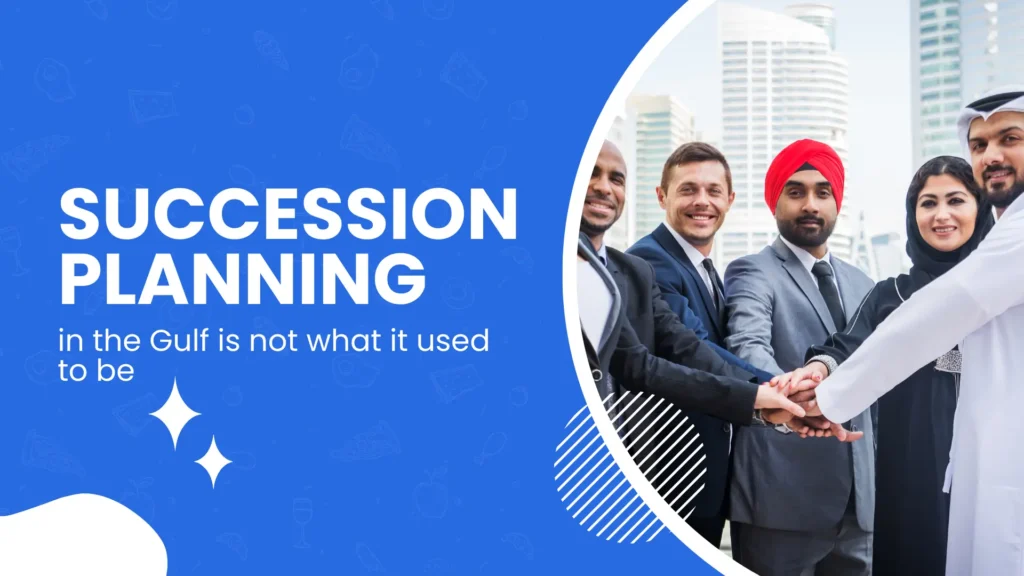
Here’s the thing. Succession planning for multinational companies in the Gulf is no longer just about naming a replacement and moving on. In Saudi Arabia UAE and Qatar the pace of change is fast and the workforce itself is global mobile and increasingly specialized. Leaders retire or relocate. Projects scale up overnight. New regulations appear. Suddenly the person who understands both the local market and the global strategy becomes critical.
For companies expanding across the GCC business climate this means succession planning must be tied directly to recruitment workforce mobility and long term talent development. If you are setting up a team in Saudi Arabia or managing hiring in Riyadh while coordinating with U.S. headquarters the old playbook simply does not work anymore.
What this really means is that succession planning today is a talent pipeline problem not just a leadership problem.
Why multinational companies struggle with succession in the GCC
Many international firms enter the region focused on growth. New offices. New clients. New megaprojects jobs tied to Saudi Vision 2030 or UAE economic diversification. Succession planning often comes later and by then the talent gaps are already visible.
A few common challenges show up again and again.
First is reliance on short term expatriate contracts. Leaders come in for two or three years with limited handover planning. When they leave knowledge leaves with them.
Second is underestimating local hiring dynamics. KSA recruitment and Qatar recruitment laws are not the same as hiring in New York or London. Saudization requirements visa timelines and cultural expectations all shape who can realistically step into future leadership roles.
Third is cross border coordination. Managing remote teams in different time zones while planning successors across the GCC and U.S. requires structure not improvisation.
Succession planning fails when companies treat it as an HR document instead of a living recruitment strategy.
Building succession plans while setting up teams in Saudi Arabia and the UAE
When companies talk about setting up a team in Saudi Arabia the conversation usually starts with licenses and office space. Those matter but the real foundation is people.
In Saudi Arabia especially leadership continuity is tied closely to visa planning and localization strategies. A Saudi Arabia work visa can take time and roles must often be carefully aligned with national workforce goals. That is why succession planning should begin the moment the first hire is made.
A practical approach looks like this.
Hire for growth not just for the current role. When hiring in Riyadh identify candidates who can realistically move into senior roles within two to four years. This includes experienced Saudi nationals and long term expatriates committed to the region.
Pair expatriate leaders with local high potential employees early. Knowledge transfer does not happen automatically. It needs structure mentoring and clear expectations.
Align succession plans with business expansion in GCC market comparison. What works in Dubai may not work in Riyadh or Doha. Free zones such as Dubai free zone setup offer flexibility but mainland operations require deeper localization planning.
In the UAE companies benefit from a deep UAE talent pool and a long history of onboarding expatriates in the Middle East. Still retention matters. Expat retention Dubai strategies like family support UAE housing guidance and schooling assistance directly affect leadership stability.
Megaprojects and future skills are reshaping succession needs
One reason succession planning feels harder now is that the roles themselves are changing.
Saudi Arabia’s megaprojects including NEOM are redefining leadership profiles. NEOM careers 2024 and renewable energy jobs Saudi Arabia demand leaders who understand sustainability technology global partnerships and cross cultural teams. Traditional management experience alone is not enough.
The same applies in fintech careers Dubai tourism jobs Qatar and large infrastructure programs across the region. Future skills in Arabian Gulf markets include digital transformation stakeholder management and international compliance.
Succession planning must ask one simple question. Are we developing leaders for yesterday’s roles or tomorrow’s reality?
Companies that succeed invest early in cross cultural training and exposure across regions. Leaders rotate between GCC and U.S. offices. Project managers gain experience in us arab joint venture project management. This builds a bench of leaders who can step in without disruption.
The U.S. side of the equation matters more than ever
Succession planning for multinational companies is incomplete if it ignores U.S. workforce mobility. Many Gulf based firms rely on American based Arab professionals to bridge markets culture and strategy.
Arab tech professionals USA jobs remain in high demand especially in software data and product leadership. For employers navigating the H1B visa for software engineers is often part of long term succession planning not just immediate hiring.
Healthcare is another area. US healthcare jobs for Arab medical professionals including physicians nurses and allied staff play a role in bilateral talent exchange. Pathways such as USMLE for Arab doctors nursing license USA and visa sponsorship for healthcare workers all shape who can realistically join U.S. operations and later move into regional leadership roles.
Smart companies view USA tech relocation and healthcare recruitment as part of a circular talent flow not a one way move. Leaders gain experience in the U.S. then return to the Gulf with deeper insight and credibility.
Retention is the quiet foundation of succession planning
You can design the perfect succession chart and still fail if people leave.
Retention in the Middle East is not just about compensation. Yes working in Dubai as an American or moving to Riyadh comes with financial considerations. Many professionals compare dubai expat salary guide expectations and cost of living Dubai vs USA before accepting roles. But long term retention depends on daily life.
Relocation support Middle East programs that address housing schooling healthcare and spouse employment make a real difference. Family support UAE initiatives often determine whether a leader stays long enough to become a successor.
Community matters too. The American community in UAE and strong professional networks reduce isolation and improve engagement. Companies that support networking for Arab professionals in USA or regional mentorship programs see better leadership continuity.
Succession planning succeeds when people can picture a life not just a job.
Managing cross cultural teams without losing momentum
Another overlooked piece of succession planning is how teams actually work day to day.
Cross cultural communication in business is not a soft skill anymore. It is operational. Leaders must manage expectations styles and decision making across cultures while coordinating teams in different time zones.
Clear 24/7 support team structure models help global operations run smoothly especially in multilingual environments. Companies building bilingual customer support center Arabic English or multilingual call center setup teams need supervisors who understand both language nuance and customer expectations.
Training future leaders in these environments prepares them for senior roles far better than classroom leadership courses alone.
Where Arab American Recruiters fits into this picture
In many of these scenarios companies and professionals look for guidance that understands both sides of the equation. Arab American Recruiters works with organizations and individuals navigating succession planning through smart international recruitment and onboarding.
Based in the U.S. and working closely with GCC markets Arab American Recruiters supports placement of Arab professionals in the U.S. and the Middle East helps companies manage onboarding expatriates in the Middle East and connects employers with talent aligned to long term leadership needs ARAB AMERICAN
Questions leaders and professionals keep asking
How can businesses set up a team in Saudi Arabia or Dubai while planning for succession
Start with roles that have growth potential not just immediate deliverables. Align hiring with local regulations early and build mentoring between expatriate and local staff from day one. Succession planning should be part of the initial setup not an afterthought.
What are the requirements for Arab professionals to work in the U.S. or GCC
Requirements vary by country and profession. In the U.S. this may include H1B visas professional licensing or healthcare exams. In the GCC it often involves employer sponsorship and country specific work permits. Planning ahead makes these pathways far smoother.
How can expatriates maximize retention and integrate smoothly in the Middle East
Focus on understanding local culture building community and seeking employers who offer real relocation and family support. Integration is faster when companies invest in cross cultural training and clear onboarding processes.
Which sectors offer the best opportunities for Arab professionals in 2024
Technology healthcare renewable energy fintech tourism and large scale infrastructure projects continue to grow. Saudi Vision 2030 jobs for foreigners and regional economic diversification are creating leadership pathways across multiple industries.
Succession planning is really about continuity and trust
At its core succession planning in the Gulf is about trust. Trust that when leaders move on the business will not lose momentum. Trust that talent pipelines are real not theoretical. Trust that people can grow across borders cultures and markets.
For multinational companies operating between the GCC and the U.S. the strongest succession plans are built through thoughtful recruitment realistic mobility planning and genuine investment in people ARAB AMERICAN.