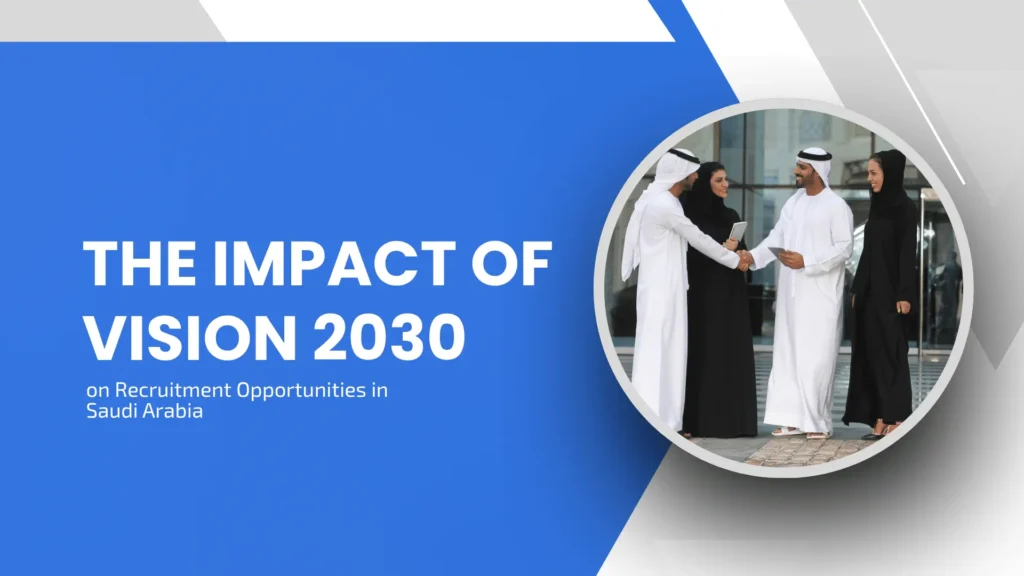
If you’ve been keeping an eye on the global job market, you’ve probably noticed that Saudi Arabia is having a major moment. It’s not just oil anymorethough that’s still a big dealit’s about a full-scale economic and social transformation that’s creating waves in industries from tech to tourism. For Arab American professionals, US employers, and GCC-based businesses, this shift is opening up doors that were barely cracked open a few years ago.
This isn’t just a minor adjustment in the global economy; it’s a complete rewrite of the rules. Let’s dive into what Vision 2030 actually means for anyone thinking about hiring in Riyadh, setting up a team, or looking for a career change in the region.
What Is Vision 2030 Really Changing?
At its core, Vision 2030 is Saudi Arabia’s blueprint to diversify its economy away from oil dependency. The government is pouring serious money into new sectors, and that creates a massive demand for skilled professionals . We’re talking about a knowledge-based economy where things like tech, finance, healthcare, and renewable energy take center stage .
For us in the recruitment world, this means a huge shift in where the jobs are. It’s no longer just about finding engineers for oil rigs (though that is still a thing). Now, we’re talking about neom project jobs, roles in fintech, and opportunities in tourism that didn’t exist a decade ago . If you’re an Arab professional in the US with skills in these areas, the landscape just got a lot more interesting.
The New Rules for the Saudi Arabia Work Visa and Hiring
One of the biggest hurdles for international hiring has always been the bureaucracy, especially around the saudi arabia work visa process. Historically, it was a bit of a maze. But the Kingdom has streamlined a lot of the process to attract global talent.
For employers thinking about setting up a team in saudi arabia, the mechanics are becoming clearer. The government has introduced instant work visa issuance for companies looking to expand or recruit for the first time . For businesses, this means the barrier to entry is much lower than it used to be.
You need to get your legal entity sorted, register with platforms like Qiwa and GOSI, and make sure all contracts are documented digitally . But the message is clear: Saudi Arabia wants you to bring your business here, and they’re making the process easier.
However, let’s be real: “easier” doesn’t mean you can ignore the rules. The labor market has become more structured. For companies, understanding the Nitaqat (Saudization) regulations is crucial. These are the rules that set quotas for hiring Saudi nationals . It’s a system that’s actually workingover 2.48 million Saudis have entered the private sector since 2020 . This is great for the country, but it means international employers need to be strategic about how they mix local and expat talent.
A Word on the Megaprojects
Now, let’s talk about the elephant in the room: the megaprojects. Neom, The Line, and Trojena are all huge parts of the Vision 2030 narrative. They’re ambitious, futuristic, and create a lot of buzz . However, as we’ve seen recently, they aren’t immune to economic realities. There have been reports of slowdowns, layoffs, and shifts in priorities as the government reassesses its massive investments .
Does this mean the opportunities are gone? Absolutely not. But it means you need to be smart. The focus is shifting. The demand for talent is moving from pure construction to high-level tech, cybersecurity, and AI. For instance, you’ll see roles advertised for cybersecurity managers for the neom project jobs these are specialized, high-skill positions that are still very much in demand. The days of the massive salary premium for any foreign specialist might be cooling off as the market matures , but the need for top-tier expertise is only growing.
GCC Market Comparison: Where Else to Look
While Saudi Arabia is the big story, it’s worth doing a gcc business climate comparison, especially if you’re looking at regional expansion. The UAE, particularly with its dubai free zone setup, has long been the traditional gateway to the region. The infrastructure is mature, and the uae talent pool is incredibly diverse. The free zones offer 100% foreign ownership and tax exemptions, which are still massive draws for international companies.
Qatar is also in the game, hosting the World Cup a few years back and continuing to invest in its infrastructure and tourism sectors. However, qatar recruitment laws can be strict, and the market is smaller. For many businesses, the choice between setting up in KSA and the UAE comes down to market size vs. ease of entry. Saudi offers the bigger market and the more aggressive transformation, while the UAE offers a more established, easier-to-navigate ecosystem.
The Human Side: Onboarding and Retaining Expats
So, you’ve landed the job or hired the talent. What next? This is where the success of onboarding expatriates in middle east truly matters. It’s about more than just a contract. Relocation support, housing allowances, and schooling are all part of the package. Saudi’s labor reformslike the ability to change jobs without an employer’s permissionhave significantly improved worker mobility, which is good for retention .
But culture matters. You can’t just drop someone into Riyadh and expect them to thrive without some guidance. This is where cross-cultural training is non-negotiable. The work week is Sunday to Thursday in KSA, while it’s Monday to Friday in the UAE and Qatar. Understanding local customs, business etiquette, and even the pace of work can make or break an expat’s experience. For companies, investing in expat retention dubai or KSA means creating a support system. It’s about helping families settle in, providing connections within the american community in uae or similar groups in Saudi, and creating a sense of belonging.
A View Back Home: The US Market
While the GCC is booming, let’s not forget that Arab American professionals also face unique challenges and opportunities in the US. The demand for specific skills is high, but the pathway is often tricky. For instance, many tech companies are looking for arab tech professionals usa jobs, and the h1b visa for software engineers remains the most common, if not frustrating, route.
For healthcare professionals, the path is equally complex. Passing the usmle for arab doctors and getting a nursing license usa are huge hurdles, but the demand is there. Employers in the US are increasingly providing visa sponsorship for healthcare workers because the domestic talent pool just isn’t meeting the demand. This creates a two-way street: you can find amazing opportunities in the US, but if you’ve got the skills, the Middle East is also calling.
FAQ: Answering Your Burning Questions
Let’s wrap up with some practical advice for those navigating this dynamic job market.
Q: How can businesses set up a team in Saudi Arabia or Dubai?
The steps are similar but have distinct local flavors. In Saudi, you need to set up a legal entity via the Ministry of Investment (MISA), get a commercial registration, and register all employees on government platforms like Qiwa and GOSI . It’s a bit bureaucratic but getting more streamlined. In Dubai, a dubai free zone setup is often the easiest route, offering 100% ownership and simplified licensing for specific zones.
Q: What are the requirements for Arab professionals to work in the US or GCC?
In the US, for a work visa, you usually need a sponsoring employer and a petition approved by USCIS (like an H-1B). In the GCC, the process is employer-driven. Your company handles the saudi arabia work visa or UAE residence visa. You’ll need to pass a medical exam, have a clean criminal record, and have your degree attested.
Q: How can expatriates integrate smoothly and stay long term in the Middle East?
Integration is about mindset. For long-term success in places like KSA, learn some Arabic, understand the local culture, and respect Islamic traditions. Also, financial planning is key. Know your cost of living dubai vs usa or Riyadh vs your home city. Organizations like Arab American Recruiters specialize in helping professionals navigate these moves and find roles where they can thrive long-term. Building a community and having solid relocation support middle east makes a huge difference.
Q: Which sectors offer the strongest opportunities in 2024-2025?
The future is bright in tech, especially fintech careers dubai and AI roles in Riyadh. Renewable energy jobs saudi arabia are booming, as are opportunities in tourism and entertainment. There’s also a massive focus on cybersecurity, especially related to neom project jobs .
Your Next Move
The landscape of international recruitment is shifting, and Saudi Arabia is firmly in the driver’s seat. Whether you’re an employer looking to tap into new markets or a professional considering a move, the time to act is now.
If you’re wondering how to make sense of this complex market, it pays to have a partner who understands both sides of the equation. For US companies looking to hire in the Gulf, or for Arab professionals looking to navigate the US or GCC job markets, partnering with an expert can save you time and headaches. Arab American Recruiters specialize in this exact space, helping connect top talent with leading employers and ensuring a smooth transition for international hires. We focus on the nuances of relocation support middle east and cross-cultural training to help professionals hit the ground running.
If you’re looking to hire or get hired in this exciting new era, contact us today to see how we can help you make the connection. The future of work is here, and it’s a global one.