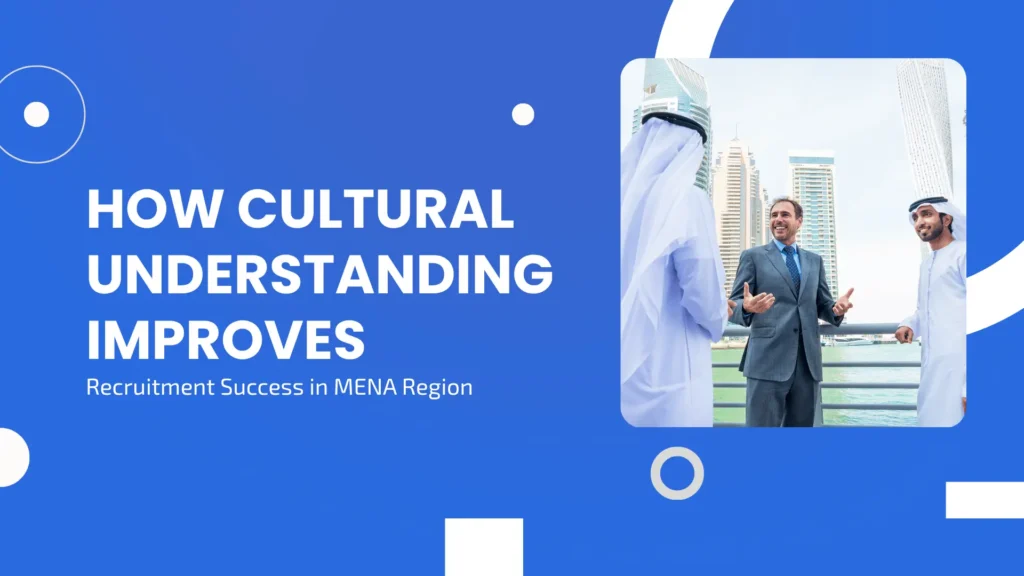
Let’s be real for a second. Hiring across borders isn’t just about matching a resume to a job description. When you’re dealing with the Middle East and North Africa (MENA) regionspecifically high-energy hubs like Saudi Arabia, the UAE, and Qatarculture isn’t a soft skill. It’s the entire ballgame.
Whether you’re a US employer trying to crack the Gulf market, a GCC business scaling up, or an Arab American professional weighing your next move between Chicago and Dubai, the secret sauce to success isn’t just a competitive salary. It’s cultural fluency.
I’ve seen too many promising international hires fall apart not because of a lack of talent, but because of a lack of wasta (the nuanced concept of networking and connections) or a misunderstanding of local workweek rhythms. Let’s fix that.
Why Your US Hiring Playbook Won’t Work in Riyadh
If you are a US employer used to hiring in New York or Texas, you need to leave your assumptions at the door. The GCC business climate operates on relationship-first principles.
In the West, we often get straight to business: “Here’s the contract, here’s the deadline.” In the MENA region, specifically when setting up a team in Saudi Arabia, you have to invest time in getting to know the person before the pen hits the paper. Rushing through the “small talk” about family or mutual connections is perceived as rude and untrustworthy.
For example, if you are hiring in Riyadh right now, you need to understand that the entire market is shifting due to Saudi Vision 2030 jobs for foreigners. This isn’t just a policy; it’s a cultural revolution. Saudis and expats alike are looking for employers who respect local heritage while embracing modernization. If your onboarding process ignores Friday as a sacred day or schedules meetings during prayer times, you’ve already lost the trust of your local talent pool.
The Visa Maze: Beyond the Paperwork
Let’s talk logistics, because cultural understanding also means respecting the bureaucratic realities of the region.
When recruiting for the Gulf, you cannot treat a Saudi Arabia work visa like an H1B. The process involves employer sponsorship, medical tests, and biometrics that feel invasive to an American but are standard procedure in the Kingdom. A culturally intelligent recruiter will prepare the candidate for this. They won’t just hand them a flight ticket; they will explain why the process takes time and what to expect at every step.
Similarly, if you are looking at Dubai free zone setup, you have a massive advantage. Free zones (like DIFC or DMCC) offer streamlined visa processes and 100% foreign ownership. However, the cultural trap here is speed. Dubai runs on “soon” and “Inshallah.” A US manager might hear a deadline for a visa medical and panic when it slips by a day. A culturally aware manager builds in buffer time and understands that flexibility is a survival skill in the Gulf.
The Arab American Advantage: The Golden Bridge
Here is where things get exciting for job seekers. Arab American professionals possess a superpower right now: they understand the legal and business frameworks of the US, but they speak the cultural language of the Gulf.
For US employers struggling to retain expats in the Middle East, these bilingual professionals are your best bet. They don’t suffer from the same culture shock that plagues a Westerner moving straight from Iowa to Doha.
Speaking of opportunities, the demand for Arab tech professionals USA jobs is exploding. But the reverse is also true. With the h1b visa for software engineers becoming a lottery mess, many Arab Americans are looking back East. Careers in Middle East for Westerners are no longer just oil and gas. We are talking fintech careers Dubai, renewable energy jobs Saudi Arabia, and tourism jobs Qatar ahead of the 2022 World Cup legacy.
Companies like Arab American Recruiters have built their reputation on bridging this exact gapplacing Arab professionals in the US and GCC by respecting the cultural nuances that generalist agencies miss. They focus on expatriate onboarding that actually feels warm, not just transactional.
Sector Deep Dive: Where the Jobs Are Right Now
Forget the old narrative of “just going to Dubai to party.” The professional landscape has matured.
- Saudi Arabia (The Megaproject Hub): We are talking NEOM project jobs and NEOM careers 2024. The Line, Oxagon, Trojenathese are sci-fi projects becoming reality. They need project managers, logistics experts, and sustainability engineers. If you have experience in us arab joint venture project management, you are gold dust right now.
- UAE (The Fintech & Logistics Hub): The uae talent pool is the most diverse on earth. Working in Dubai as an American means you are competing with the best from Europe, Asia, and the Middle East. The Dubai expat salary guide shows that while tax-free income is great, the cost of living dubai vs usa is comparable or higher for housing. Do your math, but don’t discount the lifestyle value.
- Qatar (The Steady Hand): Qatar recruitment laws have modernized significantly (hello, minimum wage and labor reforms). They are stable and looking for healthcare and education professionals.
For those looking to move to the US, the door is open for specialized skills. Us healthcare jobs for arab medical professionals are in high demand. Usmle for arab doctors is a tough road, but hospitals are actively sponsoring visa sponsorship for healthcare workers due to massive shortages. Similarly, nursing license usa conversion programs are becoming more Arab-friendly.
The Retention Secret: Onboarding is a Family Affair
You can hire the best engineer from Cairo, but if his spouse is miserable in Jeddah, he is leaving in six months. Period.
Expat retention Dubai and Riyadh hinges on relocation support middle east and family support uae. A culturally smart employer doesn’t just offer a flight allowance. They help find schools, they help the spouse find a network (like the american community in uae), and they offer cross-cultural training for the whole family, not just the employee.
We call this onboarding expatriates in middle east with dignity. If you are a hiring manager, budget for a “cultural navigator” or a concierge service for the first 90 days. It costs far less than replacing a senior leader who left because their kid hated the school.
Managing Remote Teams Across Time Zones
One of the trickiest parts of business expansion in gcc market comparison is the time zone dance. The GCC is 7 to 11 hours ahead of US Eastern Time.
Managing a remote team across these hours requires what I call “asynchronous empathy.” Don’t demand a 4 PM meeting that is 1 AM in Dubai. Instead, record video updates. Respect that Friday is their Sunday. For teams that do overlap (like early morning UAE and late evening US), use that two-hour window for deep work.
If you are running a multilingual call center setup or need bilingual customer support center arabic english, location matters. Egypt and Jordan have incredible talent pools for talent for arabic customer service, but they work different hours than the US. A 24/7 support team structure requires a manager who understands Ramadan hours (shorter, high-intensity shifts) and Eid holidays.
FAQ: Your Burning Questions, Answered
How can businesses set up a team in Saudi Arabia or Dubai without messing it up?
First, don’t DIY the legal part. For Saudi, use a local sponsor or a specialized PEO (Professional Employer Organization) to handle the ksa recruitment compliance. For Dubai, look at Dubai free zone setup options like Meydan or DMCCthey give you a visa and bank account in weeks, not months. Second, hire a local HR consultant to teach you the labor laws (Saudization, Emiratization). Third, pay for cross-cultural training for your US managers before they land.
What are the requirements for Arab professionals to work in the US or GCC?
For the US: You generally need an employer to sponsor an h1b visa for software engineers or a green card. For medical pros, passing the usmle for arab doctors or getting a nursing license usa is step one. For the GCC: You need a job offer first (the employer sponsors the visa). For a Saudi Arabia work visa, you’ll need authenticated degrees and a medical test. For Dubai, you need a medical fitness test and an Emirates ID. The process is faster than the US, but you cannot “job hunt” on a tourist visa easily anymore.
How can expatriates integrate smoothly and stay long term in the Middle East?
Join physical groups. The american community in uae is very active. Take Arabic lessonsnot to be fluent, but to show respect. Understand that you will experience a “dip” at month three (homesickness) and month six (frustration with bureaucracy). The people who stay long-term accept the chaos. They also ask their employers for family support uaegetting the spouse a freelance visa or help finding work is a massive retention tool.
Which sectors offer the strongest opportunities in 2024?
Without a doubt: Renewable energy jobs Saudi Arabia (solar and hydrogen), Fintech careers Dubai (crypto and digital banking), Tourism jobs Qatar (hospitality management), and Megaprojects jobs (construction and engineering for NEOM). Also, don’t sleep on Future skills in Arabian gulf like AI and data analytics. The region is spending billions to diversify away from oil, and they need international talent to do it.
The Bottom Line (Without the Jargon)
Look, the MENA region isn’t scary. It’s just different. And different requires respect.
For US employers: Don’t assume your way is the only way. If you are setting up a team in saudi arabia, lead with humility. For Arab American pros: Your dual perspective is a weapon. You can walk into a boardroom in Boston and a majlis in Abu Dhabi on the same day. That is valuable.
If you need a partner who speaks both languages (literally and culturally), check out the team at Arab American Recruiters . They’ve been doing the heavy lifting on expat retention and cross-cultural communication in business for years. They understand that hiring isn’t just filling a seatit’s building a bridge.
Now go hire someone great. And buy them coffee before you ask for their passport.