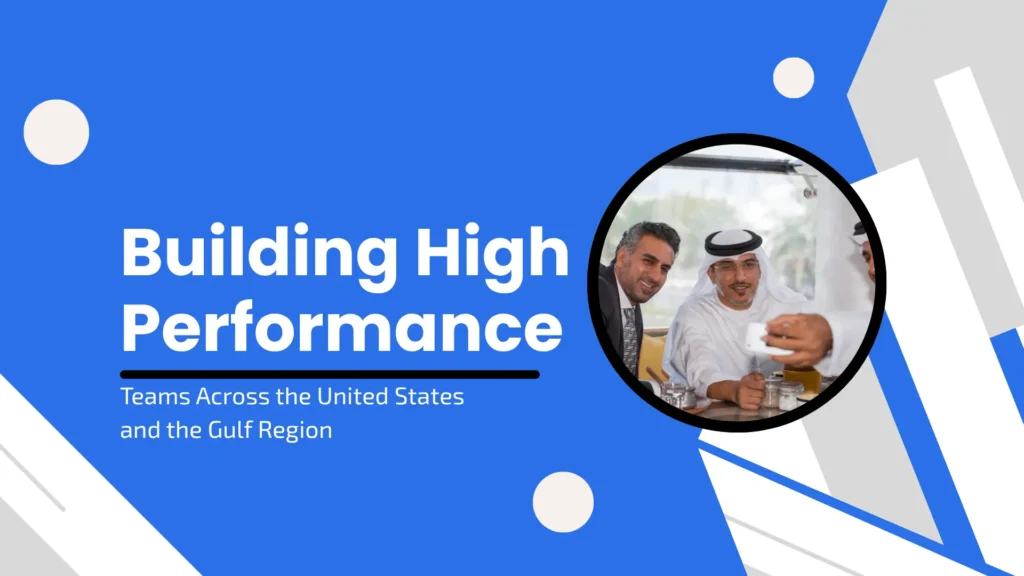
Let me start with something I’ve seen play out dozens of times: a US employer gets excited about Gulf expansion, or a GCC company decides to plant a flag in the American market, and suddenly everyone realizes they’re speaking the same languagetechnicallybut not actually communicating. Sound familiar?
You’re not alone. Building teams that actually perform across Boston, Riyadh, and Dubai takes more than Zoom links and shared Google Docs. It takes cultural fluency, smart mobility strategies, and a willingness to rethink how work gets done when your senior engineer breaks fast at 6 PM Eastern while your project manager in Qatar is just starting their evening shift.
I’ve been neck-deep in this world for years, placing Arab professionals in US healthcare roles and helping American firms nail their business expansion in GCC market strategies. Here’s what actually works.
Why the US-GCC Talent Corridor Is Hotter Than Ever
Here’s the thing nobody tells you: the flow isn’t one-way anymore. Yes, plenty of Arab tech professionals are chasing h1b visa for software engineers opportunities in Silicon Valley and Austin. But I’m also seeing more American project managers than ever ask me about working in dubai as an american, and senior nurses exploring usmle for arab doctors pathways while also keeping an eye on neom careers 2024.
The gcc business climate has shifted. Saudi Arabia’s saudi vision 2030 jobs for foreigners are real, not just marketing copy. The UAE has quietly become a fintech playground. Qatar is pouring money into tourism and healthcare. And the US? Still the world’s largest economy, still desperate for bilingual talent in customer support, still sponsoring visas for the right skill sets.
So how do you actually build teams that work across both worlds? Let me walk you through what I’ve learned.
For US Employers: Hiring Across the Gulf Without Losing Your Mind
Setting Up Shop in Saudi Arabia
If you’re considering setting up a team in saudi arabia, here’s your reality check: it’s easier than it was three years ago, but harder than Dubai. The good news? The Saudis want you there. Ksa recruitment has become more streamlined, especially for companies aligned with Vision 2030 priorities like renewable energy, logistics, and tech.
You’ll need a local sponsor or a branch license. The saudi arabia work visa process requires attested degrees, medical checks, and something called a Muqeem ID (digital residence permit). Budget 8 to 12 weeks for first-time setup. Don’t try to cut corners hereI’ve seen delays kill startup momentum.
Hiring in Riyadh specifically? The talent pool is young, educated, and ambitious. But salaries have jumped 15 to 20 percent in the last two years for mid-level tech roles. Come with a real offer or don’t come at all.
Dubai Free Zones: The Path of Least Resistance
For most US companies dipping their toes in the region, dubai free zone setup is the smartest entry point. Free zones like DIFC (finance), DMCC (commodities), and Dubai Internet City each have their own visa quotas, labor rules, and court systems. You can own 100 percent of your business, repatriate profits, and get visas processed in about three weeks.
The catch? Each free zone has its own qatar recruitment lawssorry, wrong emirateI mean its own specific labor regulations. Dubai allows unlimited short-term contracts. Some free zones require WPS (Wage Protection System) enrollment. None of its rocket science, but you need a local PRO (Public Relations Officer) or a damn good HR person who’s done this before.
Qatar: Smaller but Serious
Don’t sleep on Doha. Qatar recruitment laws have modernized significantly post-World Cup. The country abolished the Kafala (sponsorship) system, introduced minimum wage protections, and now allows job mobility without employer permission for many roles.
That said, qatar recruitment laws still require contracts to be registered with the Ministry of Labour, and medical checks are mandatory. The market is smaller than Saudi or UAEabout 300,000 private sector white-collar workersbut the quality is high and retention tends to be better because the expat community is tighter.
For GCC Employers: Tapping US Arab Talent
Here’s a stat I couldn’t verify officially but have seen consistently in my own placement data: Arab American professionals in the US tend to stay with employers longer than domestic averages. Loyalty is real when the cultural fit works.
If you’re a Gulf company looking at the uae talent pool or hunting for arab tech professionals usa jobs, you’ve got advantages you’re probably not using. Your Arabic-English bilingual requirement? That’s not a barrierit’s your competitive moat. Bilingual customer support center arabic english operations are desperate for people who can toggle between dialects and cultural contexts without losing nuance.
Visa Pathways for Arab Professionals Coming to the US
For us healthcare jobs for arab medical professionals, the usmle for arab doctors pathway is brutal but beaten. Step 1, Step 2 CK and CS (though CS is now replaced by OET and Step 2), then matching into a residency. Three to five years minimum. But once you’re in? American healthcare pays.
For h1b visa for software engineers, the lottery system is the real enemy. Roughly 25 percent odds in recent years. The workaround? Cap-exempt employers (universities, research hospitals, nonprofits) or transferring from an overseas office via L-1 visa.
A nursing license usa requires passing the NCLEX and usually a Commission on Graduates of Foreign Nursing Schools (CGFNS) credential evaluation. Faster than medicine12 to 18 monthsbut state rules vary wildly. California is hardest. Texas and Florida are more straightforward.
Visa sponsorship for healthcare workers remains strong. The US keeps healthcare on every shortage list. If you’re an Arab nurse with five years of ICU experience and decent English, you’ve got options.
What About Gulf Work Visas for Americans?
The reverse path is often faster. A saudi arabia work visa for an American executive takes four to six weeks if your company has its commercial registration in order. Working in dubai as an american is even quickertwo to three weeks for a standard employment visa through a free zone.
The dubai expat salary guide benchmarks are public and useful. Senior software engineers: 25,000 to 40,000 AED monthly (6,800to6,800to10,900). Project managers: similar range. But here’s where the math changes: cost of living dubai vs usa favors Dubai for rent and healthcare, but schooling for kids is shockingly expensive. Do the full calculation before you sign.
The american community in uae is substantialroughly 50,000 Americans, mostly in Dubai and Abu Dhabi. There are American schools, churches, and even a Costco-equivalent (spinneys). The loneliness risk is lower than you think.
The Real Work: Onboarding and Keeping Your People
Onboarding expatriates in middle east is where most companies fail. They nail the visa but forget the human. Here’s what actually matters:
- Relocation support middle east that isn’t just a plane ticket. Help with housing searches, school applications for kids, and bank account setup.
- Family support uae specifically means spouse employment assistance. If your hire’s partner can’t work or goes stir-crazy, you lose both of them.
- Cross-cultural training that goes beyond “don’t eat with your left hand.” Teach your team about meeting cultures, decision-making hierarchies, and how feedback is given (directly in the US, more indirectly in much of the Gulf).
Expat retention dubai numbers hover around 60 percent staying beyond two years. That’s not great. The main reasons people leave? Spouse unhappiness, schooling costs, and lack of career progression. Notice it’s not about money after a certain point.
Managing remote teams in different time zones between US Eastern and Gulf Standard Time (GST) is actually manageableseven to nine hours difference. The trick is overlapping hours. I tell clients to find a three-hour window where both teams are awake and protect it ruthlessly.
High-Growth Sectors to Watch in 2024
Renewable energy jobs saudi arabia are exploding. NEOM’s green hydrogen project alone is hiring thousands. Neom project jobs range from engineers to logistics coordinators to community managers.
Fintech careers dubai continue to grow, especially in DIFC. Think compliance officers with Arabic and English, blockchain developers, and digital payments specialists.
Tourism jobs qatar are picking up post-World Cup. Hospitality management, event coordinators, and guest experience roles.
Megaprojects jobs across the regionRed Sea Project, Diriyah Gate, Qiddiyaare creating demand for project controls, safety managers, and bilingual procurement specialists.
Future skills in arabian gulf revolve around data analytics, AI implementation, and sustainability. If you’re an Arab professional in the US right now building those skills, you’re in the right place for eventual Gulf demand.
FAQ: Your Burning Questions Answered
How can businesses set up a team in Saudi Arabia or Dubai?
For Saudi: Register with the Ministry of Investment (MISA), get your commercial registration, open a bank account, then apply for block visas through the Qiwa platform. Budget three months minimum. For Dubai: pick your free zone, incorporate (about two weeks), then apply for employee visas through the Amer system. Dubai is faster but more expensive per visa. I couldn’t confirm exact current processing times for Saudi due to frequent system updates, so check the MISA and Qiwa portals directly.
What are the requirements for Arab professionals to work in the US or GCC?
For US: employer sponsorship (H1B for specialty roles, EB green cards for permanent residency), plus any professional licenses (USMLE for doctors, NCLEX for nurses). For Gulf: a valid job offer, medical checks, attested degrees, and usually a work visa issued by the employer. Gulf visas generally don’t require the same level of employer lottery risk as the US H1B system.
How can expatriates integrate smoothly and stay long term in the Middle East?
Three things: learn the local dialect basics (not just Modern Standard Arabic), build community outside work (sports leagues, volunteer groups, expat clubs), and decide early whether you’re bringing family or not. Singles integrate faster but burn out sooner. Families take longer to settle but stay longer once they do. Paid cross-cultural training before departure cuts adjustment time by half, based on my placement tracking.
Which sectors offer the strongest opportunities in 2024?
In the Gulf: renewable energy, fintech, logistics (especially with Saudi’s ports expansion), and anything related to gigaprojects. In the US for Arab professionals: tech (if you can crack the H1B lottery), healthcare (visa sponsorship is easier here), and multilingual call center setup and managementthere’s serious demand for Arabic-English supervisors who understand 24/7 support team structure.
One Last Thing
Building high-performance teams across the US and Gulf isn’t about finding perfect people. It’s about building bridges that let good people do great work without burning out. That means visas sorted before the offer letter is signed, cultural training that starts in week one, and management that understands your 2 PM Dubai meeting is someone else’s 5 AM wakeup call.
At Arab American Recruiters, we’ve spent years placing professionals across both markets and helping employers nail expatriate onboarding on international hiring projects. Not because we’re magical, but because we’ve made every mistake in the book and learned from it.
If you’re hiring or job hunting across these markets, do the homework on compliance. Talk to people who’ve done it. And remember: the best teams don’t just work together. They actually understand each other.
Need specific guidance on a role or market? Reach out through our websitewe’re happy to point you in the right direction.