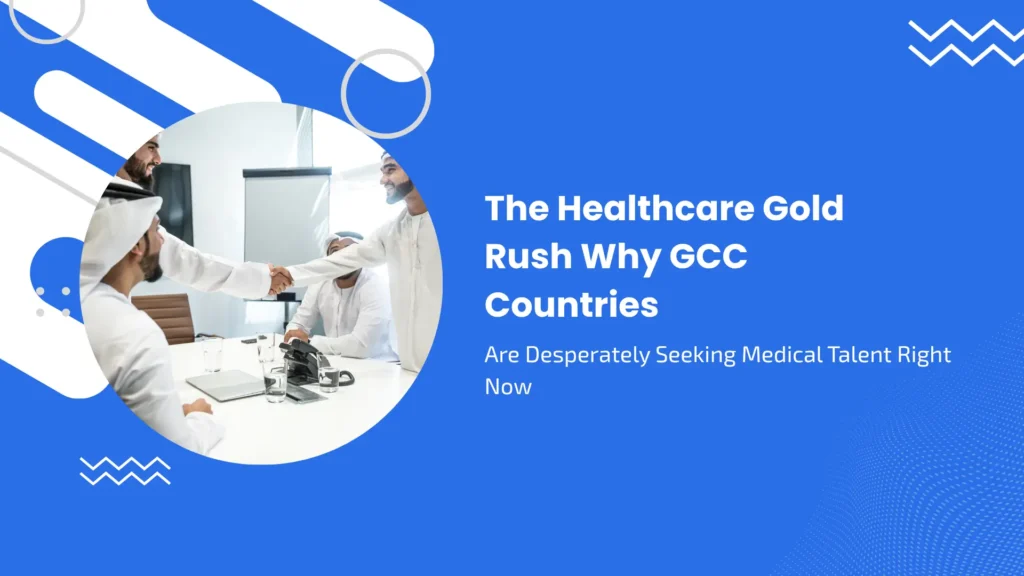
If you’ve been watching the global job market lately, you’ve probably noticed a massive shift happening in the Middle East. And no, it’s not just about oil anymore. The Gulf Cooperation Council (GCC) countries Saudi Arabia, the UAE, and Qatar in particularare in the middle of a full-blown healthcare transformation that’s creating an unprecedented demand for medical professionals from around the world.
So, if you’re an Arab American healthcare professional sitting in the US wondering if the grass is greener on the other side, or if you’re an employer trying to figure out how to tap into this growing market, keep reading. This is where the action is.
What’s Driving This Massive Surge in Healthcare Demand?
Let’s start with the numbers, because they’re honestly staggering. Healthcare expenditure in the GCC is projected to hit a whopping $159 billion by 2029, growing at an annualized rate of 7.8% . That’s not small changeit’s a signal that these countries are investing heavily in their healthcare infrastructure.
The GCC Statistical Centre recently dropped some eye-opening data: there are now about 413,200 nurses working across GCC countries, and that number has been growing at an average annual rate of 4.6% . Over the past decade alone, the region added about 150,000 nurses to its workforce . Nursing staff now makes up about 30.3% of the total healthcare workforce .
But here’s the kickerthey’re nowhere near done. Saudi Arabia alone plans to add roughly 175,000 healthcare workers by 2030, including around 64,000 nurses . That’s part of their Vision 2030 economic diversification plan, which is basically the Kingdom’s blueprint for moving beyond oil dependency .
Driving this demand is a combination of factors:
- Aging populations requiring more specialized care
- Rising non-communicable diseases like diabetes and heart conditions
- Expanded health insurance coverage across the region
- Major infrastructure projects that need staffingincluding those mega-projects you’ve been hearing about
- The push for digital transformation in healthcare
The demand for healthcare professionals isn’t just limited to doctors and nurses either. The region needs tech-savvy health workers who can navigate AI diagnostics, precision medicine, and digital health records . This is where the healthcare sector is heading globally, but the GCC is moving fast.
The Big Players: Saudi Arabia, UAE, and Qatar
Saudi Arabia: The Vision 2030 Powerhouse
When we talk about business expansion in GCC market comparison, Saudi Arabia stands out as the 800-pound gorilla. The Kingdom is investing massive amounts in healthcare as part of its Vision 2030 goals .
Major cities like Riyadh, Jeddah, and Mecca are emerging as healthcare hubs . More than 50% of government jobs in recent announcements have been in the health sector . We’re talking nursing specialists, resident physicians, radiology specialists, pharmaciststhe whole gamut .
If you’re considering setting up a team in Saudi Arabia in the healthcare space, you’re looking at a market that’s hungry for talent. But be preparedthe saudi arabia work visa process requires navigating the Saudi Commission for Health Specialties (SCFHS) licensing system, which has its own specific requirements for international qualifications .
UAE: Dubai and Abu Dhabi as Regional Hubs
Dubai continues to be the expat destination of choice for many, and healthcare is no exception. The Dubai healthcare market is particularly active, with ongoing recruitment drives from both public and private sector players . The dubai free zone setup in healthcare areas like Dubai Healthcare City offers specific advantages for medical businesses looking to establish a presence.
Abu Dhabi has also been making moves, with facilities like Sheikh Shakhbout Medical City actively hiring specialists . The UAE has been particularly welcoming to professionals with American Board certifications, and the uae talent pool reflects this international flavor .
Qatar: The 2022 Legacy Continues
Qatar has been investing heavily in healthcare as part of its post-World Cup development plans. The licensing pathway through Qatar’s Department of Healthcare Professions (QCHP) has become more streamlined . Qatar recruitment laws have been evolving to facilitate the hiring of international talent, particularly in specialized areas like family medicine and emergency care .
The Professional Pathways: US vs. GCC
The US Pathway for Arab Professionals
For Arab professionals already in the US or looking to relocate there, the H1B visa path remains a key entry point. The h1b visa for software engineers has been well-trodden, but healthcare roles are also increasingly part of the H1B landscape. Uscis h1b visa sponsorship for healthcare workers is available but requires employers to navigate the lottery system and sponsorship process.
USMLE for arab doctors remains the gold standard for practicing medicine in the US. American board certifications are widely recognized and highly valued globallyincluding in the Gulf region . If you’re an Arab medical professional with US qualifications, you’re actually in a sweet spot where you’re competitive in both markets.
Nursing license usa requirements vary by state, and nurses should be aware that each State Board of Nursing has its own rules for credential evaluation and licensing . This is particularly important for nurses in the GCC who might want to maintain US licensure while working abroad.
The GCC Pathway for US-Trained Professionals
For US-trained professionals, the working in dubai as an american experience has become increasingly common. The healthcare sector is particularly welcoming of US credentials. The licensing pathways generally involve:
- Primary Source Verification through DataFlow (a common requirement across GCC countries)
- Submission of credentials to the relevant regulatory body (DHA in Dubai, DOH in Abu Dhabi, SCFHS in Saudi Arabia, or QCHP in Qatar)
- Verification of board certifications and post-qualification experience
Professional bodies recognize American Board certifications readily, along with credentials from Canada, the UK, and Western Europe . The dubai expat salary guide and cost of living dubai vs usa calculators are definitely worth checking before making the move.
The american community in uae is well established, with numerous professional networks and social groups that can help with the transition.
What Employers Need to Know
Setting Up Teams in the GCC
If you’re a US employer looking to expand into the GCC market, you’re going to need to navigate several layers of complexity. The process of setting up a team in saudi arabia or the UAE is different from hiring in the US.
Ksa recruitment requires understanding of the Saudization policies (Saudi nationalization program) and local labor laws. The process involves working with the Ministry of Human Resources and Social Development, and you’ll need to comply with specific quotas for hiring Saudi nationals.
The neom project jobs are particularly attractiveNeom is Saudi Arabia’s $500 billion mega-project that’s creating entirely new cities from scratch. Healthcare roles within the Neom project are expected to grow significantly.
Hiring in riyadh follows similar patterns to the rest of Saudi Arabia, but the scale is bigger. Riyadh is where many of the Ministry-level approvals happen, and it’s where the major hospitals and medical cities are located.
For Dubai, the dubai free zone setup offers advantages like 100% foreign ownership and simplified visa processes . Many healthcare businesses are setting up in free zones to streamline operations.
Onboarding expatriates in middle east requires more than just paperwork. You need to think about housing, schooling for children, banking, and the cultural adaptation process . The companies that are best at this build comprehensive relocation packages.
For couples, the risk of one partner’s licensing being approved while the other’s is delayedor of job offers in different citiesis a very real concern . Smart employers coordinate these moves.
The gcc business climate for healthcare is welcoming but requires patience with bureaucracy.
Compliance and Licensing
The licensing path across the region is jurisdiction-specific. What works in Dubai may not work in Abu Dhabi, and the UAE rules are different from Saudi or Qatar. The key authorities include:
- DHA (Dubai Health Authority)
- DOH (Department of Health, Abu Dhabi)
- SCFHS (Saudi Commission for Health Specialties)
- QCHP (Qatar Council for Healthcare Practitioners)
Cross-Cultural Communication and Managing Remote Teams
Cross-cultural training for your team is not optionalit’s essential. Understanding the nuances of working with professionals from different cultural backgrounds is crucial for success. The region is multicultural, but understanding the local business culture, work styles, and expectations is important.
Managing remote teams in different time zones is increasingly common as businesses expand across regions. The time difference between the US East Coast and the GCC is about 7-8 hours, which requires thoughtful scheduling and communication practices. Tools like overlapping working hours and asynchronous communication become vital.
Retaining Talent
Expat retention dubai and in other GCC markets is an ongoing concern. The average tenure for expatriates tends to be shorter than for local hires, often due to family considerations, cultural adjustment challenges, or the constant allure of new opportunities. Strong relocation support middle east packages that include family support uae and other destinations are critical. This means helping with school enrollment, housing, banking, and community connection.
Cross-cultural training helps with the adjustment process, but it needs to be ongoing. Many organizations also find that mentorship programs that pair new expatriate hires with more experienced team members help with retention.
Career Opportunities: Where the Jobs Are
The Megaprojects Effect
Saudi vision 2030 jobs for foreigners are abundant, but the competition is fierce. Major projects like NEOM, the Red Sea Project, and other giga-projects are creating healthcare roles that didn’t exist a few years ago .
Megaprojects jobs are attracting professionals from around the world. The scale of these projects is unprecedented, and healthcare is essential infrastructure for each of them. If you’re looking for gcc economic diversification opportunities, healthcare is at the center of it all.
High-Demand Sectors
The healthcare sector has the most immediate demand, but related fields are also growing:
- Renewable energy jobs saudi arabia and across the GCC are expanding as part of the diversification push
- Fintech careers dubai and in other GCC financial centers are attracting talent
- Tourism jobs qatar are growing as the country builds on the World Cup momentum
- Us healthcare jobs for arab medical professionals continue to exist in the US, but many are finding the GCC offers compelling alternatives
Arab tech professionals usa jobs are also in demand both in the US and the GCC. The region needs professionals who can bridge the gap between clinical and technical roles.
Bilingual customer support center arabic english operations and multilingual call center setup are growing as businesses expand across the region. The talent for arabic customer service is a particular need in healthcare settings where patients prefer to speak their native language. This includes setting up 24/7 support team structure for healthcare hotlines and emergency services.
US-Arab Joint Ventures
Us arab joint venture project management roles are becoming more common as US companies partner with GCC firms on healthcare projects. The ability to navigate both markets and understand the cultural nuances is a valuable skill.
Networking for arab professionals in usa can be leveraged to find these opportunities. Arab American professional organizations are a great resource.
Essential FAQ: Your Questions Answered
How can businesses set up a team in Saudi Arabia or Dubai?
Setting up a team in Saudi Arabia starts with understanding the saudi arabia work visa and licensing requirements through the Saudi Commission for Health Specialties. You’ll need to register your business, secure a commercial license, and then apply for work permits and visas for your international hires . Many companies work with local partners or legal firms to navigate the process. In Dubai, the dubai free zone setup can simplify things by offering streamlined visa processes and allowing full foreign ownership.
What are the requirements for Arab professionals to work in the US or GCC?
For the US, the h1b visa for software engineers and other professionals is the most common pathway. The H1b visa for US healthcare workers is also available, particularly for nurses and doctors. For the GCC, licensing is jurisdiction-specific. The DHA, DOH, SCFHS, and QCHP each have their own systems for recognizing international qualifications . Generally, American Board certifications are well-regarded. The uscis h1b visa sponsorship process requires employers to sponsor you through a lottery system.
How can expatriates integrate smoothly and stay long term in the Middle East?
Relocation support middle east packages are crucialthey should include housing, schooling, banking assistance, and cultural orientation. Family support uae and in other GCC countries means helping with the whole family’s transition, not just the employee’s. Many companies are finally realizing that cross-cultural training is essential. Additionally, connecting with the american community in uae or similar networks in Saudi and Qatar can provide social support. Be patient with licensing processesthey can take several months. And consider using a consultant like Neelim, which specializes in coordinating dual applications and understanding local visa and licensing complexities.
Which sectors offer the strongest opportunities in 2024 and beyond?
Healthcare is #1. The gcc economic diversification push means healthcare is central to the region’s future. Megaprojects jobs are creating roles in infrastructure and construction, but healthcare is the backbone. Renewable energy jobs saudi arabia are growing rapidly. Fintech careers dubai and tourism jobs qatar are also expanding. The future skills in arabian gulf emphasize digital literacy, healthcare specialization, and bilingual fluency.
Ready to Make Your Move?
The GCC healthcare market represents one of the most exciting opportunities for healthcare professionals and employers in decades. Whether you’re looking for a change of pace, better compensation, or a chance to work on some of the most ambitious projects in the world, the Gulf has something to offer.
The demand is real, the compensation is competitive, and the quality of life in the GCC continues to improve. For Arab American professionals with US qualifications, the transition can be remarkably smoothespecially with the right support. Experienced international recruitment specialists understand the complexities of expatriate onboarding, cross-cultural communication, and managing distributed teams across different time zones. These partners are invaluable for both individual job seekers and organizations looking to expand in the region.
The healthcare sector in the GCC is transforming, and they need skilled professionals to make it happen. Why not be part of it?
This guide has been prepared by Arab American Recruiters, a firm specializing in placing Arab professionals in both US and GCC markets. For personalized advice on your specific situation, reaching out to an experienced recruitment partner can make a world of difference. They can help you navigate the complexities of visa sponsorship, licensing, and the cultural transition.