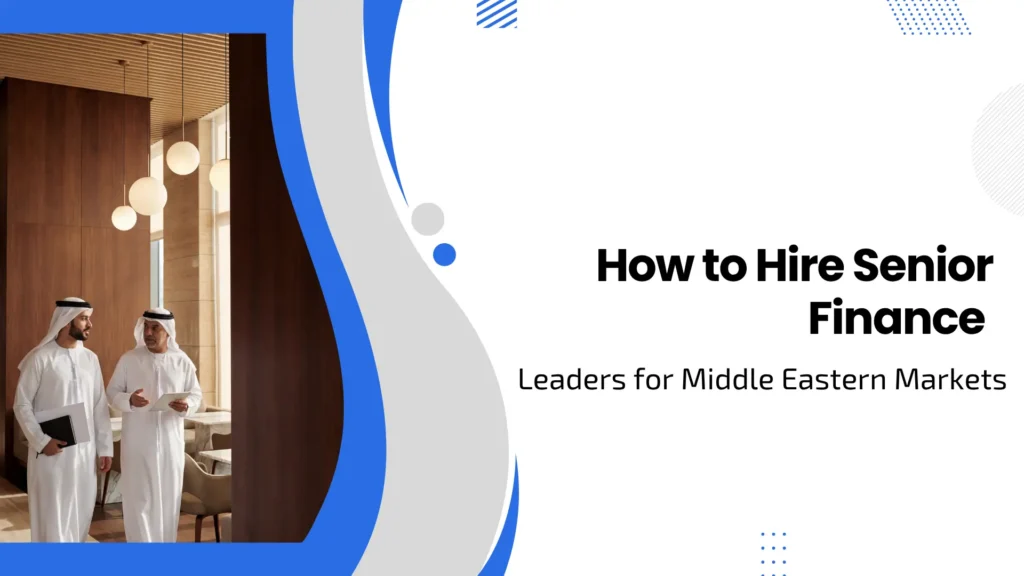
Let’s be honest: hiring a senior finance leader for the Middle East isn’t just about finding someone who can balance the books. It’s about finding a strategic partner who understands the unique rhythm of the GCC business climate. Whether you’re looking at hiring in Riyadh, setting up in a Dubai free zone, or navigating the complexities of the Qatari market, the stakes are high. These aren’t just hires; they are the architects of your financial infrastructure. As someone who’s watched this market evolve, I can tell you that the old playbook for this kind of hire is officially out of date.
The Changing Face of the CFO in the GCC
You might think you need a finance director with twenty years of experience in the region and a steady hand. That’s a good start, but is it enough in 2024? Not even close. The role has fundamentally shifted. We’re seeing a major transition where the CFO is no longer just a steward of the company’s finances. They are a builder. This is especially true in Saudi Arabia, where the push for Saudi Vision 2030 and megaprojects jobs has pulled finance into the core of business growth and transformation .
Companies that are successful in setting up a team in Saudi Arabia are looking for leaders who can handle capital structuring, IPO readiness, and complex governance. They need someone who’s been through a transformation, not just maintained the status quo. If your job description is still just about “strong accounting skills,” you are fishing in the wrong pond. The modern senior finance leader in the Gulf needs to be comfortable with high scrutiny, rapid change, and international boards.
The Demand for Specialists Over Generalists
There is a fascinating shift happening right now in how finance teams are being built across the UAE and the wider GCC. My conversations with finance leaders in Dubai and Abu Dhabi show they are moving away from hiring generalists . The work that is staying in the region is becoming more complex, involving higher-level judgment calls, advanced financial planning, and strategy.
What does this mean for you? When you are looking at the uae talent pool, you need to be laser-focused on specific expertise. Are you looking for someone to integrate FinTech solutions? Manage advanced treasury operations in a multi-jurisdictional setup? Lead digital transformation? This specialization is becoming non-negotiable. The market is pricing expertise over tenure, and those with skills in cash flow forecasting or working capital optimization are commanding a premium. If you’re hiring in Dubai or Riyadh, be prepared to adjust your salary benchmarks to secure a leader with the specific skills your business expansion in gcc demands.
Navigating the Recruitment Landscape: KSA vs. UAE vs. Qatar
Hiring in the Middle East isn’t a one-size-fits-all process. Each market has its own rhythm.
Saudi Arabia (KSA) : With the massive economic diversification goals, the appetite for talent is huge. However, the pool of leaders who fit the “builder” profile is scarce. KSA recruitment often requires a long-term perspective. You need candidates who understand the nuances of the local economy and are ready to be part of the country’s transformation. The premium on AI and automation expertise, for instance, can be as high as 40% in Riyadh compared to other markets . When you’re hiring in Riyadh, you must ask candidates not just about their experience, but about their ability to build a finance function from the ground up or scale an existing one.
UAE (Dubai & Abu Dhabi) : The UAE remains the established hub, with deep institutional history and a massive talent pool. However, the market is also highly segmented. A finance director in Dubai International Financial Centre (DIFC) typically commands significantly higher pay than one in other free zones, simply due to the regulatory demands . Abu Dhabi, often seen as the quieter sibling, actually offers higher budgets and a potentially easier placement journey due to a smaller candidate pool and increasing demand . For companies considering a dubai free zone setup, it’s crucial to understand that the pay scale and required expertise can vary wildly depending on the specific free zone’s purpose and regulations.
Qatar : The qatar recruitment laws and environment are distinct, often driven by the state’s major infrastructure and energy projects. There’s a strong need for leaders who can handle the complex financial reporting required for large-scale, multi-year projects. While the market is smaller, it offers significant opportunities, particularly in the energy and infrastructure sectors.
Practical Guidance for Employers
So, how do you actually go about making this hire? Here’s the practical advice I give to every business expanding in the region.
1. Re-write Your Job Description
Stop looking for a steward. Start looking for a builder. Focus on the transformation experience. Have they led a finance function through a period of high growth? Have they dealt with investors and complex capital structures? If you are working on neom project jobs, the skillset you need is someone who knows how to set up a finance function that aligns with a massive, unprecedented project.
2. Prepare for the Visa and Compliance Journey
Hiring internationally means navigating bureaucracy. A saudi arabia work visa or a work permit for the UAE isn’t just an HR task; it’s a critical part of the offer negotiation for the candidate. Ensure your HR or legal team is ready to handle the approved person regimes common in regulated financial sectors. For CFOs in the DIFC or ADGM, the candidate usually needs regulatory sign-off before they can start, adding weeks to the timeline . This isn’t a surprise; it’s a standard part of the process.
3. Your Offer Isn’t Just About Salary
While compensation is key, retention in the GCC is about so much more. The “expat factor” is still real. Candidates moving from the US or Europe are often factoring in the cost of living in dubai vs usa, school fees for their children (family support uae is a huge issue), and the overall quality of life. The offer needs to include a comprehensive relocation support package. Think housing, schooling, and health insurance. If you want to nail your onboarding expatriates in middle east process, make sure this is handled with care from day one. A botched relocation can lead to a brilliant CFO becoming a retention risk before they’ve even started.
4. Cross-Cultural Communication
This is non-negotiable. Effective cross-cultural training is not just a “nice to have.” It is a critical business tool. The way decisions are made and relationships are built in the GCC can be very different from the US. Don’t assume that a candidate’s stellar financial credentials automatically translate to good cultural fit.
For employers looking to build remote teams or manage teams that bridge the US and GCC time zones, this is a massive pitfall. A leader who can’t manage a remote team in a different time zone or navigate cross-cultural communication in business is going to struggle.
Career Pathways for Arab Professionals in the US
It’s a two-way street. While we’re talking about hiring senior finance leaders in the GCC, let’s not forget the immense talent of Arab American professionals in the US who are ideally positioned to bridge this gap. There’s a huge pool of US-educated, experienced finance professionals with cultural fluency that makes them invaluable in the Gulf.
But the reverse is also true. The US market is hungry for skilled talent, and there are growing pathways for GCC professionals to bring their unique perspectives to American companies. We see significant demand for arab tech professionals usa jobs, particularly in fintech and tech roles. The h1b visa for software engineers remains a primary route for top-tier talent, but it’s highly competitive.
Beyond tech, the healthcare sector is booming. There are massive opportunities for us healthcare jobs for arab medical professionals. The usmle for arab doctors is the critical step for physicians, but for nursing and allied health roles, navigating the nursing license usa and finding visa sponsorship for healthcare workers is a growing and in-demand specialty. There’s a fantastic opportunity here for US employers to tap into the GCC talent pool, particularly for roles requiring bilingual skills and a deep understanding of the Middle Eastern market.
The Role of Expert Partners
Navigating this complex, dual-market landscape is why specialist organizations are crucial. If you are trying to tap into the international workforce, you need a partner who understands both the GCC and the US markets, who knows the ins and outs of both the saudi arabia work visa and the US H1B process. This is where organizations like Arab American Recruiters make a real difference. They have built a reputation on placing highly qualified Arab professionals in both the US and GCC, offering an on-the-ground understanding of the cultural and professional landscape that generic recruiters simply don’t have. Their expertise spans the entire employee lifecycle, from the initial search to managing the complexities of expatriate onboarding.
Industry FAQ
How can businesses set up a team in Saudi Arabia or Dubai?
Setting up a team starts with choosing the right legal structure. In Dubai, a dubai free zone setup offers 100% foreign ownership but comes with specific regulations. In Saudi Arabia, aligning with the Saudi Vision 2030 objectives often unlocks access to government incentives and support. Once the entity is established, the next critical step is the recruitment process, which must be compliant with local labor laws and often requires navigating specific work visa quotas.
What are the requirements for Arab professionals to work in the US or GCC?
For the US: The primary requirement is a sponsored work visa, with the h1b visa for software engineers being the most common (though quotas are tight). Other routes include L-1 visas for intra-company transfers or EB-5 for investors. The employer initiates the sponsorship, and the individual must meet specific educational and experience criteria. For the GCC: You need a local sponsor (your employer) to secure a work visa. Requirements vary by country. In Saudi Arabia, a saudi arabia work visa requires a job offer and an employment contract. The UAE has a similar process, often linked to the company’s trade license. A clean medical history and a background check are standard across the region.
How can expatriates integrate smoothly and stay long-term in the Middle East?
For expatriates, integration goes beyond just the job. Access to robust family support uae (or in Qatar/KSA) is vital—thinking about school enrollment for kids, finding community networks, and navigating the local culture. Companies that invest in cross-cultural training and provide comprehensive relocation support middle east packages see significantly higher retention rates. The expat retention dubai numbers are much better for companies that treat the relocation as a lifestyle change, not just a work assignment. Understanding the cost of living and ensuring salary expectations match the reality is another key to long-term retention.
Which sectors offer the strongest opportunities in 2024?
The opportunities are massive across the board. The most prominent sectors are technology, especially fintech careers dubai and AI-related roles. Renewable energy (renewable energy jobs saudi arabia is a hot topic) is booming. The mega-project space, including everything from neom careers 2024 in Saudi Arabia to major developments in Qatar, is creating high-level finance leadership roles. In the US, for Arab professionals, the tech sector remains a major draw, alongside the persistently strong healthcare sector.
Finding the right senior finance leader for a Middle Eastern market is a complex but incredibly rewarding challenge. It requires a new way of thinking, a deep understanding of cultural and regulatory nuances, and a willingness to invest in the whole person, not just their resume. Get it right, and you’ll have a leader who not only protects your financial health but drives your growth in one of the most exciting economic regions in the world.