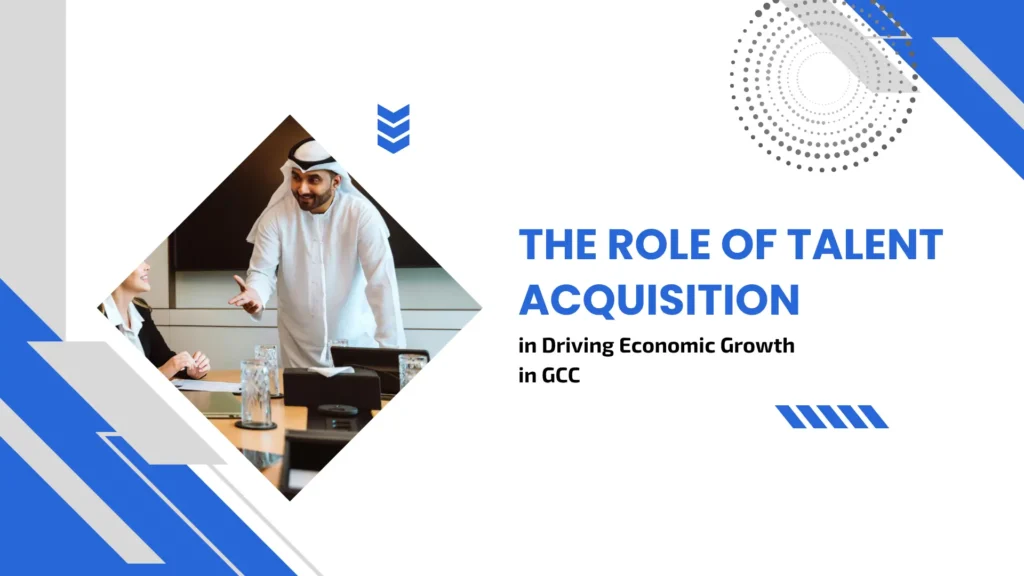
If you have been watching the global job market lately, you have probably noticed a shift. The usual suspects are still in play, but there is a new heavyweight contender in the ring for top talent. I am talking about the Gulf Cooperation Council (GCC) region. It is not just about oil anymore. Countries like Saudi Arabia, the UAE, and Qatar are pouring serious money into technology, renewable energy, tourism, and finance. This economic revolution, however, relies on one critical factor: people.
The race is on. As a recruitment expert who has watched this region transform, I can tell you that talent acquisition is no longer an HR function; it is a central pillar of national economic strategy. Let us talk about what this means for businesses and professionals navigating this dynamic landscape.
The GCC’s Big Bet on the Future
You cannot talk about the GCC without mentioning Vision 2030. Saudi Arabia’s massive diversification plan is the engine driving much of the current demand. It is not just a slogan; it is a blueprint creating thousands of jobs and opportunities. The Kingdom is actively moving beyond a resource-based economy, and that means they need experts.
The numbers are staggering. The World Economic Forum estimates a potential global talent shortage of 85 million workers by 2030, but the GCC is fighting back hard . We are seeing a lot of business expansion in gcc market comparison articles lately, and for a good reason. While the US and Europe are navigating economic headwinds, the Gulf is experiencing a hiring boom. According to the Hays GCC Salary Guide, a whopping 66% of employers in the region increased their headcount in 2025 .
This is a huge opportunity. For a US employer hiring internationally or an Arab American professional looking for a change, this market is hard to ignore.
Opportunities Abound: From Riyadh to Dubai
So, where are the jobs? Everywhere. But let us break it down by region to understand the nuances.
Saudi Arabia: The Megaproject Magnet
Saudi Arabia is currently the most exciting market for job creation. The buzz around neom project jobs and renewable energy jobs saudi arabia is real. These are not just construction roles; they need architects, engineers, project managers, and tech experts.
There is a growing demand for senior and mid-level professionals. One expert noted that professionals in AI, cybersecurity, and data engineering are “exactly the kind of talent Saudi Arabia really needs right now” . The focus on saudi vision 2030 jobs for foreigners is tangible. For businesses, setting up a team in saudi arabia requires navigating specific regulations like the Nitaqat system (Saudization), but the payoff in terms of project scale is immense.
UAE: The Established Hub
Dubai and Abu Dhabi remain the established business hubs. While Dubai has a more saturated market, it is also the gateway for many companies expanding into the region. The dubai free zone setup is still one of the most popular ways for foreign businesses to establish a presence.
However, the landscape is changing. While Saudi Arabia is absorbing mid-level talent, the UAE is becoming more selective. The market is moving from “hire fast” to “hire right” . A Dubai-based recruiter mentioned he stopped advertising jobs years ago because the sheer volume of applications made it unmanageable . For professionals, this means having a niche skill set is critical to stand out.
Qatar: The Regional Player
Qatar recruitment laws have evolved, and the country continues to invest heavily in infrastructure and tourism. Following the World Cup, they are focusing on hospitality, healthcare, and financial services. They have clear Qatarisation targets, meaning they are focused on developing local talent while still needing international expertise .
The Talent Battle: US vs. GCC for Arab Professionals
This is a fascinating dynamic. For decades, the US was the default destination for ambitious professionals. The h1b visa for software engineers and us healthcare jobs for arab medical professionals were the gold standard.
But times are changing. The US has become a more complex market to enter. With the H-1B process becoming more expensive and uncertain, the Gulf is presenting a compelling alternative. Experts suggest that while the “best of the best” still head to the US, the mid-tier professionals are now looking toward the Gulf .
For Arab American professionals, moving to the GCC is often a cultural homecoming. It offers proximity to family, a familiar cultural environment, and the chance to work on truly global projects. For US employers, this means they are competing for the same talent pool. To retain top talent, they need to offer competitive packages and career growth.
Navigating the Visa Maze
Let us be honest: the biggest hurdle for anyone moving internationally is the paperwork. For those looking to move to the region, the saudi arabia work visa process is becoming more streamlined, but it requires a sponsor. Similarly, the UAE offers a Golden Visa for highly skilled professionals, which is a massive draw for talent looking for long-term stability.
For Arab professionals eyeing the US, the h1b visa for software engineers remains the primary pathway. However, it is an annual lottery system with a lot of uncertainty. In the healthcare sector, the usmle for arab doctors and nursing license usa processes are rigorous but well-trodden paths.
The Golden Rule of Expatriate Success: Onboarding and Retention
Getting someone a visa is step one. Keeping them is step ten.
This is where many companies falter. You can offer a great salary, but if the onboarding experience is chaotic, the talent will leave. The focus on onboarding expatriates in middle east needs to be holistic. It is not just about getting them a bank account; it is about helping them adjust to a new culture.
Cross-cultural training is vital. The work culture in the GCC, while international, has its own rhythm. It is hierarchical and relationship-driven. A failure to understand this can lead to friction.
Even more important is family support uae and the wider region. When an expat relocates, their family relocates too. If the spouse cannot find work or the children struggle to adjust to school, the professional will leave. Companies that offer robust relocation support middle east, including school search assistance, housing support, and spousal networking, have significantly higher retention rates.
The Challenge of Retaining Talent
Expat retention dubai and across the GCC is a hot topic. Why? Because the “Dubai expat” lifestyle is no longer a novelty. Professionals are looking for substance. They want career growth, meaningful work, and a community. Companies are learning that “offering higher salaries can solve short-term hiring gaps but may create internal pay disparities” . This means that retention now relies on development opportunities, purpose, and a good cultural fit .
Key Growth Sectors to Watch in 2024-2025
If you are looking to pivot, these are the sectors driving the demand:
- Technology & AI: The GCC is pouring billions into AI. The UAE recently ranked second globally for AI talent migration . Everything from fintech careers dubai to cybersecurity is hot.
- Renewable Energy: Saudi Arabia is leading the charge here. The renewable energy jobs saudi arabia market is expanding rapidly as they look to diversify their energy sources.
- Healthcare & Life Sciences: With a growing and ageing population, the demand for us healthcare jobs for arab medical professionals is high, and the GCC is competing aggressively for this talent.
- Tourism & Hospitality: With tourism jobs qatar and the massive entertainment projects in Saudi, hospitality is booming.
- Construction & Infrastructure: The scale of the megaprojects is unprecedented.
The Rise of Bilingual Talent
One area often overlooked is the need for bilingual customer support center arabic english. As the region expands its global footprint, there is a massive need for talent that can operate in both Arabic and English. For Arab Americans, this is a superpower. Companies setting up a multilingual call center setup often look to the US to recruit native-level English speakers with an understanding of the region.
This demand extends to networking for arab professionals in usa. The ability to bridge the gap between Western business practices and Middle Eastern culture is incredibly valuable.
Industry FAQ: Your Burning Questions Answered
How can businesses set up a team in Saudi Arabia or Dubai?
The approach differs. In Saudi Arabia, you typically need a local partner or to go through the government’s investment authority. It is more bureaucratic but increasingly digitized. In Dubai, the dubai free zone setup is popular. You can get a license and visa allocations relatively quickly within a free zone. For both, I strongly advise using a local PRO (Public Relations Officer) or a consultancy to handle the visa processing and legal compliance.
What are the requirements for Arab professionals to work in the US or GCC?
In the US, it is usually a sponsored visa, like the H-1B for tech roles. For healthcare, it is the USMLE and matching into a residency program. In the GCC, it is about securing a job offer first. The employer sponsors the saudi arabia work visa or the UAE employment visa. You will need authenticated degrees, a medical check, and a clean police record.
How can expatriates integrate smoothly and stay long term in the Middle East?
The key is to embrace the culture. Take Arabic lessons, even if you are already a native speaker; understanding the local dialect helps. Build a network outside of your work colleagues. Also, get involved in the american community in uae or similar expat groups to find support. The most crucial factor is successful relocation support middle east for your family.
Which sectors offer the strongest opportunities in 2024?
Look no further than future skills in arabian gulf like AI, Cybersecurity, and Data Analytics. Fintech careers dubai are booming, as are renewable energy jobs saudi arabia. If you are in healthcare, the need is immense. And with huge events on the horizon, tourism jobs qatar and hospitality are also hot.
Final Thoughts
Talent acquisition is the new oil in the GCC. It is the fuel powering the region’s transformation. Whether you are an employer looking at business expansion in gcc market comparison or a professional seeking a new adventure, the opportunities are massive. The competition is intense, but for those who are prepared, the GCC offers unparalleled growth and experiences.
If you are looking to make this move, understanding the cultural landscape is just as important as the legal paperwork. Being a part of this transformation is an exciting prospect. Good luck, and maybe I will see you in the region soon.