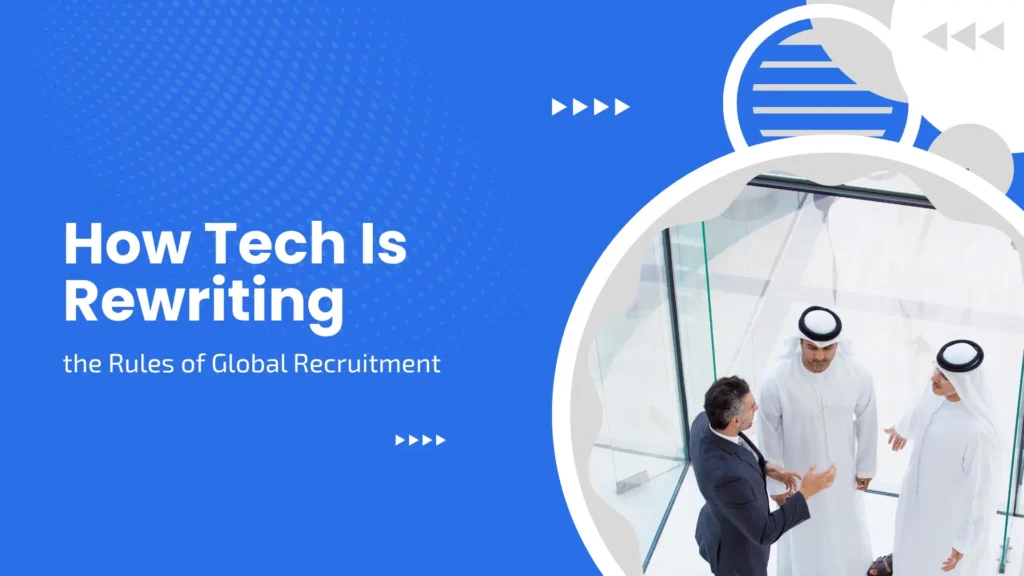
Let’s be honest: the days of posting a job ad and hoping the perfect candidate walks through the door are fading fast. They’re not gone entirelythere’s still magic in a good handshake and a sharp resume. But for anyone hiring across borders or looking for a career in a new country, technology has completely flipped the script on how we find work and find talent.
I’m not just talking about video interviews. I mean the whole infrastructure of workforce mobility. Whether you’re an Arab American professional eyeing the neom project jobs or a US employer trying to figure out setting up a team in saudi arabia, technology is the new passport.
The End of the “Local Only” Mindset
For a long time, recruitment was hyperlocal. You hired from your city, maybe your state. If you wanted to go international, you needed deep pockets and a law firm on speed dial. Now? The playing field has leveled.
We’re seeing a massive shift toward “borderless recruitment.” Why? Because the talent scarcity problem is real and it’s global. Companies are realizing that if they limit themselves to a 50-mile radius, they’re missing out on a massive talent pool. Tech has made it possible for a US startup to hire a fintech wizard in Dubai or a healthcare specialist in Riyadh without needing a physical office there first.
For Arab American professionals, this is a golden opportunity. You possess a unique blend of Western business acumen and deep cultural understanding of the gcc business climate. You’re the bridge that many companies are looking for, especially with saudi vision 2030 jobs for foreigners opening up new avenues. Tech simply allows that bridge to be built faster and more efficiently.
Tech and the Talent Pipeline: A Double-Edged Sword
Technology is acting as the great accelerator in recruitment, but it’s not magic.
The Good: Speed and Reach
The most obvious impact is speed. Applicant Tracking Systems (ATS) and AI-powered sourcing tools can scan thousands of profiles in seconds. For an employer trying to build a multilingual call center, finding talent for bilingual customer support center arabic english used to be a slog. Now, platforms can filter candidates by language proficiency and location almost instantly.
Plus, we have the rise of the Employer of Record (EOR). This is a game-changer for business expansion in gcc market comparison. Let’s say you’re a US healthcare company looking to tap into the uae talent pool. Instead of spending months and a fortune setting up a legal entity to hire one person, you use an EOR. They handle the legal compliance, payroll, and benefits in the UAE, allowing you to hire quickly and compliantly. It’s tech-enabled agility.
The Challenges: Bias and the Human Element
But we have to be realistic. AI is only as good as the data it’s trained on. We’ve all heard stories about algorithms inadvertently favoring certain demographics or penalizing candidates for “non-traditional” career paths (like a gap year). Tech can automate, but it can’t replace the human gut feeling about cultural fit or potential.
For job seekers, this means you must be strategic. You need to beat the algorithm by using keywords effectively in your resume. When I see an Arab engineer applying for usa tech relocation roles, I tell them to highlight specific skills and certifications clearly. If you’re a doctor looking at usmle for arab doctors, make sure that acronym is front and center.
A Regional Breakdown: Where the Action Is
In the GCC: Vision and Volume
The GCC isn’t just a place to work; it’s a construction site for the future. Saudi Arabia, UAE, and Qatar are investing heavily in gcc economic diversification and megaprojects jobs.
- Saudi Arabia: The saudi arabia work visa process is becoming more streamlined, partly due to digitalization. But the real draw is projects like NEOM. For US employers looking at ksa recruitment, it’s not just about oil anymore. It’s about tech, renewables, and tourism. The demand for project managers, engineers, and data scientists is through the roof.
- UAE: The UAE remains the region’s talent magnet. The dubai free zone setup is still a major draw for companies because it offers 100% foreign ownership and tax benefits. For a US company, this is a perfect beachhead. The dubai expat salary guide is often debated, but the key is that tech is making compensation benchmarking more transparent.
- Qatar: qatar recruitment laws have specific nuances, particularly around end-of-service benefits and contract lengths. Tech platforms that offer localized compliance are essential here.
In the US: The Gateway to Opportunity
For many Arab professionals, the US still represents the pinnacle of career growth. But tech has made the competition stiffer and the process more complex.
The classic pathh1b visa for software engineersis still a primary route. But the tech industry is evolving. While software engineering remains hot, we’re seeing a massive surge in demand for healthcare. With an aging population, us healthcare jobs for arab medical professionals are a booming sector. If you’re a doctor, the usmle for arab doctors is your key, and your bedside manner in Arabic could be a massive asset in diverse patient populations.
The best advice I can give is to leverage tech for networking for arab professionals in usa. LinkedIn, virtual conferences, and industry-specific groups are non-negotiable. You can’t just “apply online” anymore; you have to build a digital presence.
From Onboarding to Belonging: The Tech-Driven Support System
Getting the job is one thing. Keeping the talent is another. Retention in the expatriate world, particularly expat retention dubai and the broader region, relies heavily on a smooth onboarding experience.
Cross-cultural training used to be a 3-day workshop with a binder. Now, it’s often micro-learning modules, language apps, and virtual reality experiences that help expats navigate the cultural nuances of Riyadh or Dubai before they even land.
Relocation is also going digital. Tech platforms now handle everything from visa processing to finding schools and housing. This relocation support middle east is critical. You can’t expect someone to perform at their best if they’re stressed about getting their Iqama (residency permit) or finding a decent apartment. For companies, investing in this tech is directly linked to retention.
Frequently Asked Questions
1. How can businesses set up a team in Saudi Arabia or Dubai practically?
Technically, you have a few paths. The traditional way is establishing a legal entity (like an LLC or branch office). This is a long-term play but gives you full control. The faster, tech-enabled way is to partner with an Employer of Record (EOR). They act as the legal employer on your behalf, allowing you to hire employees in Riyadh or Dubai within weeks while staying compliant with local labor laws.
2. What are the requirements for Arab professionals to work in the US or GCC?
In the US, the most common route is the H-1B visa for specialized roles (like tech or engineering). For healthcare, it’s the USMLE (for doctors) or state-specific nursing licenses. In the GCC, it depends on the country. You generally need a job offer first, and the employer sponsors your saudi arabia work visa or UAE residency. Requirements usually include a medical exam, background check, and authenticated educational certificates.
3. How can expatriates integrate smoothly and stay long term in the Middle East?
It’s about “intentional living.” Tech can helpuse Meetup, Expat groups, and community apps to find your tribe. However, true integration comes from respecting local culture. Learn a few phrases in Arabic; it goes a long way. Also, take advantage of onboarding expatriates in middle east programs if your employer offers themthey cover everything from banking to finding a villa. Long-term success is about feeling like you belong, not just reporting to work.
4. Which sectors offer the strongest opportunities in 2024?
If I were looking right now, I’d focus on three areas:
- Technology/Future Skills: Cyber security, AI, and data analytics. future skills in arabian gulf are shifting rapidly.
- Renewable Energy: Saudi Arabia is pouring money into solar and wind.
- Healthcare: Demand is immense in both the US and the GCC for nurses, doctors, and allied health professionals.
The Final Word
Technology has made the world smaller for recruiters and candidates alike. It’s democratized opportunity. But it hasn’t removed the need for expert guidance. Navigating a saudi arabia work visa or understanding the nuances of the uae talent pool can still be a minefield.
At the end of the day, tech is the tool, but relationships are the foundation. Whether it’s leveraging AI to find the right role or using an EOR to set up a team, the goal is to connect great people with great opportunities. And if you’re looking for an expert partner who specializes in connecting top-tier talent with leading organizations across the US and GCC, Arab American Recruiters brings that localized, human touch to an increasingly digital world. They’re specialists in navigating the specific cultural and regulatory hurdles of the region.
So, embrace the tech. Update your LinkedIn. But never forget that in a world of algorithms, your unique story and perspective are still your most powerful assets.