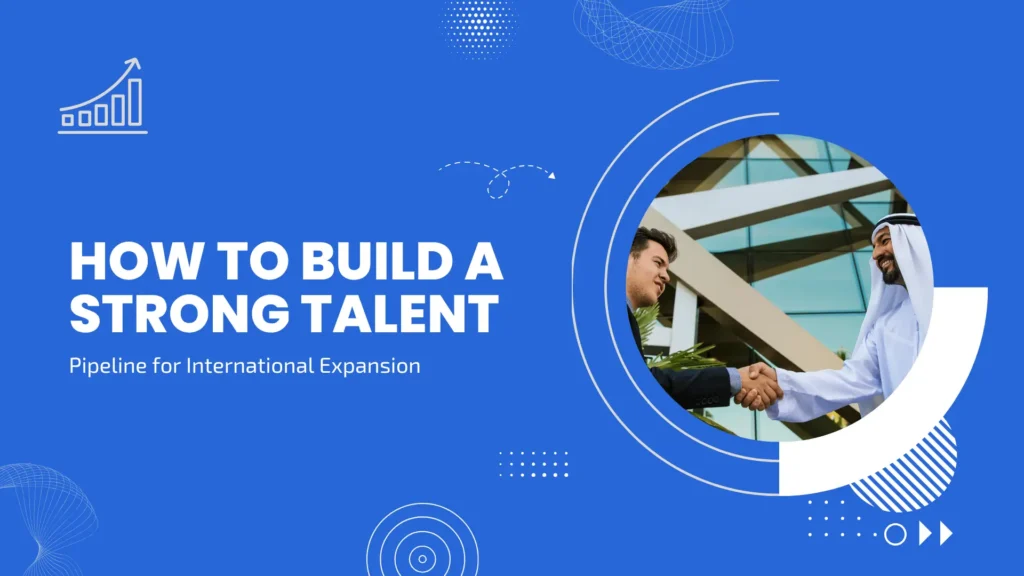
Let’s be real for a second. If you’re an American company eyeing the massive opportunities in the Gulf, or a GCC business looking to tap into the US market, the single biggest thing that can make or break your expansion isn’t strategyit’s people.
You can have the best market entry plan in the world, but without a consistent, reliable flow of top-tier talent, your international venture is just an expensive hobby.
Building a talent pipeline for international expansion isn’t like hiring down the street. It requires navigating work visas, understanding local business culture, and actually making people feel valued once they’re on board. Having spent years placing Arab professionals in both the US and the GCC, I can tell you that the companies who get this right treat talent acquisition like a long-term relationship, not a one-night stand.
Let’s break down how to build a killer talent pipeline for the US, Saudi, UAE, and Qatari markets, and how you can keep those rockstars once you’ve found them.
Know Your Battlefield: The US vs. GCC Talent Scene
Before you even write a job description, you need to understand the lay of the land. The reasons for hiring internationally are shifting. We see certain regions rising to meet specific talent needs, and talent scarcity remains an intractable issue driven by demographics and tech-related scarcities . Companies are no longer just looking for cheap labor; they are looking to embed their teams in the markets they serve . This means business expansion in GCC markets requires a different approach than setting up in the US.
For US Employers Hiring in the GCC
If you are a US company looking at the Saudi market, you’re probably interested in megaprojects jobs in Neom, the Red Sea Project, or renewable energy jobs Saudi Arabia has been aggressively pushing under Vision 2030. It’s also a hotbed for fintech careers Dubai and tourism jobs Qatar.
The reality is, the gcc business climate is booming. Recent data shows that 49% of corporate occupiers are currently planning Global Capability Centres (GCCs), with the average cost of setting up an office being significantly lower than in major global cities . You can tap into a diverse uae talent pool that is already used to an international working environment. However, this is where the “pipeline” part gets trickyyou need to secure the right visas.
- Visa Reality Check: In Saudi, the saudi arabia work visa process has undergone significant digitization. While getting a saudi arabia work visa for a foreign worker used to be a headache, the system is now more transparent. The same goes for the dubai free zone setup, which often allows for easier visa sponsorship and 100% foreign ownership.
- Cultural Fit: This is where many companies fumble. The US approach to management (often very flat and direct) doesn’t always translate well. Investing in cross-cultural training is non-negotiable if you want to retain talent.
For GCC Employers Hiring in the US
The relationship goes both ways. Many GCC companies are looking to setting up a team in saudi arabia or the UAE with talent that has US experience. They are looking for arab tech professionals usa jobs.
The US has a massive and highly skilled uae talent pool of Arab Americans who bring a unique blend of Western business practices and deep cultural understanding of the Arab world. The demand is huge for professionals who understand both worlds, especially in tech and healthcare.
But getting them over is the challenge. You’re looking at h1b visa for software engineers or visa sponsorship for healthcare workers.
Strategic Sourcing: Find the “Dual-Culture” Professionals
The best employees are those who can “code-switch” seamlessly. They know the corporate culture of New York or London, but they also understand the family dynamics and business etiquette in Riyadh or Dubai.
Talent sourcing in a new market requires insight into macroeconomic realities, cultural norms, and demographics . You need to look beyond the usual job boards. Here’s how to find those unique profiles:
- Leverage Diaspora Networks: This is huge. In the US, there is a strong network of Arab American professionals. In the GCC, there are large expat communities that have been there for decades. Someone who has studied in the US and worked in Dubai is a goldmine.
- Don’t Just Post, Engage: When you’re trying to grow your business in a new market, a “post and pray” strategy won’t work. You need to build a local Employer Value Proposition (EVP). If you are hiring in Riyadh, tell people why they want to work for you beyond the paycheck.
- Tap into Mega-Project Hype: If you are recruiting for neom project jobs or working on saudi vision 2030 jobs for foreigners, you are competing with the world. Your pipeline needs to be global.
A Note on Verification: Sometimes, you find a candidate who claims to have worked on a specific mega-project or holds a specific certification. If you can’t verify their experience with a simple reference check, I couldn’t confirm this information for you. Here’s how you can verify it: demand a reference from a direct supervisor on that specific project, not just an HR generalist.
The “Big Three” Legal Frameworks: KSA, UAE, and Qatar
You need to be aware of the local rules to avoid fines and legal headaches. The regulations in each market can vary significantly .
Saudi Arabia (KSA)
The ksa recruitment landscape is highly regulated. If you are setting up a team in saudi arabia, you are likely dealing with the “Qiwa” and “Muqeem” portals. The saudi arabia work visa is often tied to specific job categories. Also, with the push for Saudization (Nitaqat), you need to prove that you are training and hiring local talent alongside your expats.
Dubai (UAE)
Working in dubai as an american is relatively straightforward compared to some other places. A dubai free zone setup is often the quickest way to get a team operational because it simplifies the visa process and offers flexible office solutions. However, with the UAE’s new labor law reforms, you need to be meticulous about the contract typeunlimited, fixed-term, etc.
Qatar
Qatar recruitment laws are strict, and they require employers to sponsor employees directly. The “Kafala” system is essentially gone, but the Ministry of Labor still requires a formal contract approval process. If you are planning business expansion in gcc into Qatar, you need a local partner or a Professional Services Firm to navigate this.
Building a Bulletproof Onboarding & Relocation Experience
This is the part that separates the amateurs from the pros. Attracting talent is one thing; getting them to stay is another.
The “Relocation Hell” Factor
Imagine this: You’ve hired a brilliant software engineer in the US to move to Riyadh. You’ve sorted the saudi arabia work visa. But the flight is booked incorrectly, the housing allowance isn’t ready, and their kids aren’t enrolled in school. They are frustrated and looking for an exit before they even start.
This is a leading cause of expat retention dubai (and KSA/Qatar) failure.
You need a rock-solid relocation support middle east plan.
- Family Support: You aren’t just moving an employee; you’re moving a family. Offering family support uae (help with finding schools and spouse visa) is critical.
- Financial Clarity: Be transparent. Compare the cost of living dubai vs usa for the employee. If they are moving from a low-tax state to the UAE, they need to know where they stand.
Cultural Integration
I can’t stress this enough. Cross-cultural training isn’t a “nice-to-have”; it’s essential. Teach your US employees about the importance of Ramadan and “Wasta” (networking) in the GCC. Teach your GCC employees about the litigation culture in the US or how to handle “At-Will” employment.
Managing the Distributed Team
So, you’ve got a team in New York, a development hub in Dubai, and a marketing team in Cairo. How do you run managing remote teams in different time zones?
- Overlap Hours: You don’t need everyone in the same time zone, but you need overlap. With the US East Coast and the GCC being roughly 7-9 hours apart, you can create a “follow-the-sun” model.
- Communication Tools: The basics are Slack, Teams, and Zoom. But the hard part is the cross-cultural communication in business. For example, US teams tend to be very direct. GCC teams can be more diplomatic. Clarify expectations. Are emails okay? Do you need to WhatsApp for urgent issues?
- Bilingual Needs: If you are targeting the local market, you need bilingual customer support center arabic english. Don’t expect your US staff to handle Arabic calls. Having a multilingual call center setup is key.
Industry FAQ: Your Burning Questions Answered
Q: How can businesses set up a team in Saudi Arabia or Dubai?
A: For Dubai, the fastest route is often a dubai free zone setup. It gives you a legal entity and fast-tracked visas. For Saudi, you need to establish a legal entity. It’s bureaucratic but manageable. Work with a local law firm for ksa recruitment compliance and utilize the Ministry of Investment (MISA) resources. My advice: don’t go it alone. Partner with a local sponsor or a consultancy that specializes in setting up a team in saudi arabia.
Q: What are the requirements for Arab professionals to work in the US or GCC?
A: For the US, it’s usually sponsorship. In Tech, it’s often the h1b visa for software engineers. In healthcare, it’s the usmle for arab doctors and obtaining a nursing license usa. For the GCC, it depends. The saudi arabia work visa and qatar recruitment laws require a job offer from a sponsoring company. For the UAE, if you are working in dubai as an american, you usually need a job offer, though the UAE is increasingly offering remote work visas and “Green Visas” for freelancers.
Q: How can expatriates integrate smoothly and stay long term in the Middle East?
A: Step one: Company support. Relocation support middle east (housing, schools, flights) is essential. Step two: Professional. Don’t assume your Western management style works. Do cross-cultural training. Step three: Personal. Join the american community in uae or other expat groups. Many of my friends have been in Dubai for 20 years because they didn’t just treat it as a “tour of duty.” They invested in the local community.
Q: Which sectors offer the strongest opportunities in 2024/2025?
A: This is where the energy is! For the GCC, it’s all about diversification:
- Saudi: Megaprojects jobs (Neom, Red Sea), renewable energy jobs saudi arabia, and tourism jobs qatar.
- Dubai: Fintech careers dubai and AI/Blockchain.
- US: Arab tech professionals usa jobs (especially in AI and Cybersecurity) and us healthcare jobs for arab medical professionals (due to the aging population).
The Bottom Line: Build the Pipeline Now
For employers, whether you are an American company trying to crack the GCC market or a GCC company looking to attract top-tier Arab American talent, the time to start is now. If you wait until you have a vacancy, you lose. You need a “war chest” of talent.
If you want to know more about how to bridge this gap, reach out to people who do this for a living. Think about having a conversation with experts who understand the nuances of working in dubai as an american or navigating ksa recruitment. It’s about building bridges, not just businesses.
By the way, if you want to discuss how to make your global hiring strategy a reality, we at Arab American Recruiters specialize in placing top talent in these exact situations. We help bridge the gap between US career aspirations and GCC mega-opportunities. Head over to Arab American Recruiters if you want to talk shop about onboarding expatriates in middle east or finding that perfect dual-culture professional.
Building a global talent pipeline is hard work, but in a world that’s becoming more connected every day, the companies that master it will be the ones leading the pack tomorrow.