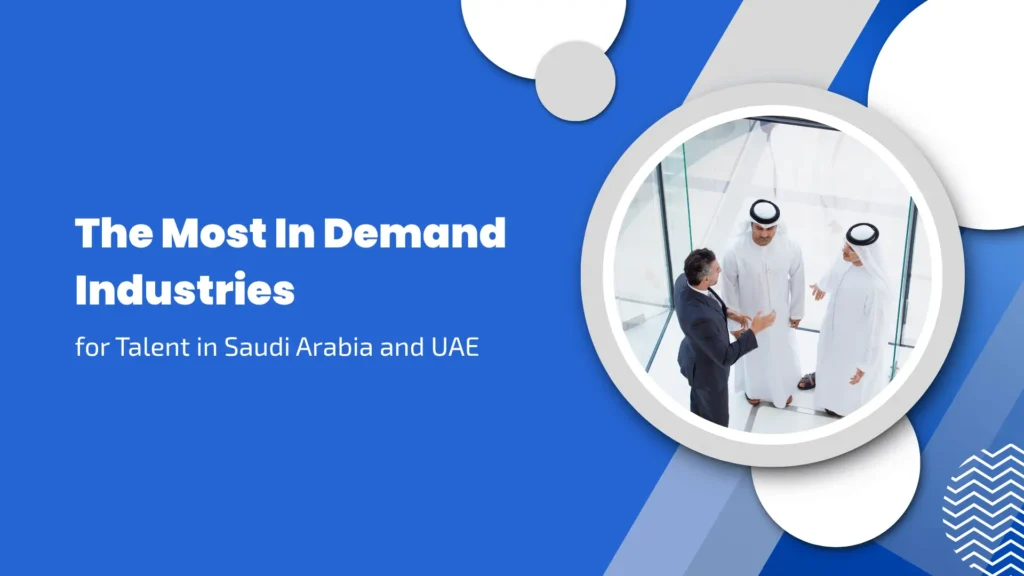
Let’s be real for a second. If you’re an Arab American professional wondering if your skills actually fit into the Middle East job market right now, or a US employer trying to figure out where to expand first, the Gulf region is almost impossible to ignore.
But here is the catch: The game has changed. We aren’t talking about the oil-centric job market of your parents’ generation. Today, Saudi Arabia and UAE are chasing very specific types of talent. Whether you are looking at neom project jobs, fintech roles in Dubai, or trying to understand the gcc business climate, this is your map for 2024.
Let’s break down where the real opportunities are, how to navigate the visa maze, and how to actually stay once you get there.
The Usual Suspects: Tech and Healthcare
You cannot talk about workforce mobility in the Gulf without starting here. Both the UAE and Saudi Arabia are racing to become knowledge economies.
For Arab tech professionals usa jobs are competitive, but the H1B visa lottery is a nightmare. That is why many are looking East. In the UAE, the demand for cybersecurity, AI, and cloud architects is through the roof. The uae talent pool is sophisticated, but it isn’t large enough to fill every seat. Companies are specifically hunting for bilingual engineers who understand Western compliance standards but speak Arabic fluently.
On the healthcare side, the story is urgent. With an aging expat population and a massive push for medical tourism, us healthcare jobs for arab medical professionals are becoming a direct pipeline. If you hold a usmle for arab doctors certification, you are gold. The process of getting a nursing license usa is rigorous, but guess what? Saudi and UAE hospitals are poaching American-trained nurses by offering visa sponsorship for healthcare workers with zero friction. They know the quality you bring, and they are cutting red tape to get you there.
The Megaproject Boom: Beyond the Hype
You’ve heard of NEOM, the Line, and the Red Sea Project. But what does that actually mean for hiring? It means we need project managers who don’t faint when a deadline moves up by six months.
Neom careers 2024 aren’t just about architects anymore. The demand is for logistics directors, environmental compliance officers, and smart city infrastructure techs. If you are an American project manager who has worked on large-scale infrastructure in the US, you have a huge advantage.
Similarly, renewable energy jobs saudi arabia are exploding. The Saudis aren’t just building solar farms; they are building entire green hydrogen ecosystems. This requires a specific breed of engineer who understands both European tech standards and the harsh Gulf climate. For US employers looking at setting up a team in saudi arabia, targeting former oil and gas engineers who want to transition into renewables is a very smart short-term strategy.
The UAE vs. Saudi Arabia: Where to Actually Plant a Flag
Here is where the business expansion in gcc market comparison gets real.
If you are a gcc business or a US firm looking to scale, the choice between Riyadh and Dubai comes down to speed versus scale.
Dubai free zone setup remains the easiest on-ramp. In places like DIFC or Dubai Internet City, you can get a license in weeks. The culture is “get it done.” However, the market is saturated. The dubai expat salary guide shows that while salaries are high, the cost of living dubai vs usa is now comparable to New York or San Francisco, minus the state income tax.
Hiring in Riyadh is slower but infinitely more lucrative. Saudi vision 2030 jobs for foreigners come with a caveat: localization (Saudization). You can hire a foreign expert, but you must prove you are training a Saudi counterpart. For ksa recruitment, patience is a virtue. The saudi arabia work visa process requires a block visa, medical testing, and biometrics. It is a headache, but the upside is massive, untapped government contracts.
Qatar recruitment laws are a different beast entirely. Post-World Cup, Qatar is focusing on retention. They have introduced more flexible labor laws, but the sponsorship system still requires employer sign-off for exits. For tourism jobs qatar, the season is picking up again, but the market is smaller. It is a great entry point for junior staff, but senior leaders usually prefer the churn of Dubai or the checks of Riyadh.
The “Sticky” Factor: Onboarding and Retention
Getting the visa is easy. Keeping the talent is hard.
Onboarding expatriates in middle east fails when you ignore the human element. I can’t tell you how many American hires show up in August, realize the AC isn’t working in the temporary apartment, and start looking for a flight home within a week.
Relocation support middle east cannot just be a cash stipend. It has to include active cross-cultural training. Explain to your US hire why Thursday is the new Friday. Explain that “Inshallah” might mean “maybe” or “yes” depending on the eyebrow raise.
Specifically for expat retention dubai, the secret is family support uae. If the spouse is unhappy or the kids don’t get into the right school, you lose the employee. The best companies we see at Arab American Recruiters offer spouse job search support as a retention tool. If you are working in dubai as an american, join the american community in uae groups immediately. That network saves your sanity.
Managing the Remote Reality
For US employers hiring remote teams in the Gulf, you have to drop the “set it and forget it” mindset.
Managing remote teams in different time zones between EST and GST (Gulf Standard Time) is an 8-hour difference. That means your morning is their afternoon. The solution is asynchronous work. Don’t demand a 9 AM EST meeting for a Dubai employee at 5 PM. Record it.
Also, invest in cross-cultural communication in business. Arab professionals in the US are used to direct American feedback (“This is wrong, fix it”). In the GCC, that directness can be perceived as aggression. A us arab joint venture project management style needs a translator—not for language, but for tone. You need someone who can take a harsh US profit margin requirement and phrase it as a partnership growth opportunity for the local board.
The Language Asset: Bilingual Support
Here is a niche that is printing money right now: bilingual customer support center arabic english.
As US banks and e-commerce platforms expand into the GCC, they realize their English-only support fails. They need multilingual call center setup experts. This means hiring talent for arabic customer service who can handle the formality of Arabic business communication and the speed of American CRM software.
For a 24/7 support team structure, the Gulf is perfect. You can follow the sun. A team in Dubai covers the Asian and European shifts, while your US team wakes up to a clean queue. If you are a networking for arab professionals in usa, pitch this exact model to your VP of Operations. It cuts costs and improves service quality.
Industry FAQ Section
Q: How can businesses set up a team in Saudi Arabia or Dubai?
A: For Dubai, look at a Dubai free zone setup (like DMCC or DIFC). You get 100% ownership and no corporate tax for specific years. For Saudi, you need a foreign investment license first. Setting up a team in saudi arabia requires a local partner or a very expensive “premium residency” route for specific roles. My advice? Start in a Dubai free zone to test the waters, then use that entity to sponsor saudi arabia work visa applications for remote work until you go fully local.
Q: What are the requirements for Arab professionals to work in the US or GCC?
A: For the US, it is mostly the h1b visa for software engineers or an L-1 transfer. For medical folks, passing the usmle for arab doctors is step one. For the GCC, it is easier but slower. You need an attested degree, a medical fitness test, and a local sponsor. The qatar recruitment laws require a standard contract template, while the UAE uses a simplified “unlimited” contract model.
Q: How can expatriates integrate smoothly and stay long term in the Middle East?
A: Do the boring stuff first. Get your Emirates ID or Iqama sorted immediately. Second, pay for cross-cultural training—even if you are Arab American, local business etiquette in Riyadh is different from back home. Third, invest in family support uae or Saudi. If your family hates it, you will quit. Finally, find a mentor within the american community in uae or local ex-pat groups. They tell you where to find good bacon and which clinic to use for emergencies.
Q: Which sectors offer the strongest opportunities in 2024?
A: Fintech careers dubai are number one. The Central Bank’s payment regulations have opened the floodgates. Second is logistics. With the expansion of ports in Jeddah and Abu Dhabi, supply chain managers are kings. Third is tourism. Tourism jobs qatar and Saudi are ramping up for the next travel wave. Finally, gcc economic diversification means we are seeing massive pushes for future skills in arabian gulf like green hydrogen engineering and AI ethics officers.
Ready to Make the Move?
The old rules of careers in middle east for westerners have been rewritten. It is no longer about just showing up with a degree. It is about megaprojects jobs, digital skills, and cultural fluency.
Whether you are an Arab American tired of the US visa waitlist, or a US employer scouting for bilingual customer support center arabic english talent, you need a partner who speaks both languages—literally and figuratively.
We specialize in exactly this messy middle. From expat retention dubai to neom careers 2024, we help you dodge the pitfalls. Visit Arab American Recruiters to see how we place top Arab professionals in US and GCC markets—and how we help businesses handle the messy part of onboarding expatriates in middle east without losing their minds.
Let’s get you working where you are valued most.