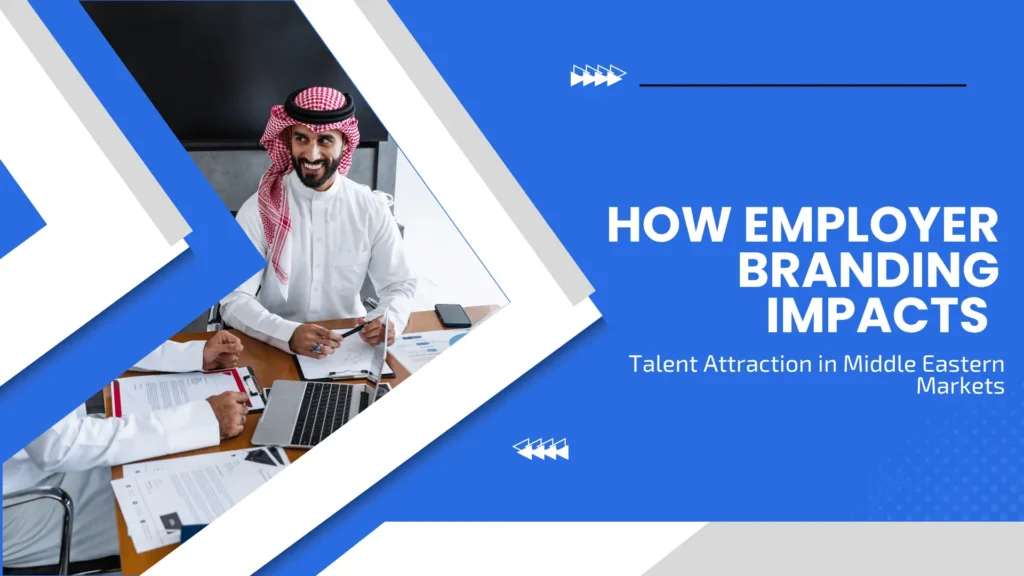
Let’s be real for a second. If you are trying to hire top-tier talent in Riyadh, Dubai, or Doha right now, your job postings aren’t enough. Actually, they never were.
In the current GCC business climate, the power has shifted. High-performing professionalsespecially those looking at megaprojects jobs or the Saudi Vision 2030 jobs for foreignersaren’t just looking for a paycheck. They are looking for a story. They want to know who you are as an employer before they even read the fine print on their Saudi Arabia work visa.
Whether you are a US employer trying to tap into the UAE talent pool, or a GCC business scaling up for NEOM project jobs, your employer brand is either your best recruiter or your biggest bottleneck.
Let me walk you through how this actually works on the ground, without the corporate fluff.
Why Your Reputation Precedes You (For Better or Worse)
I’ve worked with dozens of firms trying to crack the code on business expansion in GCC market comparison studies. Here is the honest truth: The Middle East is a relationship-driven market. Your corporate brand might get you in the door, but your employer brand keeps the talent from walking out.
Take Saudi Arabia, for example. With the flood of setting up a team in Saudi Arabia requests we’ve seen since 2022, the companies that succeed are the ones who talk about legacy, not just logistics. Candidates want to know if you have a real roadmap. Are you just here for the contract, or are you invested in the local cross-cultural training and community?
In the US, Arab American professionals are watching this closely. They have the unique advantage of understanding Western work culture while speaking the language of the Gulf. If your brand feels chaotic or disrespectful of local norms, you will lose them to a competitor who gets it.
The Visa & Onboarding Handshake
Nothing kills your employer brand faster than a broken onboarding process. I mean it.
When you are onboarding expatriates in Middle East, the process is intense. You are dealing with a Saudi Arabia work visa, medical tests, housing, and bank accounts. If a candidate feels lost during this phase, they assume the company is disorganized.
We specialize in smoothing this out. At Arab American Recruiters, we’ve seen that the difference between a six-month employee and a six-year employee is often the first thirty days of relocation support. If you promise relocation support Middle East, actually deliver it. Don’t just hand them a flight number. Help them understand how to get a SIM card, where to find coffee, and how to navigate the cost of living Dubai vs USA without sticker shock.
Riyadh, Dubai, or Doha: Where to Focus?
Let’s break down the current vibes in each hub because ksa recruitment is very different from hiring in Dubai.
Saudi Arabia (Riyadh & NEOM): The energy here is unmatched. Hiring in Riyadh right now is frantic but rewarding. If you are looking at renewable energy jobs Saudi Arabia or NEOM careers 2024, you need to sell the vision. Candidates want to be part of history. But be warned: the infrastructure is playing catch up. Your employer brand needs to be transparent about the commute times or the temporary office setups. Hype without honesty will destroy your expat retention Dubai (or in this case, Riyadh) stats.
UAE (Dubai & Abu Dhabi): This is the mature market. Dubai free zone setup is well-trodden ground. The UAE talent pool is sophisticated and expensive. If you want to attract a fintech careers dubai expert, you need to offer stability, school subsidies, and family support UAE. Working in Dubai as an American is attractive, but the gloss wears off if the benefits package is weak. Check the Dubai expat salary guide before you make an offer; if you are 20% below market, your brand looks either ignorant or cheap.
Qatar: Slow and steady wins the race here. Qatar recruitment laws are strict regarding notice periods and non-competes. If your brand is “fast and loose,” you will struggle. However, for tourism jobs Qatar and logistics, the market is stable. Highlight job security in your branding.
The American Connection: Bringing Talent Stateside
Let’s flip the map. There is a massive hunger for Arab tech professionals USA jobs. The US market is crying out for bilingual, culturally agile talent.
If you are a US employer, you need to know that the h1b visa for software engineers is a nightmare right now, but it isn’t the only path. We are seeing huge success in usa tech relocation for senior roles using O-1 and EB visas. But your employer brand must signal that you are “immigration ready.”
Don’t tell a candidate you want them if your legal team has no idea how to file a nursing license USA or verify a medical degree from Cairo or Beirut. For us healthcare jobs for arab medical professionals, the process is grueling. USMLE for Arab doctors is a multi-year journey. If your brand offers mentorship and visa sponsorship for healthcare workers, shout that from the rooftops. That is your differentiator.
Cross-Cultural Chaos: Managing Remote Teams
Here is where most US-GCC joint ventures fall apart: time zones and Fridays.
Managing remote teams in different time zones isn’t just about a shared Google Calendar. It is about respect. If you are running a us arab joint venture project management team, your employer brand needs to acknowledge that the US team works Sunday to Thursday sometimes to match the Gulf.
Cross-cultural communication in business isn’t a “nice to have.” It is survival. We strongly recommend cross-cultural training for any US manager overseeing a team in Jeddah or a bilingual customer support center arabic english. The way you give feedback in Chicago is too direct for Doha. The way you build consensus in Abu Dhabi feels slow to New York. A good employer brand admits these differences and provides tools to bridge them, like 24/7 support team structure guidelines.
The Retention Secret: Family & Community
Want to know the real reason expats leave the Gulf? Boredom and isolation.
If you are setting up multilingual call center setup in Jordan or a tech hub in Bahrain, your expat retention Dubai strategy must include a social component. Family support UAE is critical. If the spouse isn’t happy, the employee leaves.
Your employer brand should highlight how you help with schooling, community events, and networking. For Arab Americans moving to the Gulf, highlight the American community in UAE and the ease of working in Dubai as an American. It makes the transition from a 401k to a gratuity payment less jarring.
Industry FAQ: Your Burning Questions Answered
Q: How can businesses set up a team in Saudi Arabia or Dubai without losing their minds?
A: First, do not try to DIY the legal entity if you are small. For Dubai, look at a Dubai free zone setupit’s faster and gives you 100% ownership. For Saudi, you need a local partner or a regional headquarters license. Setting up a team in Saudi Arabia takes patience (3-6 months). Use a local PRO (Public Relations Officer) for the Saudi Arabia work visa process. Do not rely on the candidate to figure this out; your employer brand lives or dies on your ability to hold their hand here.
Q: What are the requirements for Arab professionals to work in the US or GCC?
A: For the US, it depends on the role. For tech, the h1b visa for software engineers is a lottery. For medical, passing the USMLE for Arab doctors or getting a nursing license USA is step one. For the GCC, it is easier but specific. You usually need an attested degree and a medical exam. For careers in middle east for westerners (or Arabs returning home), the company handles the visa. Just ensure the contract specifies who pays for the relocation support middle east.
Q: How can expatriates integrate smoothly and stay long term in the Middle East?
A: Learn the weather and the weekends. Seriously. Accept that “Inshallah” means “maybe,” not “no.” For long-term stays, invest in cross-cultural training early. If you are an American moving to Dubai, study the Dubai expat salary guide and cost of living Dubai vs USA so you don’t resent your rent. Join the American community in UAE groups on LinkedIn. The people who stay are the ones who stop comparing everything to home and start enjoying the tax-free salary and the travel opportunities.
Q: Which sectors offer the strongest opportunities in 2024?
A: If you aren’t looking at future skills in Arabian gulf lists, you are behind. Renewable energy jobs Saudi Arabia are exploding (solar and hydrogen). Fintech careers dubai are hot because of the regulatory changes. NEOM project jobs are still rolling out for 2024. Also, don’t sleep on tourism jobs Qatar and us healthcare jobs for arab medical professionalsthat demand is never dropping. If you speak Arabic and English fluently, talent for arabic customer service and bilingual customer support center arabic english roles are paying premium rates right now.
Ready to Build a Brand That Attracts?
Your employer brand is a living thing. It breathes in the way you reply to emails and the way you handle a visa denial. Whether you are scaling up for gcc economic diversification or trying to place arab tech professionals usa jobs, you need a partner who speaks both languagesliterally and culturally.
We have been in the trenches handling expatriate onboarding and international hiring for projects ranging from neom project jobs to us arab joint venture project management. We know what keeps a software engineer from Riyadh happy in Austin, and what convinces a nurse from Detroit to take a chance on working in dubai as an american.
Don’t let a weak brand lose you a great candidate.
Visit Arab American Recruiters to see how we bridge the gap between the US and GCC markets.