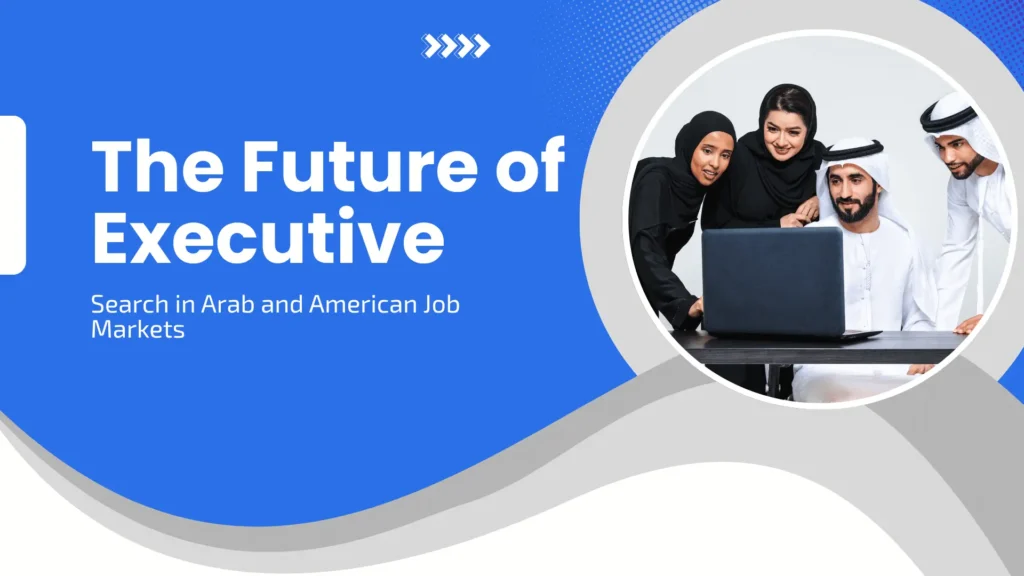
Let’s be real for a second: The way we hire executives and specialized talent has completely flipped its script. Remember when a “global search” meant posting a job ad in New York and hoping someone in Dubai saw it? Yeah, those days are gone.
Today, I’m watching two fascinating things happen at the same time. On one side, you have Arab American professionals in the US looking for new horizons or a way to plug into the megaprojects jobs back home. On the other side, you have US employers desperate for bilingual, cross-cultural leaders, and GCC businesses trying to build world-class teams.
Whether you are a software engineer in Chicago eyeing an H1B visa for software engineers or a CEO in Riyadh trying to understand US Arab joint venture project management, the future of executive search is here. And it looks a lot like a bridge between Detroit, Cairo, San Francisco, and the Dubai Silicon Oasis.
Let’s break down what that bridge looks like for job seekers, employers, and everyone in between.
The Great Pivot: From “Brain Drain” to “Brain Circulation”
For decades, the narrative was simple: ambitious talent from the Arab world moved to the US or Europe for stability. Today, the story is circulation. With Saudi Vision 2030 jobs for foreigners exploding and the UAE talent pool diversifying faster than ever, we are seeing a healthy two-way street.
Arab American professionals are uniquely positioned here. You understand the hustle of the US market (the long hours, the meritocracy, the networking) and the relationship-driven, high-context business climate of the GCC.
For US employers, this is gold. If you are hiring for a role that requires you to manage a remote team in Cairo or close a deal in Dammam, your typical Ivy League grad probably won’t cut it. You need the person who knows when to shake hands and when to share coffee.
Navigating the New Saudi Frontier: Riyadh and NEOM
If you haven’t looked at ksa recruitment trends lately, you are missing the biggest labor shift of the decade. Setting up a team in Saudi Arabia is no longer just an oil play; it is a tech and tourism revolution.
I was talking to a recruiter last week who mentioned that hiring in Riyadh has become more competitive than Dubai for certain senior roles. Why? Because the NEOM project jobs and the renewable energy jobs Saudi Arabia offer a scope that legacy markets can’t match.
What Employers Need to Know
If you are a US or European firm looking at business expansion in gcc market comparison, note this: Saudi moves fast, but the paperwork is specific. Getting a Saudi Arabia work visa requires meticulous compliance with the Ministry of Human Resources. You cannot just fly someone in and call it a day.
The companies winning right now are those investing in relocation support Middle East. If you tell a CFO from New York to move to Riyadh but give them zero help finding housing or schools, they will quit within six months. Onboarding expatriates in Middle East requires a white-glove touch.
What Job Seekers Need to Know
For Arab Americans, NEOM careers 2024 are incredibly realistic. They need people who speak fluent English and understand local customs. Look at sectors like logistics, data centers, and tourism. Tourism jobs Qatar and Saudi are booming as they prepare for global events.
Dubai Free Zones and Qatar’s Legal Landscape
While Saudi is the “new shiny object,” the UAE remains the reliable anchor. The dubai free zone setup allows companies to bypass local sponsorship laws in specific areas (like DIFC or DMCC), making it a favorite for fintech and legal firms.
If you are considering working in dubai as an american, know that the dubai expat salary guide numbers have shifted. The days of tax-free 30% premiums are leveling out. Instead, you are seeing better work-life balance and zero state income tax, which, compared to the cost of living dubai vs usa, still favors Dubai for high earners.
Conversely, qatar recruitment laws have tightened significantly. They have moved toward a standardized contract system (QWEL) that prevents companies from holding passports. This is great for expat retention dubai and Doha, as it builds trust.
The American Dream 2.0: Pathways for Arab Professionals
Let’s flip the lens. What about the Arab professional moving to the US? The executive search landscape here is highly specific.
Tech and Healthcare are the Gateways
For arab tech professionals usa jobs, the landscape is competitive but fair. The H1B visa for software engineers is a lottery, so smart candidates are also looking at O-1 visas (for extraordinary ability) or L-1 transfers (via a GCC company with a US office). USA tech relocation packages are getting more generous, but you need to negotiate for legal fees upfront.
In healthcare, the shortage is massive. For us healthcare jobs for arab medical professionals, you need to tackle the usmle for doctors (Steps 1, 2, and 3) and the nursing license usa process (NCLEX). It is a two-year journey, but the payoff is stability. Also, look for visa sponsorship for healthcare workers specifically; many hospital networks in Texas, Michigan, and Illinois have dedicated immigration teams.
The Soft Skills No One Talks About
You can have the perfect resume, but if you can’t manage the invisible cultural rules, you will fail. This is where cross-cultural training becomes a necessity, not a perk.
I recently advised a US fintech setting up a multilingual call center setup in Cairo. They assumed English was enough. It wasn’t. They needed talent for arabic customer service and a bilingual customer support center arabic english to handle the nuance. Managing that team remotely meant learning their holiday calendar (Eid vs. Christmas) and shifting meeting times for managing remote teams in different time zones.
The best cross-cultural communication in business advice I can give? Assume nothing. A “yes” in Boston might mean “I agree.” A “yes” in Jeddah might mean “I hear you, but we will see.”
FAQ: Your Burning Questions Answered
How can businesses set up a team in Saudi Arabia or Dubai?
You have two paths. For Saudi, you often need a local partner (or a branch license via the MISA portal). Start with a Temporary Work Visa, then transition to a Resident Permit. For Dubai, I recommend a Dubai free zone setup (like DMCC or Silicon Oasis) because it allows 100% foreign ownership and simplifies visas. You will also need to budget for office space, even if it is a shared desk, as the “virtual office” rules have tightened.
What are the requirements for Arab professionals to work in the US or GCC?
For the US, it depends on your field. For tech, it is usually the H1B visa lottery. For medicine, it is the USMLE and residency match. For the GCC, it is generally easier: You need a job offer, a health check, and a degree attested by your home country and the target embassy. For Saudi, the Saudi Arabia work visa requires a specific professional classification from the Ministry of Human Resources.
How can expatriates integrate smoothly and stay long term in the Middle East?
Do not skip the soft landing. Investing in relocation support Middle East (finding housing, getting a local driver’s license, and setting up a bank account) is vital. Family support UAE is the secret to retention. If your spouse is bored or your kids can’t find a school, you will leave. Join the american community in uae or similar expat groups in Riyadh. Also, understand the exit visa system (which is phasing out in most places) to feel secure.
Which sectors offer the strongest opportunities in 2024?
Right now, three sectors are on fire. First, fintech careers dubai and Riyadh—banks are digitizing fast. Second, renewable energy jobs saudi arabia—think solar and hydrogen. Third, tourism jobs qatar and megaprojects jobs (like NEOM and the Red Sea Project). In the US, look at us healthcare jobs for arab medical professionals and arab tech professionals usa jobs in AI and cybersecurity.
The Right Partner for the Bridge
Navigating this dual-market reality is tricky. You need a team that understands why an Arab American CFO might want to return to Riyadh for a saudi vision 2030 jobs for foreigners project, or why a GCC family office needs a US-educated operations manager.
This is exactly why firms like Arab American Recruiters exist. They specialize in placing Arab professionals in the US and supporting gcc economic diversification by helping US employers staff their overseas offices. Their work in expatriate onboarding and international hiring projects saves companies from the common pitfalls of visas and cultural mismatches.
Your Next Move
The future isn’t about choosing between the US market or the GCC market. It is about mastering both.
If you are an employer, stop looking for “the best candidate” in one zip code. Start looking for the candidate who can straddle time zones and cultures. If you are a professional, update your LinkedIn to highlight your bilingual skills and your experience with cross-cultural communication in business. The gcc business climate is hungry for your skills, and the uae talent pool is ready for your leadership.
Ready to bridge the gap? Visit Arab American Recruiters to see how they connect top-tier Arab talent with leading employers across the US and the Gulf. Whether you are setting up a team in saudi arabia or relocating to Boston, get an expert in your corner.