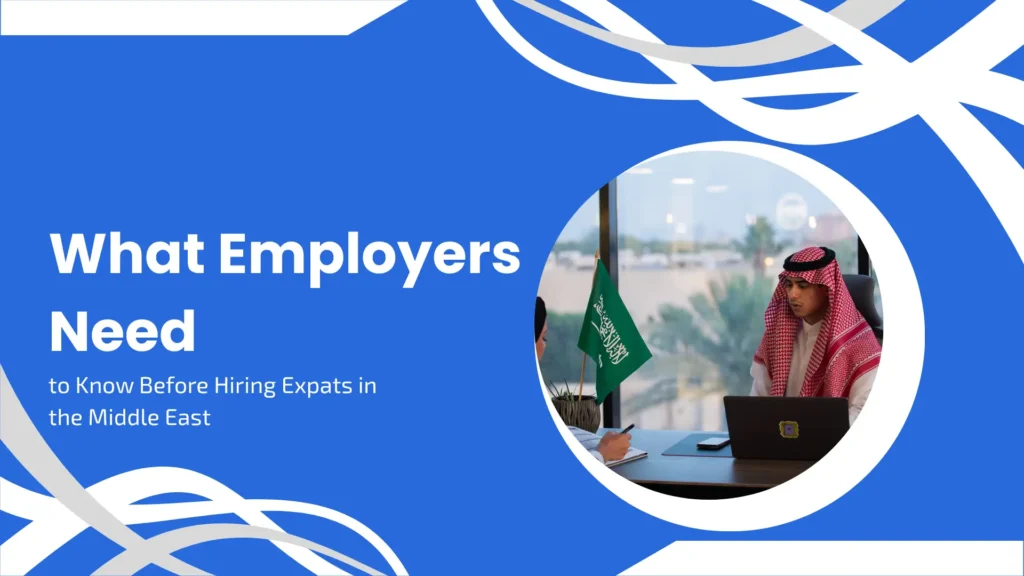
So, you’re thinking about hiring expats in the Middle East. Maybe you’re a US tech firm eyeing the gcc business climate, or perhaps you’re a saudi arabia work visa away from launching a massive business expansion in gcc market comparison project. Either way, welcome to the club.
The Middle Eastspecifically Saudi Arabia, the UAE, and Qataris currently the most exciting chessboard for international talent. But here is the reality check: hiring expats isn’t just about signing contracts and booking flights. If you get the cultural onboarding wrong or underestimate the logistics, your shiny new hire will be back on a plane in six months.
Let’s break down what actually works, what fails, and how to keep your talent happy on both sides of the Atlantic.
The Great Shift: Why Everyone is Looking at Riyadh and Dubai
For a long time, the flow was one-way: Arab professionals moved to the US for stability. Now, the pendulum is swinging back. With saudi vision 2030 jobs for foreigners popping up everywhere and neom project jobs making headlines, the uae talent pool is diversifying rapidly.
American employers are noticing. You have Arab American professionals in Detroit or Dearborn who speak fluent Arabic, understand Western compliance, and are willing to relocate. Meanwhile, GCC businesses are desperate for that specific bilingual, bi-cultural skill set.
But before you post that job ad, let’s talk about the three pillars of successful expat hiring: Visas, Onboarding, and Retention.
The Nitty-Gritty of Setting Up a Team in Saudi Arabia vs. Dubai
If you are setting up a team in saudi arabia, throw your US playbook out the window. Saudi is moving fast under Vision 2030, but bureaucracy still requires patience. The saudi arabia work visa process has digitized recently (thank goodness), but you still need a local sponsor or a regional headquarters license.
Dubai, on the other hand, is the “easy button.” A dubai free zone setup can be done in two weeks. You get 100% ownership, no corporate tax (for now), and visa processing is smooth. However, “easy” means expensive. The cost of living and schooling in Dubai is higher than Riyadh.
Pro tip from the trenches: Don’t treat these markets as interchangeable.
- Use a Dubai free zone setup for flexibility and global HQ access.
- Use KSA recruitment for scale, local market dominance, and long-term contracts.
If you are a US employer hiring internationally, remember that qatar recruitment laws are stricter regarding exit permits and contract lengths. Always check the labor law updates for 2024, as they change frequently. I couldn’t confirm the exact processing times for every visa category right now; here’s how you can verify it: always check the Ministry of Human Resources portal in KSA or the ICP in the UAE before setting a start date.
Beyond the Visa: Onboarding Expatriates in Middle East
This is where most companies fail. They get the saudi arabia work visa approved, fly the employee in, and hand them an apartment key. That is not onboarding. That is abandonment.
Onboarding expatriates in middle east requires a “white glove” approach. You are moving a human across continents. For a US family moving to Jeddah, the top fear isn’t work; it’s “What does my spouse do?” and “Where do the kids go to school?”
Family support uae (and Saudi) is your secret retention weapon. If you hire a senior engineer and don’t provide relocation support middle east that includes school searches and spousal networking, they will leave. Full stop.
We have seen clients succeed by offering:
- A dedicated relocation concierge (airport pickup, bank account setup, mobile SIM).
- Cross-cultural training (No, really. Explain the weekend is Friday-Saturday, not Saturday-Sunday).
- A clear path for dependents to find work (though the spouse visa work rules vary by emirate).
Retention: Stopping the 12-Month Exit
The dreaded “expat itch” usually hits month nine. The novelty of the dubai expat salary guide numbers wears off. The heat sets in. If you want expat retention dubai or Riyadh to succeed, you need to build community.
Cross-cultural communication in business is a skill. Your US-based team needs managing remote teams in different time zones training. You cannot expect a team in Dubai to join a 9 AM EST meeting (that’s 5 PM or 6 PM their time) every day without burning out.
Create asynchronous workflows. And for the love of coffee, invest in bringing your american community in uae or Riyadh together physically. Monthly dinners, sports leagues, or volunteering for local Saudi initiatives go further than a bonus check.
The American Dream Flows Both Ways
While we are talking about moving East, let’s not forget the talent here. Arab American Recruiters has built a reputation on this exact two-way street. We handle the messy middlefrom h1b visa for software engineers coming to Silicon Valley to us arab joint venture project management roles in the Gulf.
For arab tech professionals usa jobs, the market is hot right now. Companies are desperate for networking for arab professionals in usa, especially in fintech careers dubai and renewable energy jobs saudi arabia.
For US Employers:
If you want to tap into the uae talent pool remotely, remember you still need visa sponsorship. Usa tech relocation is expensive, but visa sponsorship for healthcare workers and usmle for arab doctors is a direct line into filling your nursing shortages. We see massive demand for us healthcare jobs for arab medical professionals because the nursing license usa process is understood by top Arab graduates.
For GCC Employers:
Stop looking only at Western expats. Look at the Arab American diaspora. They bring cross-cultural communication skills, US compliance backgrounds, and bilingual customer support center arabic english capabilities that are unmatched. If you are building a multilingual call center setup, you need talent for arabic customer service that understands slang from both Jersey and Jeddah.
The Megaprojects Driving the Future
If you are a job seeker, target the gcc economic diversification sectors. Forget oil.
- Saudi: Neom careers 2024, megaprojects jobs in logistics, and tourism jobs qatar (post-world cup growth).
- UAE: Fintech careers dubai and AI.
- Remote work: 24/7 support team structure roles for global SaaS companies.
Future skills in arabian gulf now include data centers, green hydrogen, and digital health.
FAQ: Your Burning Questions Answered
1. How can businesses set up a team in Saudi Arabia or Dubai?
For Saudi, you need to go through the Ministry of Investment (MISA) or work with a local entity to sponsor your visas. Setting up a team in saudi arabia usually requires a minimum capital investment and a physical office lease. For Dubai, look at a dubai free zone setup like DMCC or DAFZAthey handle the visa quotas and legal compliance for you. Always use a local PRO (Public Relations Officer) to manage the paperwork.
2. What are the requirements for Arab professionals to work in the US or GCC?
In the US, the main routes are the h1b visa for software engineers (lottery-based) or the EB-1/EB-2 green cards for extraordinary ability. For usmle for arab doctors, you need to pass your exams and match into a residency. In the GCC, you need a sponsor employer. The saudi arabia work visa requires a professional license verification (Dataflow) and a medical test. For Dubai, it’s a straightforward entry permit, medical, then Emirates ID.
3. How can expatriates integrate smoothly and stay long-term?
Don’t live in a bubble. Learn the local “wasta” concept (it’s not bad; it’s networking). Use relocation support middle east services to handle the banking and housing stress. The families that last are the ones who invest in cross-cultural training and let their kids attend local sports clubs. Also, be honest about the cost of living dubai vs usa; budget for school fees (they are brutal) and summer flights home.
4. Which sectors offer the strongest opportunities in 2024?
Right now? Renewable energy jobs saudi arabia (ACWA Power projects), fintech careers dubai (the VARA regulations are attracting all the startups), tourism jobs qatar, and surprisingly, us arab joint venture project management for the massive neom project jobs. Also, if you speak Arabic and English fluently, bilingual customer support center arabic english roles are paying a premium for 24/7 coverage.
Time to Make the Move
The gcc business climate is aggressive and growing. But hiring is a relationship, not a transaction. Whether you are a US hospital looking for visa sponsorship for healthcare workers or a Riyadh-based fund needing cross-cultural communication in business experts, the fundamentals are the same: respect the human, handle the logistics, and bridge the culture gap.
If you want to stop guessing and start hiringwhether that is hiring in riyadh or placing arab tech professionals usa jobstap into a network that speaks both languages.
Ready to build your international team without the headache? American Recruiters to navigate saudi arabia work visa logistics, qatar recruitment laws, and everything in between. We specialize in exactly this messy, rewarding, global puzzle.