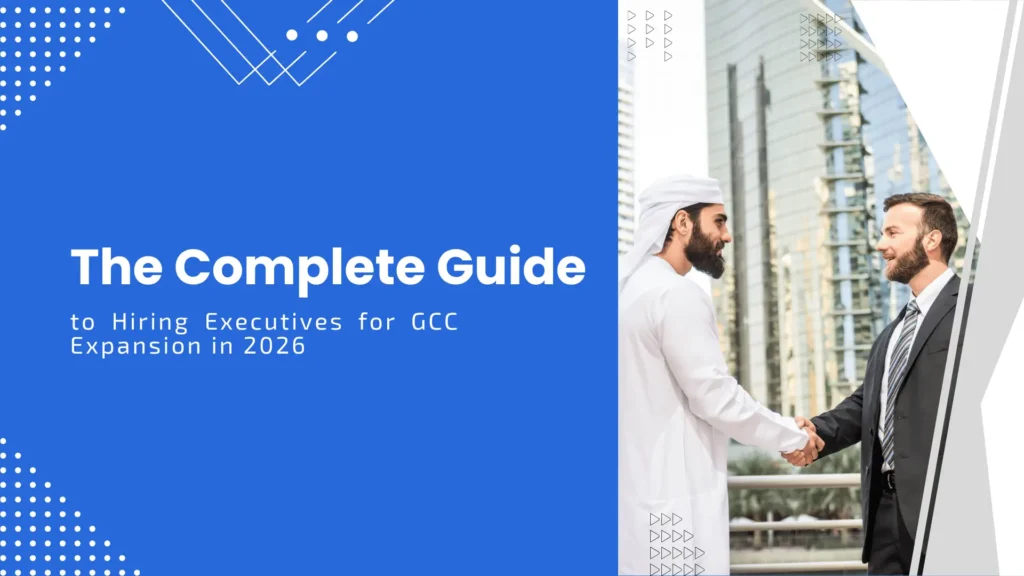
I’ve spent over a decade watching companies trip over the same expensive mistakes when expanding into the Gulf. They assume Riyadh works like Houston, or that Dubai’s glitz means regulations don’t matter. Neither is true. If you’re reading this as a US employer eyeing GCC markets, or an Arab American professional wondering whether this is your moment to go back home or step into the region for the first time, let’s cut through the noise. 2026 is shaping up to be a fascinating year for cross-border hiring, and the rules have shifted in ways most guides haven’t caught up with yet.
What makes executive hiring in the GCC so different now isn’t just the oil price or another flashy megaproject announcement. It’s that Saudi Arabia, the UAE, and Qatar are genuinely competing for talent on a global stage, and they’re doing it while rewriting their own labor laws in real time. Employers who treat this like an expat package negotiation from 2015 are already losing candidates to companies that understand what relocation support, family integration, and long-term career mapping actually look like today.
Why the GCC Executive Talent Rush Feels Different This Time
Walk into any serious conversation about business expansion in GCC market comparison right now, and you’ll hear the same tension. Saudi Arabia is moving at a pace that feels almost reckless to outsiders, the UAE is maturing into a fiercely competitive talent market, and Qatar is quietly professionalizing its entire workforce ecosystem after the World Cup infrastructure boom leveled off. Each country requires a completely different playbook.
The Saudi transformation is the one that catches most American executives off guard. Setting up a team in Saudi Arabia used to mean navigating a slow, relationship-heavy process where finding the right local partner mattered more than your actual business plan. That’s still partly true, but Vision 2030 has injected so much urgency that the government is actively smoothing paths for foreign companies who bring skills the local market can’t supply yet. I’m seeing Riyadh hiring activity spike specifically for C-suite roles in renewable energy, entertainment, and technology, sectors that barely existed there a decade ago. The NEOM project jobs and other megaprojects jobs are obviously the headline grabbers, but the quieter growth is happening in mid-sized Saudi companies that suddenly need international experience to compete.
The UAE is a different beast entirely. Dubai free zone setup remains the cleanest entry point for American companies, but the talent conversation has shifted. Employers aren’t just asking about costs anymore. They’re asking about the UAE talent pool and whether it’s deep enough to sustain growth without constantly importing senior people. The honest answer is that for certain niches like fintech careers Dubai has built a genuine cluster, but for other functions you’re still competing globally. Working in Dubai as an American doesn’t carry the mystique it once did, which means compensation packages need to reflect reality rather than a premium for the location itself.
Qatar keeps surprising people who underestimate it. Qatar recruitment laws changed significantly after the kafala system reforms, and the market is more regulated than many expect. Employers who assume Doha is just a smaller, slower Dubai often struggle with compliance and cultural expectations that don’t match the UAE playbook.
How to Actually Hire an Executive in Saudi Arabia, UAE, or Qatar
Let’s get practical because this is where timelines collapse and budgets explode. Hiring an executive in the Gulf isn’t like hiring one in Chicago. You’re not just competing on salary. You’re competing on the entire experience you’re offering someone who may be relocating a family, navigating a new legal system, and making a bet on a region they might not know well.
For Saudi Arabia, the work visa process starts with your entity. If you’re setting up a team in Saudi Arabia from scratch, you need your commercial registration and Ministry of Investment authorization before you can sponsor anyone. The Saudi Arabia work visa itself has become more streamlined for certain sectors, especially those aligned with Saudi Vision 2030 jobs for foreigners, but the medical checks and credential attestation still create delays that most American hiring timelines don’t account for. I tell every client to add six to eight weeks beyond what their lawyers promise.
The KSA recruitment market has a quirk many miss. Saudi nationals are increasingly taking roles that were once expat territory, which means the foreign executives being hired are filling genuinely specialized gaps rather than running basic operations. This makes the search harder and the onboarding more critical because you’re dropping someone into a team where cultural integration matters enormously.
In the UAE, the process is faster but the compensation expectations are more complex. The Dubai expat salary guide numbers you find online often lag reality by a year or more. I’m seeing American executives increasingly negotiate based on cost of living Dubai vs USA comparisons that factor in schooling, which in Dubai can run higher than private school tuition in major American cities. Employers who don’t address this in the initial offer letter end up reopening negotiations after the candidate does their own math.
Qatar recruitment laws require employers to provide housing, transportation, or allowances that cover both. The contract structures are more prescribed than in the UAE. Get this wrong and you’re not just dealing with an unhappy hire, you’re dealing with labor ministry complaints.
The Relocation and Onboarding Piece Nobody Budgets Properly
Onboarding expatriates in Middle East markets is where I watch great hires fall apart. Someone accepts the role, the package looks generous on paper, and then reality hits. Their spouse can’t work because the UAE or Saudi work authorization doesn’t automatically extend to partners. Their children’s school waitlists are eighteen months long. They’re in a compound that looked beautiful online but feels isolating once they’re there.
Relocation support Middle East style needs to go far beyond a flight and a temporary apartment. The companies retaining talent are the ones providing genuine family support UAE or Saudi or Qatar level, meaning school placement assistance, spousal career counseling, and cultural orientation that doesn’t feel like a condescending two-hour seminar. Cross-cultural training shouldn’t just cover “don’t shake hands with the opposite gender.” It should cover how decisions actually get made, how feedback is given and received, and why your American directness might be burning relationships you didn’t know you were damaging.
Expat retention Dubai and broader GCC data consistently shows that the number one reason executives leave within two years isn’t money. It’s family unhappiness. If you’re not thinking about the spouse and the kids from the first conversation, you’re already planning your backfill search.
What Arab American Professionals Need to Know Right Now
I talk to Arab American professionals constantly who are considering moves in either direction, back to the GCC or deeper into the US market. The calculus has changed for both paths.
For those looking at the GCC, the opportunity in renewable energy jobs Saudi Arabia and the broader gcc economic diversification push is real and growing. You’re not just seeing roles for oil and gas engineers anymore. Future skills in Arabian Gulf are trending toward AI, sustainability, tourism development, and digital infrastructure. Being bilingual and culturally fluent gives Arab Americans an edge that pure Western expats don’t have. You can bridge communication gaps that cost companies months of friction.
But don’t romanticize it. Coming back to the region as an American passport holder with Arab heritage creates its own complexity. You’ll be expected to understand cultural codes that you might have only experienced through your parents. Some organizations will see you as a Western hire and pay accordingly. Others will treat you as a local and expect local norms around working hours and hierarchy. Clarify this before you sign.
For those building careers in the United States, the pathways are shifting too. Arab tech professionals USA jobs are concentrated in hubs you’d expect like Silicon Valley, New York, and increasingly Detroit and Dallas but the visa landscape is unpredictable. H1B visa for software engineers remains the primary route for tech talent, yet the lottery system and political uncertainty mean you should never put all your eggs in one employer’s sponsorship promise. USA tech relocation packages have become less generous post-pandemic, so negotiate carefully.
US healthcare jobs for Arab medical professionals represent a steadier pipeline. The demand isn’t going anywhere. If you’re navigating USMLE for Arab doctors or the nursing license USA process, the administrative burden is significant but well-documented. Visa sponsorship for healthcare workers is more predictable than tech sponsorship simply because the shortage is so acute that hospitals treat immigration lawyers as essential infrastructure.
Networking for Arab professionals in USA markets has matured considerably. There are industry-specific associations, mentorship circles, and regional conferences that didn’t exist fifteen years ago. Use them. The diaspora network is strong if you’re intentional about engaging it.
Sectors That Will Actually Be Hiring in 2026
Let’s talk about where the demand is, because guessing wrong here costs years.
In Saudi Arabia, NEOM careers 2024 and 2025 hiring waves showed us what the market values, and the 2026 outlook suggests continued demand for project management, sustainable infrastructure, and technology integration roles. But the hidden opportunity is in the supply chain and logistics leadership positions supporting all these megaprojects. Everyone applies to the futuristic city jobs. Fewer think about the companies feeding those projects.
Fintech careers Dubai are maturing past the startup phase. The firms hiring now need compliance officers, risk managers, and seasoned operators, not just product builders. Tourism jobs Qatar are expanding again as the country pushes to become a cultural destination beyond the World Cup afterglow. Both markets need bilingual customer support center Arabic English capabilities, which creates a whole operational layer that companies often underestimate.
Multilingual call center setup and talent for Arabic customer service is actually one of the hardest things to get right in the region. Companies assume they can just hire Arabic speakers, but the dialect variations, cultural expectations around service, and the need for 24/7 support team structure across time zones make this genuinely complex. Managing remote teams in different time zones sounds manageable on paper until you’re running customer support in Arabic, English, and sometimes Hindi or Tagalog across offices in three countries.
Cross-cultural communication in business across these contexts isn’t soft skills fluff. It’s operational. A US Arab joint venture project management situation where one side expects detailed written project charters and the other expects relationship-based verbal agreements is going to bleed money until someone bridges that gap.
What I’d Tell Employers Right Now
If you’re expanding into the GCC, start your executive search earlier than feels reasonable. The talent you want is already employed, likely in the region already, and not actively looking. This means search work, not just posting and praying.
Invest in the family. Every relocation package should include meaningful spouse support, schooling guidance, and cultural integration resources. The companies doing this well aren’t just being generous. They’re protecting their investment.
Know which country fits your business culture. The UAE rewards speed and polish. Saudi Arabia rewards patience and deep relationships. Qatar rewards compliance and precision. Pick wrong and you’ll feel it in your retention numbers.
Over the years, Arab American Recruiters has built deep experience placing Arab professionals in both the US and GCC markets, and the patterns that lead to successful placements are remarkably consistent across industries. Understanding expatriate onboarding, cross-cultural dynamics, and the specific visa landscapes in each market isn’t optional knowledge anymore. It’s the baseline.
Questions I Get Asked Most Often
How can businesses set up a team in Saudi Arabia or Dubai?
The short version: in Saudi Arabia, you’ll need a legal entity, a commercial registration, and Ministry of Investment approval before you can sponsor visas. Budget four to six months for the full setup if you’re moving efficiently. In Dubai, the free zone route is fastest for companies that don’t need to operate on the mainland, often allowing setup within weeks rather than months. But free zone companies have restrictions on doing business directly in the local market, so get clear on your operating model first.
What are the requirements for Arab professionals to work in the US or GCC?
For the US, it depends entirely on your visa pathway. H1B for tech, J1 or H1B for medical roles with the appropriate licensure like USMLE for Arab doctors or nursing license USA credentials. For the GCC, the employer sponsors your work visa, but the requirements vary by country and profession. Saudi Arabia mandates degree attestation and medical clearance. The UAE process is generally faster but still requires employer sponsorship. Qatar requires authenticated documents and has specific contract requirements that protect employees more than some expect.
How can expatriates integrate smoothly and stay long term in the Middle East?
The successful ones treat it as a family project, not an individual career move. They engage with the local culture beyond the expat bubble, invest in understanding how business actually works rather than complaining about it, and make intentional choices about housing and community. The ones who leave early usually had an unhappy spouse or children who never settled.
Which sectors offer the strongest opportunities in 2024?
Renewable energy, technology, healthcare, and project management across the GCC megaprojects ecosystem. Fintech in Dubai. Tourism and hospitality management in Qatar. In the US, healthcare continues to be the most reliable pathway for Arab medical professionals, while tech demand fluctuates with the immigration policy cycle.
If you’re trying to map out your hiring strategy for the GCC or find your next opportunity as an Arab American professional, we’d welcome the conversation at Arab American Recruiters. No hard pitch, just practical guidance from people who’ve been in your shoes.