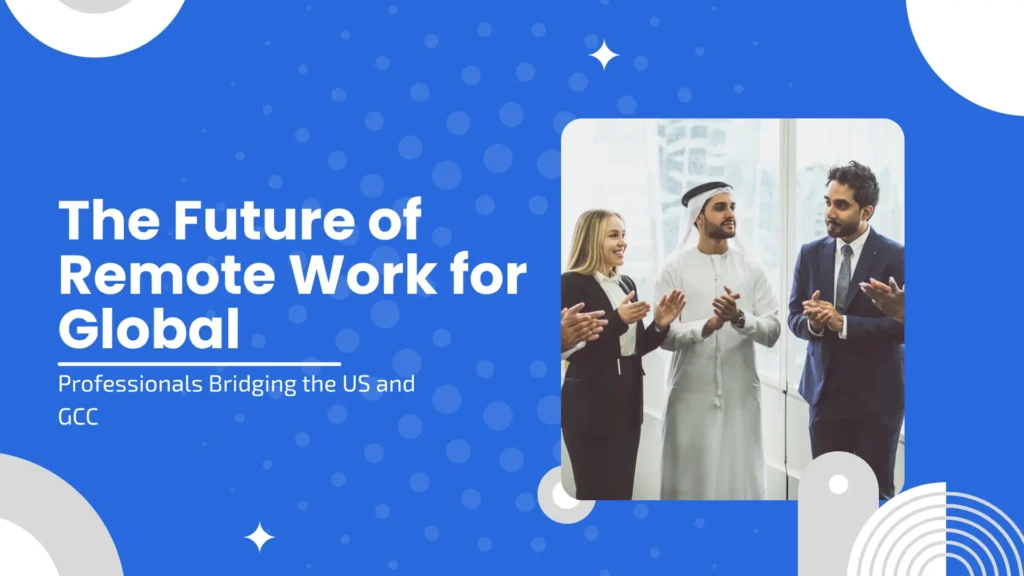
Let’s be real for a second. The world of work has been flipped, twisted, and remixed over the last few years. And honestly? That’s a good thing. For Arab American professionals, US employers hungry for global talent, and GCC businesses scaling up fast, the old rulebook is out the window.
We aren’t just talking about Zoom calls in pajamas anymore. We are talking about a fundamental shift in where we work, how we hire, and why loyalty is now earned through flexibility, not just a paycheck.
As someone who watches workforce mobility trends daily, I can tell you this: the future isn’t fully remote or fully in-office. It’s hybrid, borderless, and deeply human. Let’s break down what that actually looks like for the US-Saudi-Qatar-UAE corridor.
Why the GCC is Suddenly the Hottest Ticket for Remote and Hybrid Talent
If you are an Arab American professional, you have a secret weapon right now: bicultural fluency. US companies are desperate to expand into high-growth markets, and the GCC business climate is on fire. Meanwhile, Saudi and UAE firms are launching megaprojects jobs faster than they can fill them.
The rise of “distributed teams” means you don’t always have to pack your bags overnight. But when you do? The opportunities are staggering.
The Saudi Surge: Beyond Oil
Saudi Arabia isn’t just opening up; it is sprinting. With Saudi Vision 2030 jobs for foreigners popping up everywhere from Red Sea resorts to NEOM, the Kingdom needs people who understand Western compliance but speak Arabic like a local.
For US employers, setting up a team in Saudi Arabia used to be a nightmare of red tape. It is getting smoother. While you still need a Saudi Arabia work visa (which requires a local sponsor), the new special economic zones are loosening restrictions. If you are looking at ksa recruitment, focus on renewable energy jobs Saudi Arabia and NEOM project jobsthese entities operate almost like startups, with modern remote-work policies.
The UAE: The Hybrid Hub
Dubai and Abu Dhabi have mastered the “work from anywhere” vibe long before it was cool. For an american community in uae, the lifestyle is unbeatable. But here is the nuance: Working in Dubai as an American is different from working for a Dubai company remotely.
Many professionals are now taking US salaries (via contractor agreements) while living in a Dubai free zone setup as their own consultancy. Why? Zero percent personal income tax. However, if you take a local role, check the Dubai expat salary guide carefully. The cost of living dubai vs usa is shiftingrent is up, but services are cheaper. Smart expats are negotiating “hybrid weeks”: three days in the office for team syncs, two days remote to manage US time zones.
Qatar: The Steady Player
Don’t sleep on Doha. Qatar recruitment laws have modernized significantly post-World Cup. The key change? No more exit visas for most roles. For US healthcare and engineering firms, qatar recruitment laws now favor fixed-term contracts that can be extended remotely. The tourism jobs qatar market is booming as they pivot from sports to business tourism.
The Reverse Flow: Arab Professionals Heading to the US
Let’s flip the coin. For GCC businesses expanding into the American market, you need local feet on the ground. That’s where the uae talent pool often overlaps with the arab tech professionals usa jobs market.
The classic path is still the h1b visa for software engineers. It is a lottery, so don’t rely on it solely. Smarter GCC firms are using the L-1 visa (intra-company transfer) to move senior managers from Riyadh or Dubai to Silicon Valley. For us healthcare jobs for arab medical professionals, the process is more structured. Passing the usmle for arab doctors is hard, but the payoff is massive. Similarly, getting a nursing license usa requires a CGFNS evaluation, but US hospitals are actively sponsoring.
Here is my blunt advice for Arab Americans: Don’t just apply cold. Networking for arab professionals in usa is everything. Use LinkedIn in Arabic and English. Attend events by the Arab American Institute. And if you need a visa sponsorship for healthcare workers, target rural hospital systemsthey have more flexibility than coastal giants.
The Nitty Gritty: Hiring and Retaining Across Continents
Let’s talk logistics. Whether you are a US CEO or a Saudi HR director, the mechanics of business expansion in gcc market comparison matter.
For US Employers Hiring in Riyadh, Dubai, or Doha
You have three options:
- Entity setup (costly, but necessary for long play).
- Employer of Record (EOR) (best for testing the waters).
- Contractor agreements (risky if misclassified).
When hiring in Riyadh, understand the “Saudization” (Nitaqat) laws. You need a certain ratio of local hires. However, for specialized fintech careers dubai or neom careers 2024, exceptions exist. Your best bet? Partner with experts who live and breathe this. Firms like Arab American Recruiters specialize in placing Arab professionals in the US and GCC, handling the messy middle of onboarding expatriates in middle east so you don’t mess up the visa paperwork.
Retention: Stop Just Paying More Money
Expat retention dubai and Riyadh is failing because of loneliness, not salary. People leave due to poor relocation support middle east. If you want a senior engineer to stay for five years, you need:
- Family support uae (school placement assistance is huge).
- Cross-cultural training (teaching your US team that Thursday is the start of the weekend in GCC).
- Managing remote teams in different time zones with a “golden hour” overlap (e.g., 10am-2pm Dubai time / 2am-6am ESTor shift the US team earlier).
The Secret Sauce: Bilingual Customer Support Centers
One massive trend nobody is talking enough about: nearshoring customer service to the Arab world for the European market.
US and UK firms are realizing that bilingual customer support center arabic english is a goldmine. You don’t need a multilingual call center setup in India anymore. Egypt, Jordan, and the UAE offer highly educated, culturally aligned agents. Building a 24/7 support team structure? Split it: US team covers Americas, GCC team covers Europe/Middle East.
For talent for arabic customer service, look for professionals with us arab joint venture project management experience. They already know how to bridge the gap between a New York boardroom and a Riyadh operations center.
FAQ: Your Burning Questions Answered
How can businesses set up a team in Saudi Arabia or Dubai?
It depends on your timeline. For Saudi, you must partner with a local entity or use a government-approved EOR. The saudi arabia work visa requires a block visa and medical testing. For Dubai, a Dubai free zone setup (like DMCC or DAFZA) is fastestyou can get a license in 2-3 weeks. You get 100% ownership and no corporate tax for a certain period. Avoid the mainland unless you need to trade directly with the government.
What are the requirements for Arab professionals to work in the US or GCC?
For the US: Usually an h1b visa for software engineers or an L-1 for transfers. For healthcare, passing the usmle for arab doctors or getting a nursing license usa is step one. For the GCC: A sponsored work visa is required. The new “Freelance Visa” in UAE allows you to work for US clients while living there. For Saudi, you need a company sponsor for the saudi arabia work visa.
How can expatriates integrate smoothly and stay long term in the Middle East?
Don’t just work. Join a sports club in Dubai or a cultural group in Riyadh. Relocation support middle east should include a “buddy system” from the company. Use cross-cultural training to learn the difference between “Inshallah” (maybe) and “Bukra” (tomorrow). For families, prioritize family support uaeschools are expensive, so negotiate that into your package.
Which sectors offer the strongest opportunities in 2024?
Hands down: Renewable energy jobs Saudi Arabia (ACWA Power projects), fintech careers dubai (the VARA regulatory framework is a global leader), tourism jobs qatar (new hotels opening monthly), and us healthcare jobs for arab medical professionals (aging US population needs you). Also, watch neom careers 2024that single project will need 50,000+ skilled workers.
The Bottom Line (And Your Next Step)
The future of work is not a place. It is a mindset. For Arab Americans, you have the rare gift of moving seamlessly between the boardrooms of Boston and the majlises of Jeddah. For US and GCC employers, the winners will be those who invest in cross-cultural communication in business and managing remote teams in different time zones with empathy, not just Slack pings.
You don’t have to figure out qatar recruitment laws or hiring in Riyadh on your own. There are specialists who handle expat retention dubai and onboarding expatriates in middle east every single day.
If you are ready to stop guessing and start building a truly global teamor finding your dream role bridging the US and the Arab worldgo see how experienced partners can help Arab American Recruiters.