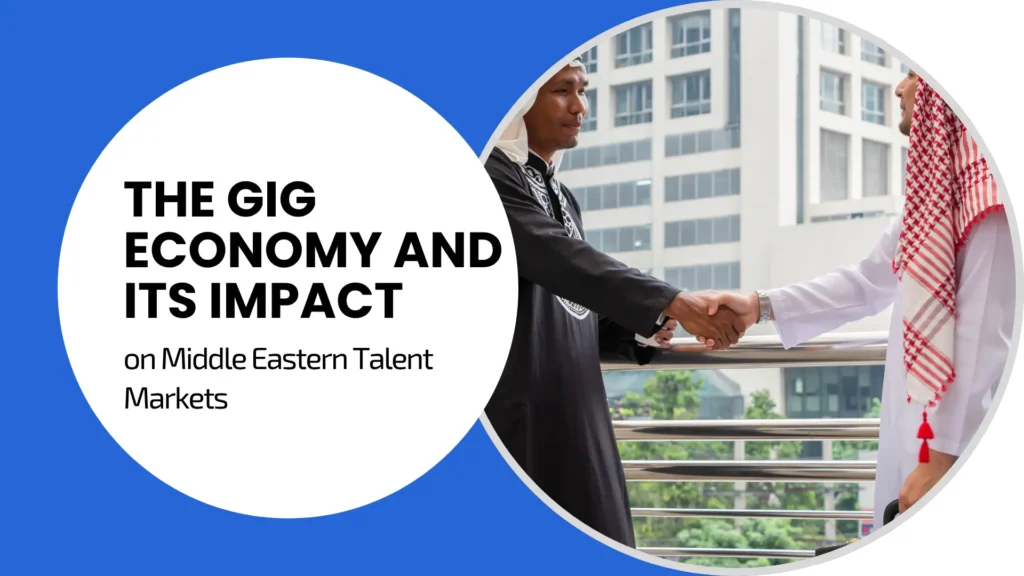
Let’s be real for a secondwhen most people hear “gig economy,” they picture someone driving for a ride-share app or freelancing from a coffee shop in Brooklyn. But here’s what’s actually happening: the gig economy has grown up, crossed borders, and is quietly reshaping how talent moves between the United States and the Gulf Cooperation Council (GCC) countries.
For Arab American professionals, US employers looking internationally, and GCC businesses scaling up fast, this shift isn’t just interestingit’s opportunity knocking.
So let’s break down what’s really going on with freelance, contract, and project-based work across the Middle East, and more importantly, how you can actually use this to your advantage.
The Old Rules vs. The New Reality
Remember when working in the Gulf meant signing a two-year contract, packing up your whole life, and committing to a traditional employer-sponsored role? That still exists, don’t get me wrong. But Saudi Arabia, the UAE, and Qatar have been quietly rewriting the playbook.
The gig economy has forced governments to get creative. Why? Because a huge chunk of the workforceespecially younger professionals and digital nativesdoesn’t want the old model anymore. They want flexibility. They want to work on megaprojects jobs without being locked into a rigid structure. And honestly? Employers are starting to prefer it too.
What’s Actually Driving This Shift in the GCC
You can’t talk about Middle Eastern talent markets right now without mentioning Saudi Vision 2030 jobs for foreigners. The Kingdom is pouring billions into diversification, and that means they need specialized skills yesterday. But not every role justifies a full-time, fully relocated employee. Sometimes you need a project manager for six months. Sometimes you need a bilingual customer support team that can spin up fast.
That’s where the gig mindset comes in.
The same goes for the uae talent pool. Dubai and Abu Dhabi have always been hubs for expatriate workers, but the rise of dubai free zone setup options has made it staggeringly easy for companies to bring in contract-based professionals without the overhead of traditional sponsorship.
And Qatar? After the World Cup, the country realized something importantthey don’t need every single worker to be a long-term resident. Qatar recruitment laws have evolved to accommodate shorter-term, project-specific hiring, especially in tourism, events, and infrastructure maintenance.
For US Employers: Why You Should Care About Gulf Gig Talent
Here’s where it gets interesting for American companies. You’re probably struggling to find bilingual Arabic-English talent stateside. The h1b visa for software engineers is a nightmare lottery system. Usa tech relocation costs are through the roof. But what if you could tap into Gulf-based professionals on flexible terms?
I’ve seen smart US companies start setting up a team in saudi arabia specifically for regional coverage, but also using Saudi and UAE-based talent to serve US hours. The time zone difference actually works in your favormorning in Riyadh is late night on the East Coast. That’s perfect for handoffs and 24/7 coverage.
The key is understanding the legal landscape. A saudi arabia work visa for a traditional employee looks different from a freelance or project-based arrangement. But many GCC free zones now offer freelance permits that allow professionals to work for multiple international clients. That’s a game-changer for US employers who want Gulf talent without setting up a full legal entity.
For Arab American Professionals: Your Two-Market Advantage
If you’re an Arab American professional reading this, you need to understand something. You have something that pure US candidates don’tcredibility in both markets. And the gig economy has made that more valuable than ever.
Let me give you a real example. I know a Palestinian American software architect who splits his year between Chicago and Dubai. He works remotely for a US fintech company while also taking short-term contracts in the fintech careers dubai space. He’s not breaking any visa rules because he structures his work through a Dubai free zone freelance permit and handles his US taxes properly.
Could he do this ten years ago? Absolutely not.
The high-demand areas right now? Renewable energy jobs saudi arabia are exploding. Neom project jobs are recruiting on contract basis constantly. Us healthcare jobs for arab medical professionals are growing, but so are opportunities to work remotely for US healthcare systems while living in the Gulf. Usmle for arab doctors still matters if you want to practice in America, but telemedicine and consulting roles are opening up new pathways.
Networking for arab professionals in usa has never been more important, but here’s the twistyour network in the Gulf matters just as much now. The gcc business climate is hungry for people who understand both American work culture and Arab business norms.
For GCC Businesses: Building Flexible, Resilient Teams
If you’re leading business expansion in gcc markets, you’ve probably noticed something frustrating. The war for talent is real, and traditional full-time hiring is slow, expensive, and risky. The gig economy offers you an alternative.
Let’s say you’re hiring in riyadh for a six-month project under Vision 2030. Do you really want to go through the full ksa recruitment process, sponsor a visa, provide housing, and then figure out what to do with that person when the project ends? Probably not.
Smart GCC companies are building hybrid workforcescore full-time teams supported by a flexible layer of contract professionals, freelancers, and project-based hires. This is especially true for tourism jobs qatar, where demand fluctuates seasonally, and for multilingual call center setup, where you might need Arabic-English agents for a specific client campaign.
The gcc economic diversification push means new sectors are emerging constantly. Neom careers 2024 alone represent thousands of project-based roles. The companies that win are the ones that figure out how to staff those projects quickly and compliantly.
The Human Side: Onboarding and Keeping Talent
Here’s something nobody talks about enough. The gig economy might offer flexibility, but it also creates isolation. Whether you’re hiring freelancers in Dubai or contract workers in Dammam, onboarding expatriates in middle east requires more thought than just sending a contract and a laptop.
Cross-cultural training isn’t just for full-time expats anymore. Your gig workers need to understand local business etiquette too. A freelance project manager from Cairo working on a Saudi megaproject still needs to know how communication flows, how decisions get made, and what the expectations are around hierarchy.
Relocation support middle east looks different for gig workers, but it still matters. Even a three-month contractor needs help finding housing, understanding local transportation, and navigating daily life. Family support uae becomes critical if you’re bringing someone in for a longer contract and they have school-aged children.
Expat retention dubai has traditionally focused on full-time employees, but I’d argue you need retention strategies for your best gig workers too. The ones who deliver consistently, understand your business, and work well with your full-time teamthose people are gold. Find ways to bring them back project after project.
Managing Across Continents
The us arab joint venture project management space has grown enormously, partly because of the gig economy. American and Gulf companies are partnering on everything from construction to software development, and they need team members who can operate in both worlds.
Managing remote teams in different time zones is its own skill set. When your US team is logging off as your Riyadh team is starting, you need clear handoff protocols, overlapping communication windows, and a culture that respects everyone’s working hours.
Cross-cultural communication in business becomes even more important when people aren’t sitting in the same room. Assumptions get made. Emails get misinterpreted. Invest time in building shared norms around how your hybrid team communicates.
Bilingual customer support center arabic english operations are a perfect example. Your US-based clients might expect instant Slack responses. Your Gulf-based agents might prefer email or scheduled calls. Neither is wrongyou just need to agree on how you’ll work together.
FAQ: Your Questions, Answered
How can businesses set up a team in Saudi Arabia or Dubai?
Start with the free zones. In Dubai, a dubai free zone setup can be completed in weeks rather than months, and many free zones offer freelance or remote work permits. In Saudi Arabia, setting up a team in saudi arabia has become easier with the Regional Headquarters program and various economic city initiatives. You’ll need local partners or a professional employer organization (PEO) to handle compliance unless you’re establishing a full legal entity. The key is matching your business needs to the right legal structuredon’t over-invest in setup if you’re just testing the market.
What are the requirements for Arab professionals to work in the US or GCC?
For the US, it depends on your profession. H1b visa for software engineers requires a sponsoring employer and luck in the lottery. Usmle for arab doctors is a multi-step process but leads to visa sponsorship for healthcare workers through hospitals and health systems. Nursing license usa varies by state but generally requires passing the NCLEX. For the GCC, a saudi arabia work visa requires a local sponsor, medical tests, and attested credentials. The UAE and Qatar have similar but slightly faster processes. Many Arab professionals find it easier to get sponsored for neom project jobs or other megaprojects because those entities handle the visa logistics internally.
How can expatriates integrate smoothly and stay long-term in the Middle East?
The short answer: don’t just work therelive there. Join community groups. Learn some Arabic phrases even if you don’t need them for work. Understand the local calendar, holidays, and social norms. American community in uae is large and welcoming, but the people who stay long-term are the ones who build genuine local friendships. Working in dubai as an american is fantastic if you embrace the lifestyle. Cost of living dubai vs usa favors Dubai on safety and convenience, but housing can be expensive. Check a dubai expat salary guide before negotiatingwhat seems like a good offer might not go as far as you think. Careers in middle east for westerners often come with housing allowances and school stipends, so look at total package, not just base salary.
Which sectors offer the strongest opportunities in 2024?
Technology leads the pack. Arab tech professionals usa jobs are growing, but so are tech roles in the Gulf. Fintech careers dubai are exploding with the UAE’s push to become a digital finance hub. Renewable energy jobs saudi arabia are central to Vision 2030. Tourism jobs qatar continue to grow post-World Cup. Healthcare is massive in both marketsus healthcare jobs for arab medical professionals in telemedicine and administration, plus clinical roles for those with US credentials. And don’t sleep on talent for arabic customer serviceevery multinational needs bilingual support, and 24/7 support team structure relies on professionals who can work US, European, and Gulf hours.
A Quick Word on Getting Expert Help
Navigating two complex labor markets isn’t something you should figure out alone. Whether you’re an Arab American professional trying to understand usa tech relocation packages, a US employer exploring ksa recruitment, or a GCC company expanding into the American market, working with specialists who understand both sides makes everything smoother.
Firms like Arab American Recruiters focus specifically on placing Arab professionals in the US and GCC, with deep expertise in expatriate onboarding and international hiring projects. They’ve seen the gig economy shift up close and can help you structure arrangements that work legally, practically, and financially.
The Bottom Line
The gig economy isn’t killing traditional employment in the Middle Eastit’s adding options. For employers, that means you can staff projects faster and more flexibly. For professionals, it means you can work across borders without uprooting your whole life every time.
The smart players in both the US and GCC markets are already figuring out how to use these new tools. The question isn’t whether the gig economy will impact Middle Eastern talent markets. It already has. The question is whether you’ll adapt fast enough to benefit from it.