Let’s be honest: The business world has gotten smaller, but the learning curve for international hiring has not.
Whether you are an Arab American professional looking to leverage your dual heritage, a US employer trying to tap into the uae talent pool, or a GCC business scaling up under Saudi Vision 2030 jobs for foreigners, you face the same awkward problem: How do we actually work together without stepping on cultural landmines?
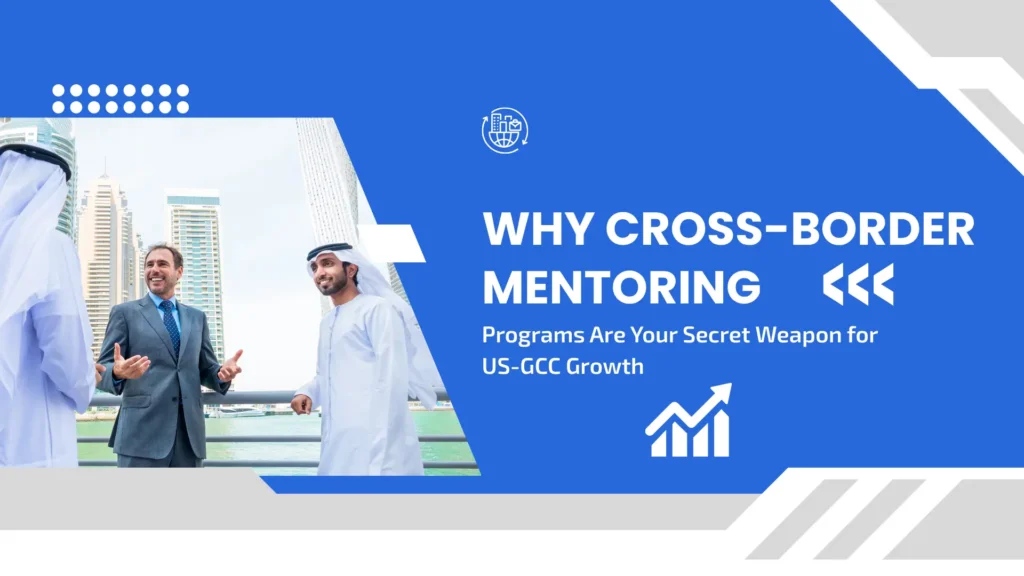
The answer isn’t a fancy software platform. It’s people. Specifically, cross-border mentoring programs.
When done right, these programs turn “relocation stress” into “career rocket fuel.” They save US companies millions in turnover and help GCC businesses retain the global talent they fought so hard to bring in. Let’s break down why this works, how to avoid the cringe, and where the real opportunities are hiding in 2024.
Why Traditional Onboarding Fails (And Mentoring Wins)
Most companies still do the “sink or swim” method. You hire a software engineer from Cairo, fly them to Riyadh, hand them a housing stipend, and say “good luck.” That engineer lasts six months before burning out due to loneliness and confusion over local business etiquette.
Cross-border mentoring flips the script. It pairs a new hire (the mentee) with a veteran insider (the mentor) who has walked that exact path.
For US employers hiring internationally, this is your retention hack. For GCC businesses, this is how you turn a work visa into a long-term career. Mentorship bridges the gap between “I have a job” and “I belong here.”
The Arab American Advantage: The Ultimate Bridge
If you are an Arab American professional reading this, stop underestimating your value. You are the natural mentor for this ecosystem.
You understand the direct communication style expected in US boardrooms, but you also get the wasta (networking) nuances of the Gulf. You know that “Inshallah” doesn’t always mean “maybe” in a project deadline context. You are the human Rosetta Stone.
US tech firms expanding into neom project jobs desperately need you. Likewise, GCC firms setting up a team in saudi arabia need you to train their local managers on how to handle remote US contractors. Don’t wait for a job description; pitch yourself as a cross-cultural facilitator.
Best Practices for Building a Mentoring Program That Doesn’t Suck
I’ve seen too many “mentoring programs” die after two Zoom calls. Here is how to build one that actually drives business expansion in gcc market comparison strategies.
1. Start Before the Plane Takes Off
Mentoring shouldn’t begin on Day 1. It should begin when the contract is signed.
- For Employers: Connect your new expat with a mentor two weeks before relocation. The mentor handles the real questions: Where do I find bacon in Riyadh? How do I setup a bank account? Is the salary guide accurate?
- For Job Seekers: If you are moving for hiring in Riyadh, ask HR if they have a “buddy system.” If they don’t, use LinkedIn to find a fellow expat in the company.
2. Structured but Not Stuffy
Don’t just say “be friends.” Give them prompts.
- Week 1: Review the dubai expat salary guide vs. reality.
- Week 2: Role-play a difficult conversation with a local stakeholder.
- Week 3: Tour the area for family support uae (schools, clinics, housing).
3. Close the Feedback Loop
Mentors need to report upward. If every mentee is struggling with cross-cultural communication in business, that tells HR they need better cross-cultural training for the whole office.
Sector Spotlight: Where the Jobs Are Right Now
Whether you are chasing h1b visa for software engineers in Silicon Valley or neom careers 2024 in Tabuk, the rules are changing. Here is the real-time landscape.
For Arab Professionals Heading to the USA
The path isn’t just tech anymore.
- Healthcare is booming: Us healthcare jobs for arab medical professionals are surging. Hospitals need bilingual staff. If you have completed your usmle for arab doctors or your nursing license usa, look for visa sponsorship for healthcare workers. It’s easier to get than a tech visa right now.
- Tech remains strong: Despite layoffs, arab tech professionals usa jobs are secure if you specialize in AI or cybersecurity. Usa tech relocation packages are getting leaner, so negotiate hard.
For Westerners & Americans Heading to the GCC
The “expat package” isn’t what it was in 2015, but the quality of life is still elite.
- Working in dubai as an american means no income tax, but the cost of living dubai vs usa is now almost equal. Don’t move for the money; move for the lifestyle and zero tax on investments.
- Megaprojects are hiring: Beyond oil, look at renewable energy jobs saudi arabia and fintech careers dubai. The gcc business climate is thirsty for AI and logistics experts.
- Qatar is specific: Qatar recruitment laws have tightened (hello, standardized contracts). Always run your offer by a local legal expert.
The Compliance Corner: Visas & Setup
You cannot mentor someone if they aren’t legally allowed to work. Let’s cut through the noise.
For US Employers hiring from the GCC:
If you want to relocate an Arab professional to the US, you are looking at the h1b visa for software engineers (lottery-based, stressful) or the L-1 for intra-company transfers. Start the process 9 months in advance. Do not promise a start date you can’t keep.
For GCC Employers hiring Americans or Expats:
- Saudi Arabia: Setting up a team in saudi arabia requires a saudi arabia work visa (Taqeef is your friend). The ksa recruitment landscape is shifting fast with Vision 2030. You need a local sponsor (often a PEO) to start.
- Dubai: Dubai free zone setup is the fastest route. It offers golden visas for senior talent. If you are working in dubai as an american, push for a Free Zone visa; it gives you more freedom.
- Qatar: Be aware of the sponsorship (Kafala) reforms. It’s better now, but qatar recruitment laws still favor the employer in disputes.
The Retention Secret: It’s Always the Family
Here is a truth that HR manuals get wrong: Expat retention is not about salary; it’s about spouse happiness.
When onboarding expatriates in middle east, you absolutely must discuss relocation support middle east that covers the partner. If a software engineer moves to Riyadh for neom project jobs, but their spouse cannot find work or community, they will leave within 12 months.
Best Practice: Extend the mentoring program to the spouse. Connect them with the american community in uae or a similar group in Saudi. Help them understand the gcc business climate for their own job search. If the family is stable, expat retention dubai rates skyrocket.
FAQ: Your Cross-Border Questions Answered
Q: How can a US business actually start setting up a team in Saudi Arabia or Dubai without a local office?
A: Use an Employer of Record (EOR). They handle the saudi arabia work visa and compliance while you manage the team. For Dubai, look at dubai free zone setup options like Meydan or DMCC, which allow 100% foreign ownership. Do not try to run a “remote contractor” model for full-time work in the GCC; labor laws are too strict.
Q: What are the specific requirements for Arab professionals wanting to work in the US vs. the GCC?
A: For the US: You generally need a bachelor’s degree and a job offer before you apply for an h1b visa for software engineers or a green card sponsorship. For us healthcare jobs for arab medical professionals, you must pass the usmle for arab doctors (or nursing license usa) before you can get a visa. For the GCC: The barrier is lower but the bureaucracy is higher. You need a job offer first; the employer sponsors the saudi arabia work visa or UAE residence visa. Medical and educational certificates must be attested (translated and notarized), which takes 2-3 months.
Q: How can expatriates integrate smoothly and stay long-term in the Middle East?
A: Learn the “why” behind the rules. Take cross-cultural training seriously. Understand that Friday is the holy day (Sunday is a work day). Most importantly, invest in family support uae or Saudifind schools, social clubs, and Arabic classes for the kids. The expats who last are the ones who stop comparing everything to “back home.”
Q: Which sectors offer the strongest opportunities in 2024?
A: Three stand out: 1) Renewable Energy: Renewable energy jobs saudi arabia are exploding due to Saudi Vision 2030 jobs for foreigners. 2) Tech & Finance: Fintech careers dubai and neom project jobs for AI specialists. 3) Tourism & Service: Tourism jobs qatar (post-World Cup legacy) and bilingual customer support center arabic english roles across the region. For US-bound Arabs, us healthcare jobs for arab medical professionals are the safest bet.
The Bottom Line
Cross-border mentoring isn’t a “nice to have.” It is the operating system for the modern, bilingual, bi-continental workforce.
Whether you are a US firm trying to crack the gcc business climate, or a Saudi company hunting for niche skills, remember that culture eats strategy for breakfast. You can have the best dubai expat salary guide and the fastest saudi arabia work visa, but if you don’t have a trusted mentor to show the new hire where to buy peanut butter or how to say “no” politely to the boss, you will lose them.
And for the Arab American professionals stuck in the middle? Lean in. You are the bridge. Go build it.
Ready to bridge the gap?
Whether you need help setting up a team in saudi arabia, navigating usa tech relocation, or finding bilingual talent for a multilingual call center setup, we’ve been in the trenches.
Contact Arab American Recruiters to find the talentor the mentorwho speaks your language, literally and professionally.