Over the last decade, I have watched interest in Middle East careers shift from cautious curiosity to serious intent. Western professionals are no longer just testing short term contracts. Many are moving families, building long term careers, and taking leadership roles across Saudi Arabia, the UAE, and Qatar.
At the same time, US employers and GCC companies are navigating workforce mobility at a level that did not exist before. Vision driven projects, regional expansion, and global hiring have created real opportunity and real friction.
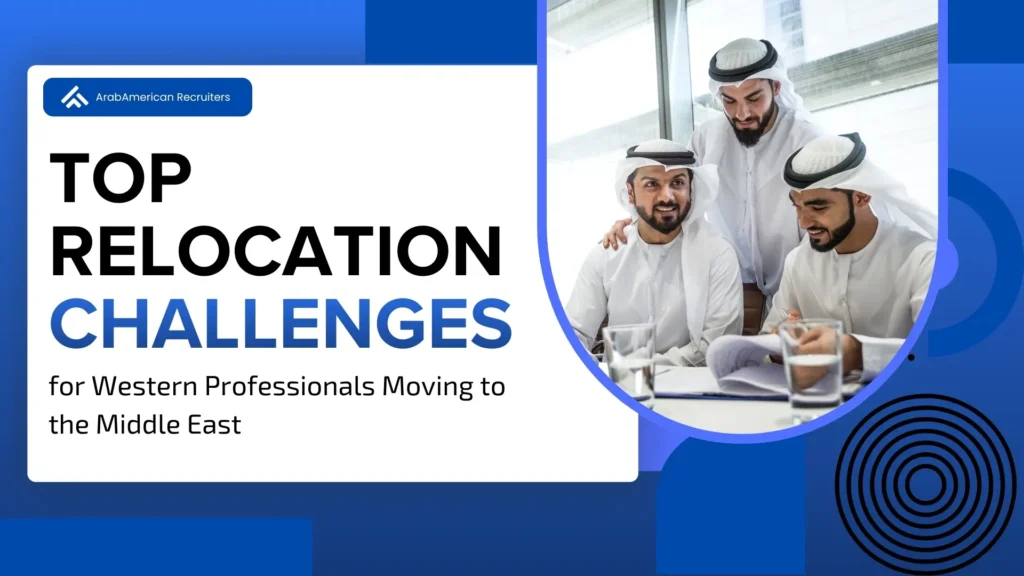
Relocating to the Middle East can be rewarding, but it is rarely simple. Below are the most common challenges I see, why they matter, and how professionals and employers can prepare for them without unnecessary stress.
Understanding the Reality Beyond the Offer Letter
One of the biggest surprises for Western professionals is that a strong compensation package does not automatically translate into an easy transition.
Working in Dubai as an American or relocating to Riyadh often looks straightforward on paper. In reality, relocation support Middle East programs vary widely by employer. Housing, schooling, healthcare access, and family support UAE policies differ from company to company.
Professionals who thrive are the ones who ask detailed questions early. Employers who retain talent are the ones who address these issues before arrival rather than reacting later.
Visa Processes That Require Patience and Precision
Visa compliance is one of the first real obstacles.
A Saudi Arabia work visa involves coordination between government systems, local sponsors, and employers. Small errors can delay start dates by weeks. The same applies when hiring in Riyadh or onboarding expatriates in Middle East operations.
Qatar recruitment laws also require close attention, especially for contract terms and role classifications. The UAE tends to move faster, particularly within a Dubai free zone setup, but documentation still matters.
For Arab professionals pursuing US roles, the process brings its own complexity. The H1B visa for software engineers remains competitive and time sensitive. Healthcare professionals face additional layers such as USMLE for Arab doctors or nursing license USA requirements.
If something cannot be verified in advance, say it clearly and confirm directly with immigration counsel or government portals. Guesswork creates frustration on both sides.
Cultural Adjustment Is Not Optional
This is where many relocations struggle quietly.
Cross cultural communication in business is not about learning polite phrases. It is about understanding decision making styles, hierarchy, time expectations, and feedback norms.
Saudi workplaces are evolving rapidly due to Saudi Vision 2030 jobs for foreigners, but relationship building still matters. In the UAE, multinational teams require clarity and adaptability. Qatar often blends formal process with relationship driven trust.
Cross cultural training should never be treated as a soft extra. It directly impacts productivity, retention, and leadership credibility. Managing remote teams in different time zones only amplifies this need.
Family Considerations Can Make or Break Retention
Professionals with families face additional pressure.
School availability, spousal employment options, and healthcare access are among the most common concerns. Family support UAE programs are often stronger than in newer Saudi markets, but the gap is closing fast.
Employers focused on expat retention Dubai strategies or long term KSA recruitment success invest in family onboarding just as much as professional onboarding. Without it, even well paid professionals quietly plan their exit.
Cost of Living Expectations vs Reality
Cost of living Dubai vs USA comparisons often surprise newcomers.
Housing, education, and lifestyle expenses can offset tax advantages if expectations are not aligned. Dubai expat salary guide discussions should include realistic budgeting conversations, not just headline numbers.
Riyadh and Doha can be more affordable in some areas, but availability and quality vary by neighborhood. Transparent discussions upfront help professionals make informed decisions rather than emotional ones.
Career Trajectory Concerns for Western Professionals
A common fear is whether a Middle East role will limit future options.
In practice, careers in Middle East for westerners can accelerate leadership experience if positioned correctly. Exposure to megaprojects jobs, regional expansion, and diverse teams builds skills that translate globally.
NEOM project jobs and renewable energy jobs Saudi Arabia in particular are giving professionals experience that few markets can match. Fintech careers Dubai and tourism jobs Qatar also continue to attract global talent.
The key is framing the role strategically on future resumes and LinkedIn profiles.
Employer Challenges When Building Regional Teams
From the employer side, the challenges are equally real.
Setting up a team in Saudi Arabia requires understanding local labor rules, sponsorship models, and market expectations. KSA recruitment timelines are improving, but planning remains essential.
Business expansion in GCC market comparison exercises help companies decide where to hire first. Dubai offers speed and infrastructure. Riyadh offers scale and long term growth. Qatar offers stability and targeted sector opportunities.
UAE talent pool access is strong, especially for multilingual roles such as bilingual customer support center Arabic English teams. Multilingual call center setup and 24/7 support team structure planning benefit from regional workforce diversity.
Retention Is Harder Than Hiring
Hiring is only the first step.
Expat retention Dubai and Riyadh strategies depend on clear growth paths, transparent performance expectations, and consistent communication. Professionals leave when they feel disconnected or underutilized.
Onboarding expatriates in Middle East operations should extend beyond the first week. Check ins at three, six, and twelve months matter. So does ongoing cultural support.
This is where experienced partners like Arab American Recruiters have seen the biggest difference. Their work placing Arab professionals in the United States and GCC markets highlights how structured onboarding and realistic role alignment reduce early turnover.
Arab Professionals Navigating US and GCC Pathways
Arab professionals often move in both directions.
Some pursue arab tech professionals USA jobs or us healthcare jobs for arab medical professionals before returning to the region with enhanced credentials. Others build US careers while supporting US Arab joint venture project management initiatives remotely.
Networking for Arab professionals in USA remains critical. Community support accelerates job search success and professional confidence.
For healthcare workers, visa sponsorship for healthcare workers combined with licensing preparation requires long term planning. Shortcuts rarely work.
Where Opportunities Are Strongest Right Now
Looking at current trends, several sectors stand out.
Technology continues to dominate, especially software, data, and cybersecurity roles. Healthcare demand remains strong across the US and GCC. Renewable energy, fintech, tourism, and megaprojects align closely with GCC economic diversification goals.
Future skills in Arabian Gulf markets increasingly include leadership, adaptability, and cross regional coordination, not just technical expertise.
Industry FAQs People Actually Ask
How can businesses set up a team in Saudi Arabia or Dubai
Start by understanding legal structure options and hiring timelines. A Dubai free zone setup offers speed, while Saudi expansion requires deeper local engagement. Build compliance and cultural planning into your launch timeline.
What are the requirements for Arab professionals to work in the US or GCC
Requirements vary by role and country. GCC roles require employer sponsorship and valid work visas. US roles often require visa sponsorship such as H1B for tech or specific licensing for healthcare. Always confirm with official authorities.
How can expatriates integrate smoothly and stay long term in the Middle East
Success comes from preparation, openness, and support. Invest in cross cultural training, build local networks, and involve families early in the transition.
Which sectors offer the strongest opportunities in 2024
Technology, healthcare, renewable energy, fintech, tourism, and large scale development projects continue to lead hiring across the region.
A Practical Next Step
Relocation works best when expectations match reality. Whether you are a professional considering your next move or an employer expanding across borders, clarity beats optimism every time.
Organizations like Arab American Recruiters bring firsthand experience in international hiring, expatriate onboarding, and cross market workforce planning. If you want guidance grounded in real placements rather than theory, explore their insights at Arab American Recruiters.
The Middle East offers opportunity, but only for those who approach relocation with preparation, patience, and perspective.