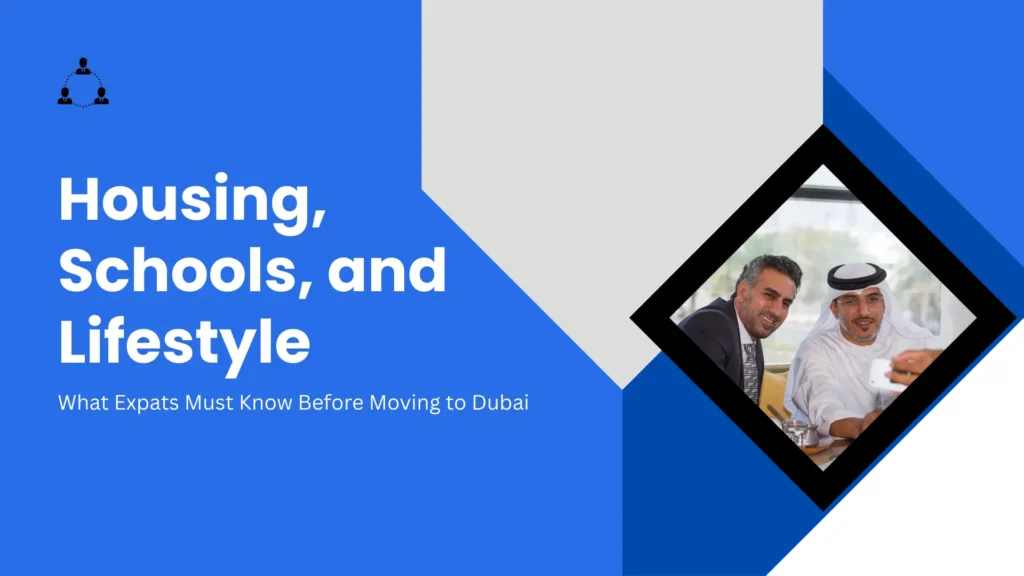
Moving to Dubai is not just a career decision. It is a lifestyle shift that affects your family, finances, and long-term plans. Whether you are an Arab American professional exploring careers in the Middle East for westerners, a US employer managing international relocation, or a GCC business expanding its workforce, understanding daily life in Dubai matters just as much as understanding contracts and visas.
I have worked for years on international hiring projects and onboarding expatriates in the Middle East. The biggest mistakes I see are not about salaries or job titles. They are about housing choices, school decisions, and lifestyle expectations. Let us walk through what really matters before you pack your bags.
Why Dubai Remains a Top Destination for Global Talent
Dubai continues to attract talent from across the US, Europe, and the wider Arab world because of its business-friendly environment, strong infrastructure, and access to the broader GCC business climate. It is also a strategic base for companies hiring in Riyadh, Doha, and beyond.
Many professionals come for fintech careers in Dubai, healthcare leadership roles, renewable energy projects, or regional management positions. Others relocate because their employer is scaling across the region, sometimes alongside setting up a team in Saudi Arabia or supporting business expansion in GCC market comparison strategies.
But life in Dubai feels very different depending on where you live, how your children are educated, and how well your employer supports relocation.
Housing in Dubai: What You Really Need to Know
Dubai offers everything from beachfront villas to downtown apartments, gated communities, and suburban family compounds. Your housing choice will shape your daily experience more than almost any other factor.
Popular residential areas include:
- Dubai Marina and Downtown for young professionals and couples
- Arabian Ranches, Mirdif, and Jumeirah for families
- Business Bay for professionals working in financial or consulting sectors
Rent is usually paid annually or in a small number of postdated checks, which surprises many Americans. Some employers include housing allowances, while others leave housing entirely up to the employee.
When comparing cost of living Dubai vs USA, housing is often higher than in many US cities, but not always higher than places like New York, San Francisco, or Washington DC. Utilities, domestic help, and school fees are major cost drivers.
What employers should consider:
- Offering relocation support Middle East packages that include housing assistance
- Providing temporary accommodation during the first month
- Helping new hires understand lease contracts and landlord expectations
This kind of support directly improves expat retention Dubai and reduces early turnover.
Schooling Options for Expat Families
Education is one of the most critical issues for families relocating to Dubai. The city has a large number of international schools, but quality, cost, and curriculum vary widely.
Common curricula include:
- American
- British
- International Baccalaureate
- Indian CBSE
- IB and bilingual programs
School fees are often not fully covered by employers, and waiting lists can be long, especially for top-tier schools. Parents moving mid-year should prepare backup options.
For Arab American families, bilingual education in Arabic and English is increasingly available, which supports cultural continuity and long-term language development.
Practical advice for families:
- Apply to schools before finalizing housing
- Ask employers about family support UAE policies
- Visit campuses virtually if relocating from abroad
Employers serious about onboarding expatriates in Middle East roles should treat school placement as part of the recruitment and retention strategy, not an afterthought.
Lifestyle in Dubai: Daily Life Beyond Work
Dubai’s lifestyle is a mix of Middle Eastern traditions and global modernity. You will find mosques next to malls, family-oriented neighborhoods next to nightlife districts, and conservative dress codes in some settings alongside beach clubs and luxury resorts.
Work-life balance varies by industry.
Tech, fintech, and consulting roles often mirror US working hours, while healthcare, construction, and hospitality may require shift-based schedules.
Social life is built around:
- Restaurants and cafes
- Fitness and outdoor activities
- Family-friendly events and community gatherings
- Cultural festivals and religious holidays
For Americans wondering about working in Dubai as an American, daily life is generally comfortable and safe, but it requires cultural awareness and flexibility.
Cross-cultural training is not optional.
Professionals who invest in understanding local norms, communication styles, and workplace etiquette adapt faster and perform better. This applies equally to employees and managers leading teams across borders.
For Employers: How to Set Up Teams and Hire in Dubai and Beyond
Dubai often serves as a regional hub for companies expanding across the GCC. Many organizations start with a Dubai free zone setup and then expand into Saudi Arabia and Qatar.
Key considerations for employers:
- Understand visa sponsorship processes
- Comply with labor laws and Emiratization policies where applicable
- Structure compensation packages to reflect local cost structures
- Provide relocation and onboarding support
This is particularly important for companies also hiring in Riyadh or pursuing Saudi Vision 2030 jobs for foreigners. Saudi Arabia work visa processes, KSA recruitment practices, and hiring in Riyadh now require careful compliance and local partnerships.
Similarly, companies exploring Qatar recruitment laws must understand sponsorship rules, labor protections, and sector-specific licensing requirements, especially in healthcare, energy, and tourism.
Organizations that invest in strong onboarding expatriates in Middle East frameworks consistently outperform those that treat relocation as a transactional HR task.
For Job Seekers: Career Pathways in Dubai, Saudi Arabia, Qatar, and the US
For Arab professionals, career mobility now flows in both directions. Many pursue opportunities in the GCC, while others aim for roles in the United States through H1B visa for software engineers, healthcare sponsorship programs, or academic pathways.
High demand sectors in the GCC include:
- Technology and fintech careers Dubai
- Renewable energy jobs Saudi Arabia
- Megaprojects jobs including NEOM project jobs
- Tourism jobs Qatar
- Healthcare leadership and hospital administration
- Multilingual customer support centers and 24/7 support team structures
In the US, Arab professionals often pursue:
- Arab tech professionals USA jobs
- US healthcare jobs for Arab medical professionals
- USMLE for Arab doctors
- Nursing license USA
- Visa sponsorship for healthcare workers
Each pathway has distinct licensing, credentialing, and visa requirements. I could not confirm the most current processing timelines for every category; here is how you can verify it. Check official immigration portals and professional licensing boards for up-to-date requirements.
For those considering USA tech relocation or careers in the Middle East for westerners, strategic career planning across regions is increasingly common, especially for bilingual and multicultural professionals.
Retaining Expat Talent in Dubai
Hiring international talent is only half the equation. Retaining that talent requires thoughtful policies, cultural awareness, and family-focused support.
Top retention drivers include:
- Clear career progression paths
- Competitive compensation aligned with market realities
- Family integration support
- Ongoing cross-cultural training
- Transparent communication from leadership
Employers who ignore family needs, schooling challenges, or cultural adaptation issues often lose talent within the first year.
This is where specialized recruitment partners like Arab American Recruiters bring long-term value. They have extensive experience placing Arab professionals in the US and GCC, supporting expatriate onboarding, and managing international hiring projects across industries.
Housing, Schools, and Lifestyle in Context of Regional Expansion
Many companies view Dubai as the gateway to the GCC. From there, they expand into Saudi Arabia, Qatar, and sometimes Oman or Kuwait.
Understanding lifestyle expectations in Dubai helps employers design better relocation programs for Riyadh, Jeddah, Doha, and emerging cities connected to megaprojects and GCC economic diversification initiatives.
For example:
- NEOM careers 2024 require candidates who are comfortable with developing regions and evolving infrastructure.
- Riyadh hiring increasingly attracts families, not just single professionals.
- Qatar’s tourism and infrastructure sectors demand culturally adaptable, multilingual teams.
Employers who succeed in one market often replicate their relocation models across others, adjusting for local norms and regulations.
Industry FAQ: What Professionals and Employers Ask Most
Q: How can businesses set up a team in Saudi Arabia or Dubai?
Most companies begin with a legal entity or a free zone registration in the UAE, then expand into Saudi Arabia through local partnerships or licensed entities. For Saudi Arabia, you will need to navigate Saudi Arabia work visa processes, labor quotas, and compliance rules. It is strongly recommended to work with local legal and recruitment experts to avoid delays.
Q: What are the requirements for Arab professionals to work in the US or GCC?
Requirements vary by country and profession. In the US, many professionals pursue H1B visas, healthcare sponsorship, or academic pathways. In the GCC, work visas are employer-sponsored and tied to contracts. Licensing is required in regulated fields such as healthcare and engineering. I could not confirm all licensing timelines; verify directly with professional boards and immigration authorities.
Q: How can expatriates integrate smoothly and stay long term in the Middle East?
Successful integration comes from cultural openness, community engagement, family stability, and employer support. Cross-cultural training, networking for Arab professionals in USA or GCC, and access to family services significantly improve long-term retention.
Q: Which sectors offer the strongest opportunities in 2024?
In the GCC, technology, renewable energy, healthcare, tourism, and megaprojects are driving demand. In the US, healthcare, software engineering, and data science remain strong. Bilingual professionals, especially in Arabic and English, have a competitive advantage across regions.
What Expats Often Underestimate
Many professionals underestimate:
- The complexity of school enrollment
- The impact of housing location on commute and lifestyle
- Cultural adaptation in workplace communication
- The importance of community and support networks
They often overestimate:
- How quickly daily life will feel familiar
- How much employers will handle without being asked
- How similar workplace norms are to US or European offices
Understanding these realities upfront leads to smoother transitions and better career outcomes.
Final Thoughts for Employers and Professionals
Dubai offers exceptional professional opportunities, but success depends on preparation. Housing, schools, and lifestyle are not side issues. They are central to workforce mobility, expat retention, and international recruitment success.
For employers, investing in relocation support, cross-cultural training, and family integration is not a luxury. It is a strategic necessity.
For professionals, thoughtful planning, cultural openness, and realistic expectations will shape not only your work success but your family’s happiness and stability.
Organizations like Arab American Recruiters play a critical role in bridging these worlds. Their experience in placing Arab professionals in the US and GCC, combined with deep expertise in expatriate onboarding and international hiring projects, makes them a trusted resource for both employers and job seekers navigating global careers ARAB AMERICAN.