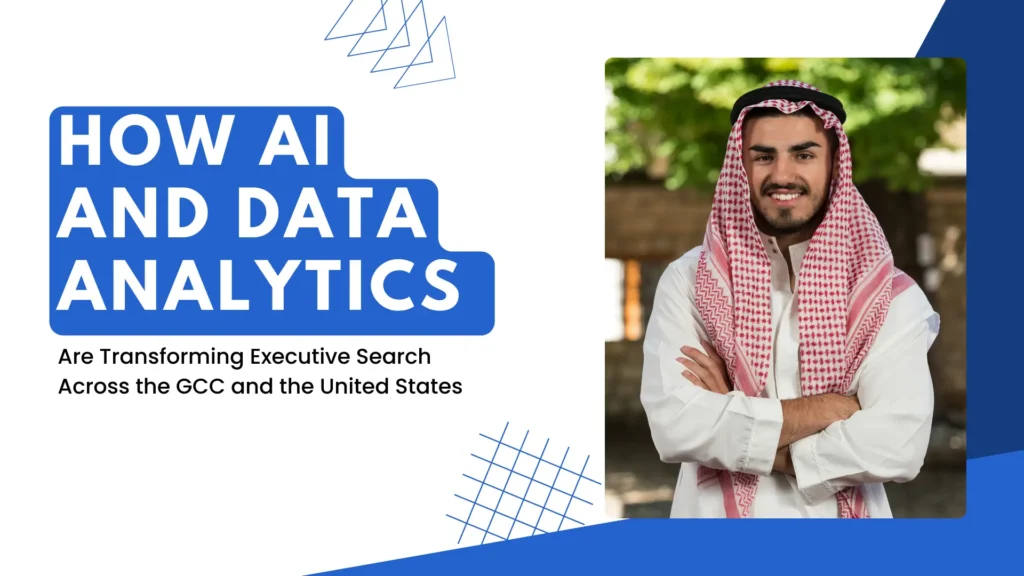
Executive search used to rely heavily on relationships, intuition, and long conversations over coffee. Those elements still matter, especially in relationship driven markets like Saudi Arabia, the UAE, and Qatar. What has changed is how much smarter and faster the process has become thanks to AI and data analytics.
For Arab American professionals, US employers hiring internationally, and GCC businesses building teams, this shift is not theoretical. It is already shaping who gets hired, how fast leadership teams come together, and how well those hires succeed long term.
I have seen firsthand how executive search has evolved from manual shortlists to insight driven decision making. When used responsibly, AI does not replace human judgment. It sharpens it.
Let us break down what is actually changing, what is not, and what this means if you are hiring or building a cross border career.
What AI Really Means in Executive Search Today
AI in recruitment often sounds more complicated than it is. In practice, it refers to software that can analyze large volumes of candidate data and identify patterns humans would miss.
In executive search, AI is commonly used to:
• Map global talent markets and leadership availability
• Analyze career progression and mobility trends
• Match candidates to roles based on experience, skills, and context
• Predict hiring risks such as early attrition
Data analytics adds another layer by helping recruiters understand regional workforce behavior. For example, leadership retention in Riyadh looks different from retention in Dubai or Houston. Data helps explain why.
This matters deeply when working across the GCC business climate, where cultural fit, visa timelines, and relocation readiness are just as important as job titles.
Why This Shift Matters in the GCC Right Now
The GCC is not hiring incrementally. It is hiring at scale.
Saudi Arabia alone is reshaping its economy through Vision 2030. Demand for leadership talent spans renewable energy jobs in Saudi Arabia, megaprojects jobs tied to NEOM, and private sector growth in Riyadh. Many organizations are setting up a team in Saudi Arabia for the first time and discovering that traditional hiring playbooks do not work.
AI driven executive search helps answer real questions like:
• Where can we find leaders with Gulf experience and global exposure
• Which candidates are most likely to succeed in a Saudi work visa environment
• How does hiring in Riyadh differ from hiring in Dubai or Doha
When paired with human insight, data allows companies to move faster without making careless hires.
Smarter Hiring in Saudi Arabia, UAE, and Qatar
Each GCC market has its own hiring reality.
In Saudi Arabia, ksa recruitment today is shaped by localization requirements, fast growing private sectors, and Vision 2030 jobs for foreigners. AI tools help recruiters filter for candidates who have navigated Saudi regulatory environments before or who show adaptability in similar markets.
In the UAE, especially around Dubai free zone setup, hiring often moves quickly. The UAE talent pool is highly international, but retention can be a challenge. Analytics now help identify which leadership profiles are more likely to stay long term, improving expat retention Dubai outcomes.
Qatar presents a different picture. Qatar recruitment laws and sector specific growth, including tourism jobs Qatar and infrastructure, require careful compliance. Data helps track sector demand cycles and anticipate hiring windows.
Across all three markets, AI does not eliminate the need for local expertise. It simply gives recruiters better visibility before making decisions.
Executive Search Is Becoming More Global by Default
One of the biggest changes I see is how international executive search has become.
Arab tech professionals USA jobs, US healthcare jobs for Arab medical professionals, and leadership roles tied to US Arab joint venture project management are no longer isolated tracks. Candidates move between the US and GCC markets more fluidly than before.
AI systems now track global mobility trends, such as:
• Interest in working in Dubai as an American
• Career transitions from Silicon Valley to Riyadh
• Movement of healthcare professionals through visa sponsorship for healthcare workers
This helps employers understand where talent is coming from and helps candidates see realistic pathways.
What This Means for Arab Professionals Building Global Careers
For job seekers, this shift is both an opportunity and a wake up call.
AI driven executive search favors clarity. Clear career narratives, consistent progression, and well documented cross cultural experience matter more than ever.
If you are considering:
• Usa tech relocation through an H1B visa for software engineers
• Healthcare pathways like USMLE for Arab doctors or nursing license USA
• Careers in the Middle East for westerners tied to fintech careers Dubai or renewable energy
Then your digital professional footprint matters. Recruiters increasingly rely on data to validate experience before the first conversation.
That said, AI cannot measure ambition, cultural intelligence, or leadership presence. Those still come through human conversations.
The Human Side Still Matters More Than People Think
Here is the part many articles skip.
AI can identify patterns, but it cannot read a room in Riyadh. It cannot assess how a leader will navigate cross cultural communication in business or manage remote teams in different time zones with empathy.
Successful executive search still depends on:
• Understanding family considerations like family support UAE
• Planning relocation support Middle East realistically
• Preparing leaders for onboarding expatriates in Middle East environments
Data helps predict risk. Humans help mitigate it.
How Employers Can Use AI Without Losing Trust
If you are an employer expanding in the GCC, the goal is not to automate hiring. The goal is to make better decisions earlier.
Practical ways employers are using AI today include:
• Market mapping for business expansion in GCC market comparison
• Identifying leadership gaps before launching operations
• Supporting compliance planning for Saudi Arabia work visa timelines
• Designing better cross cultural training programs
The strongest results come when data insights are paired with recruiters who understand local realities.
This is especially important when building bilingual customer support center Arabic English teams or designing a 24 slash 7 support team structure across regions.
Supporting Expatriates Beyond the Job Offer
Retention remains one of the hardest challenges in the Gulf.
AI can flag early warning signs of expat turnover, but it cannot replace thoughtful onboarding. Leaders who succeed long term usually receive:
• Clear expectations about cost of living Dubai vs USA realities
• Support networks such as the American community in UAE
• Honest guidance about schools, housing, and healthcare
When these elements are ignored, even the best hire can fail.
Where Arab American Recruiters Fit Into This Shift
Organizations like Arab American Recruiters have adapted to this evolution by blending data driven search with cultural and regional expertise.
Their experience placing Arab professionals in the US and GCC has shown that AI works best when guided by people who understand both sides of the hiring equation. This includes expatriate onboarding, international compliance, and long term integration.
It is not about replacing relationships. It is about strengthening them with better information.
Industry FAQ
How can businesses set up a team in Saudi Arabia or Dubai
Start with a clear hiring plan tied to your legal structure. Whether you are hiring in Riyadh or pursuing a Dubai free zone setup, work visa pathways, localization rules, and leadership readiness should be planned together, not separately.
What are the requirements for Arab professionals to work in the US or GCC
Requirements vary by role and country. In the US, pathways include H1B for tech roles and specialized healthcare visas. In the GCC, Saudi Arabia work visa processes differ from UAE and Qatar systems. Always verify with official government or licensed advisors. I could not confirm every visa detail here. Here is how you can verify it by checking official immigration portals or consulting licensed immigration professionals.
How can expatriates integrate smoothly and stay long term in the Middle East
Successful integration goes beyond salary. Cultural awareness, family support, and realistic expectations about work pace and hierarchy matter. Employers that invest in cross cultural training and relocation support Middle East programs see better retention.
Which sectors offer the strongest opportunities in 2024
Technology, renewable energy, fintech, tourism, healthcare, and megaprojects continue to lead. Saudi Vision 2030 jobs for foreigners and NEOM careers 2024 remain major drivers, alongside steady demand in the UAE and Qatar.
A Practical Next Step
AI and data analytics are not trends to watch from a distance. They are tools shaping real hiring decisions today.
If you are an employer planning international expansion or a professional navigating opportunities across the US and GCC, work with partners who understand both data and people.
To learn more about global executive search, expatriate onboarding, and international hiring support, visit Arab American Recruiters and explore their resources and experience across the US and GCC markets.